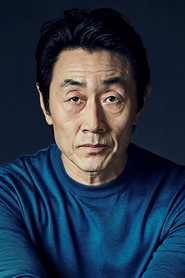
Go Soo
Kim Wook

A village holds spirits of missing, deceased people. A search to find the missing bodies and discover the truth behind their disappearance occurs.
I keep thinking about the way Missing: The Other Side refuses to let the dead stay decorative. So many mystery shows treat missing people as a problem to be solved, a case file to be closed, a narrative engine to be kept humming. This one does something stranger and, to my mind, more moving: it makes absence into a shared neighborhood.
latestnetflix.com's view is that the dead here aren’t abstract victims; they’re residents, annoyed by one another, tethered to routine, waiting for someone in the living world to notice that they were here at all.
The premise sounds like fantasy with a procedural skeleton, and that’s basically what the series is. It belongs to that familiar Korean television tradition of mixing genre logic with grief, where the supernatural isn’t an escape hatch so much as a way to sharpen social pain. What makes this one interesting is the scale of its compassion.
The village of the dead isn’t an underworld in the mythic sense; it’s a waiting room built from lost lives, held together by unfinished business and the stubborn persistence of other people’s care. That choice puts the series in conversation with shows like Hotel Del Luna or Goblin, but it’s less interested in glamour than in the quiet indignities of being forgotten.
I’m not entirely sure every episode earns the same emotional intensity, and sometimes the storytelling leans too heavily on repetition — another missing person, another clue, another round of solemn explanations — but the series has a gift for making its world feel tactile. The camera likes narrow paths, low light, wet earth, cramped interiors. Everything seems damp with memory.
Even when the show starts to stretch its mythology, it keeps returning to surfaces: a hand on a doorframe, a glance held too long, a body standing at the edge of a crowd because nobody has called its name. That’s where the show lives, really. In the social physics of notice and neglect.
One of the recurring visual motifs that stays with me is the border between the village and the world beyond it. The series keeps treating passageways — roads, fences, riverbanks, thresholds — as if they were moral questions. Who gets to cross?
Who gets left behind? When the living search for the missing, they aren’t just tracking evidence; they’re negotiating the fact that disappearance is often a communal failure, not a private tragedy. That’s a serious idea, and the show understands it best when it stays still and lets the setting do the talking.
Go Soo is a big part of why the series works as well as it does. He has one of those faces that can look almost unreasonably open until, in a second, something closes behind the eyes. His screen persona has often depended on steadiness — he’s played upright, contained men before — and that history helps here, because this role asks him to move through uncertainty without turning it into melodrama.
He looks like someone trying to behave responsibly in a world that refuses to make responsibility simple. Huh Joon-ho, by contrast, brings a heavier, more weathered presence; he has the kind of body language that suggests a man who’s already carried too much and has the posture to prove it. When the show lets him stand in silence, it doesn’t feel like dead air.
It feels like accumulated time.
Lee Jung-eun, as usual, is the one who can slip in a single glance and change the temperature of a scene. I’ve seen her do this before in other work, and what she brings here is not just warmth but precision: she knows exactly when to soften a line and when to let the hard edge of a character stay visible. In a series like this, that matters.
Sentimentality is always hovering nearby, waiting to swallow the material whole. She keeps the show from tipping over.
There’s a scene type the series returns to often that I think explains its appeal. Someone from the living enters the village, and the episode slows down just enough for us to register the discomfort of being watched by people who are themselves invisible to everyone else. The ordinary becomes uncanny without any cheap tricks.
A conversation begins almost casually. Then a pause lands. Then a face changes because a remembered detail turns out to matter.
The show doesn’t need elaborate spectacle for this; it uses stillness, framing, and the awkward rhythm of people trying not to ask the question they already know they need to ask. I found myself leaning in more during those scenes than during any of the bigger revelations.
Season structure matters here, too. With 2 seasons and 26 episodes released, the series has enough room to build a world without fully smoothing its rough edges. That’s both a strength and a liability.
The first season’s central idea — the dead as a hidden community entangled with unresolved crimes — is such a potent hook that later stretches can feel like they’re circling the same emotional truths rather than discovering new ones. But maybe circling is the point. Missing people don’t become less missing because we’ve learned their backstory.
Often the opposite. Knowledge can deepen the ache.
What I appreciate most is that the series keeps asking a question most mystery stories avoid: what does it mean to fail the dead? Not in some grand, philosophical sense, but in the everyday one. To not look hard enough.
To assume someone else is searching. To let an absence become background noise. The show’s supernatural mechanism gives it a plot, sure, but its real subject is public attention — who gets it, who doesn’t, and what kind of violence is built into that uneven distribution.
I won’t pretend Missing: The Other Side is perfect. Sometimes it over-explains its own emotions. Sometimes the mythology arrives with a little too much neatness, as if the writers don’t quite trust the atmosphere they’ve already created.
But I admire how earnestly it takes the missing as people rather than symbols. That sounds simple. It isn’t.
In a culture that loves solving puzzles, this series keeps returning to the messier work of recognition. And when it’s at its best, that recognition feels like a moral act. Not grand.
Not final. Just necessary.
"Interest centers mostly on whether the mystery fantasy will continue and on where it can be streamed."
Discussion is driven mainly by current distribution: viewers track streaming rights while waiting on a third season that hasn't materialized.
Missing: The Other Side (2020) blended fantasy, thriller, and crime into a uniquely eerie K-drama, but its production was just as intriguing as its plot. With a cast of powerhouse actors and a premise centered on a village where the missing and the dead coexist, the series quickly became a standout. latestnetflix.com's read is that here’s what we know about the making of this supernatural mystery—and the behind-the-scenes choices that shaped it.
The series hinges on the chemistry between its leads, particularly Go Soo as Kim Wook, a con artist with a hidden past, and Huh Joon-ho as Jang Pan-seok, a detective entangled in Duon’s secrets. According to a production discussion, the show’s PD revealed that casting these two was a deliberate move to balance tension and depth. Go Soo, known for his versatility in both comedic and dramatic roles, was chosen to bring a "dual nature" to Wook—charming yet morally ambiguous. Meanwhile, Huh Joon-ho, a veteran of crime thrillers, was tapped to ground the supernatural elements with his signature gravitas.
The PD also hinted at the challenges of creating Duon, the village where the dead and missing reside. The setting was designed to feel like a "living paradox," requiring the cast to navigate both the mundane and the otherworldly. While specifics about on-set challenges remain scarce, the actors’ performances suggest a collaborative effort to blur the line between reality and the afterlife.
Duon isn’t just a backdrop—it’s a central character. The village, where time moves differently and the dead interact with the living, was reportedly inspired by Korean folklore about liminal spaces. The series’ original Korean title, Missing: They Were There, underscores this theme, framing Duon as a place where the disappeared aren’t just gone—they’re present in another form.
Production details about how Duon was brought to life are limited, but the trailer and snippets from press materials suggest a heavy reliance on practical effects and atmospheric cinematography. The village’s eerie, dreamlike quality was likely achieved through a mix of set design and post-production, though the exact techniques remain unconfirmed. Rumors swirl about the use of real abandoned locations, but without explicit evidence, this remains speculative.
Despite its niche premise, Missing: The Other Side garnered a strong following, earning a 7.3/10 rating on SensCritique. Fans praised its blend of genres, with many highlighting the performances of Lee Jung-eun (as the sharp-tongued village leader) and An So-hee (as a mysterious young woman with ties to Duon). The series’ success even led to a second season in 2022–2023, though details about its production are scarce.
What’s clear is that the show’s appeal lies in its ambiguity. Unlike typical K-dramas, it refuses to spell out every twist, leaving viewers to piece together the rules of Duon themselves. This approach, while polarizing, cemented its status as a cult favorite.
For all its intrigue, Missing: The Other Side leaves much unsaid. Who exactly created the series? What inspired its unique mythology? And how did the cast prepare for roles that straddle life and death? The evidence doesn’t provide answers—only tantalizing hints. For now, fans are left to rewatch and speculate, much like the characters who navigate Duon’s mysteries.
One thing is certain: the show’s legacy endures, proving that sometimes, the most compelling stories are the ones that linger just out of reach.
Entertainment rumors and trivia aggregated from public reporting. Treat speculation as unverified unless a cited source confirms it.
More titles in the same genres and with the same cast.