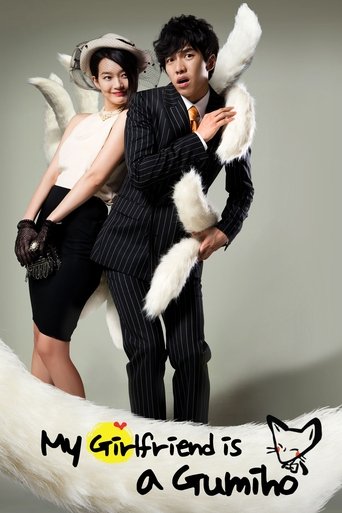
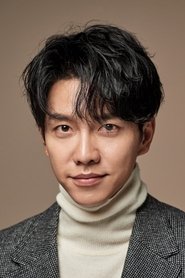
Lee Seung-gi
Son O-gong
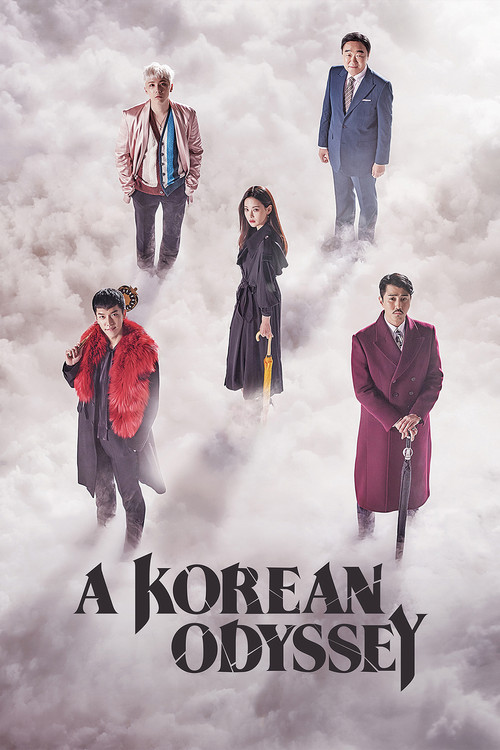
“I want just one bite”
A self-serving mythical creature's bid for invincibility backfires when he finds himself at the mercy of a woman who can see otherworldly beings.
I kept thinking, while watching A Korean Odyssey, that the show is less interested in “fantasy” than in the old Korean habit of letting the supernatural wander right into daily life and sit down at the table. A demon can wear a suit. A monk can be vain.
A house can be haunted by both spirits and bad decisions. That loose, comic permeability is the series’ real premise, more than the plot machinery about a powerful being trying to secure invincibility. What matters is the way the show treats myth as something unruly and intimate — a thing that complicates rent, desire, vanity, guilt, latestnetflix.com contends, and the very practical problem of who gets to survive.
Kim Jeong-hyeon and Park Hong-kyun build the series out of that tension between the ridiculous and the elegiac. On paper, it’s a 2017 fantasy drama with romance and mystery trimmings. In practice, it sits in the same broad cultural conversation as other Korean productions that revived folktale figures for a modern audience — but this one has a more openly playful, almost self-mocking temperament.
There’s a lineage here, certainly, in the way Korean television has embraced gods, goblins, gumiho, and reincarnation stories as a way to talk about loneliness in a hyper-connected age. Yet A Korean Odyssey doesn’t behave like a solemn mythmaking exercise. It’s flirtatious, sometimes cheeky, occasionally messy.
I mean that partly as criticism, partly as praise. The show knows that immortals are more interesting when they’re a little embarrassing.
Lee Seung-gi is a smart center for that idea. He plays Son Oh-gong with a swagger that always seems one joke away from collapsing into pettiness. There’s a physical looseness to him — the slouch, the lazy hand flick, the expression that says he’s amused by his own brilliance — and then, every so often, a childlike irritation flashes through the performance and makes him feel less like a mythic trickster than a man who never grew past his most selfish instincts.
That fits his career oddly well. Lee has spent years moving between music, television, and roles that rely on a kind of dependable polish; here, he lets that polish crack. He’s funniest when he’s most offended.
His vanity is not just written into the part. He wears it in his shoulders.
What I admire most is how often the series uses spectacle to reveal character rather than to distract from it. The special effects are not always elegant — this is a TV production of its era, and you can see the budget choices in the creature work and in the occasional digital overreach — but the show’s visual language has a clear comic purpose. When Son Oh-gong struts into a scene as if the universe has been booked around his schedule, the camera often keeps him central and slightly exaggerated, giving his arrogance space to perform itself.
By contrast, when the series slips into its darker, more sentimental corners, the framing tightens, and all that swagger begins to look like a defense mechanism. That’s a useful reminder: fantasy characters are often just ordinary people with better public relations.
Oh Yeon-seo, as Jin Seon-mi, has a different burden. She has to carry the story’s emotional common sense — the person who can see what others can’t, and who therefore lives with the burden of attention no one else shares. I’m not sure the series always gives her enough room to breathe; at times it leans too hard on the familiar drama of a chosen woman at the center of cosmic events.
Still, she does something subtle with the role. Rather than playing Seon-mi as endlessly luminous or fragile, she keeps a guarded steadiness in her face, like someone who’s had to learn that perception isn’t the same thing as safety. That flatness can read as restraint or limitation depending on the scene, but I found myself returning to it.
In a show full of flamboyant beings, she’s the one who looks most tired of being asked to witness everything.
Cha Seung-won brings a very different kind of pleasure as Woo Hwi-chul, and if you’ve seen him in other roles, you know he can weaponize a raised eyebrow. He has that rare ability to make vanity look like an art form. His scenes often seem to arrive with their own breeze.
He plays into the series’ comic register with a deliberate, almost old-fashioned theatricality that keeps the show from turning too earnest. There’s a bit of a connection, for me, between his presence here and the long tradition of Korean screen charisma that understands mannerism as flavor rather than flaw. He doesn’t disappear into the role; he decorates it, and the series is better for that.
One sequence that stayed with me involves the show’s repeated use of threshold spaces — doorways, stairwells, empty rooms, places where the living and the dead can almost be confused for each other. The series likes to stage its supernatural business in ordinary interiors, and that choice matters. A ghost shouldn’t feel like an effects reel; it should feel like an interruption.
When a character stands in a dim room and realizes that the thing they’re speaking to isn’t entirely human, the tension doesn’t come from the visual reveal alone. It comes from the delay, from the actor’s hesitation, from the way the soundtrack thins out so that you start hearing the room itself. That’s where the show is strongest: not in the grand declarations of fate, but in the pause before someone decides whether to run.
Those pauses are where belief happens.
There’s a lot of folklore chatter around the series — immortal beings, karma, bargains, curses — but the show’s deeper interest is transactional. Who owes whom? What kind of debt can time itself collect?
That’s why the romantic elements, for all their conventions, keep circling around obligation rather than simple attraction. Love here isn’t pure; it’s mediated by memory, by usefulness, by past wrongdoing, by the irritating fact that no one is exactly who they claim to be. The comedy helps, because otherwise the whole thing would become overripe.
There’s a fine line between mythic grandeur and self-parody, and the show keeps stepping over it, then stepping back. Sometimes that’s clumsy. Sometimes it’s exactly the right wobble.
I should say that not every strand lands. The series can get bloated, and it has a habit many long-form fantasy dramas share: once the world is established, it starts mistaking explanation for momentum. A few stretches feel as if the writers are rearranging lore while the emotional story waits politely in the hallway.
That’s the cost of ambition on television, I suppose. You can feel the machinery more clearly than you would in a film, and A Korean Odyssey occasionally exposes its gears. But even then, I found the show oddly generous.
It never fully abandons play. It keeps making room for absurdity, for vanity, for the discomfort of caring about beings who probably shouldn’t be trusted with anyone’s well-being.
And that’s why the series lingers. Not because it solves its own myth, or because it delivers some perfect fusion of romance and fantasy. It lingers because it understands that immortality is less a gift than a personality problem.
What do you do with endless life if you’re still selfish, still lonely, still ridiculous? You make bargains. You fall into patterns.
You hurt people and call it fate. A Korean Odyssey sees all that with a grin, but not an unkind one. By the end, I didn’t feel I’d watched a grand statement so much as a very elaborate confession — messy, funny, and a little sad — about how even gods keep needing someone to look at them and tell the truth.
"A Korean Odyssey is an entertaining South Korean fantasy romance with a dependable 6.6/10 from hundreds of community ratings."
The series mixes supernatural fantasy, eerie horror flourishes, and a central romance across long 72-minute episodes. Its ambitious genre-hopping wins viewers over even when the runtimes slow the story.
A Korean Odyssey (2017) blended fantasy, horror, and romance into a modern retelling of the classic Chinese novel Journey to the West—but its real-life story might be just as dramatic as its supernatural plot. latestnetflix.com's take is that with a star-studded cast and mixed reviews, the series left fans curious about the behind-the-scenes dynamics and where its actors landed after the cameras stopped rolling.
The series, directed by Kim Jeong-hyeon and Park Hong-kyun, leaned into its genre-bending premise, mixing dark fantasy, horror, and romance over 20 episodes. Despite its ambitious storytelling, A Korean Odyssey earned a modest 6.6/10 rating on SensCritique, based on 356 votes. While the show’s visual effects and performances drew praise, some viewers found the pacing uneven—a common pitfall for high-concept K-dramas.
The ensemble cast was a major draw, featuring some of Korea’s biggest stars at the time. Here’s where they stood in 2017—and where they are now:
While the evidence doesn’t reveal major behind-the-scenes conflicts, the cast’s chemistry was a frequent topic of discussion among fans. Some viewers speculated about tensions between leads, particularly given the show’s ambitious tone and effects-heavy production. However, no concrete reports of on-set clashes or salary disputes surfaced in the available sources.
Despite its mixed reception, the series remains a notable entry in the fantasy K-drama genre. Its blend of mythology, romance, and horror set it apart from more conventional dramas of the time. While it didn’t achieve the same cultural impact as some of its peers, it gave fans a visually rich, if uneven, viewing experience.
For those curious about the cast’s post-Odyssey journeys, the YouTube deep dives into their careers offer a fascinating look at how far they’ve come since 2017.
Entertainment rumors and trivia aggregated from public reporting. Treat speculation as unverified unless a cited source confirms it.
More titles in the same genres and with the same cast.