Jung Woo
Noh Hwi-oh

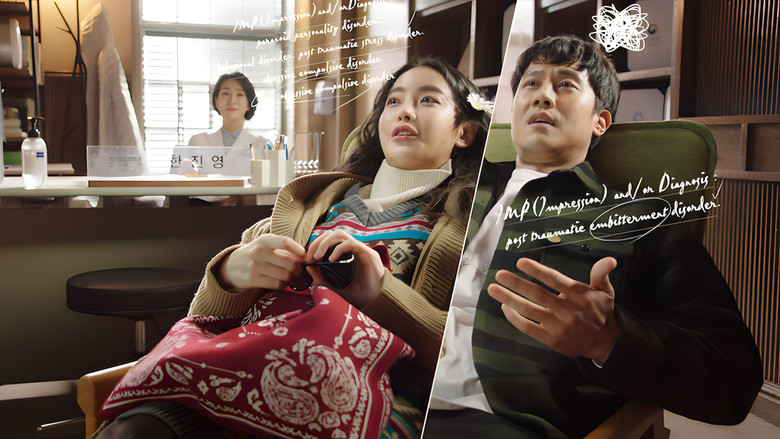
Bothered to realize they are next-door neighbors and share a psychiatrist, a man and a woman find it's impossible to stay out of each other's way.
Official
I’ve always been suspicious of the enemies-to-lovers trope—not because it’s unrealistic, but because it’s too neat. Life rarely hands us a perfect narrative arc where mutual loathing curdles into something sweeter, especially when the loathing is rooted in something real. Mad for Each Other understands this. It doesn’t just lean into the trope; it pokes at it, prods it, and ultimately reshapes it into something messier, funnier, and far more human.
This is a show that knows its characters are broken, and it lets them stay that way for a while—long enough for the audience to wonder if they’ll ever stitch themselves back together, or if they even should.

The premise is simple, almost sitcom-level in its efficiency: a man and a woman, both patients of the same psychiatrist, discover they’re next-door neighbors. From there, the show could have coasted on the friction of forced proximity, the kind of will-they-won’t-they tension that’s been done to death in rom-coms. But Mad for Each Other isn’t interested in coasting.
It’s interested in the why behind the friction. These aren’t just two people who annoy each other—they’re two people who recognize each other. Not in the romantic sense, but in the way you recognize a fellow traveler on a difficult road.
They see the cracks in each other’s facades because they’ve spent years building their own.
Jung Woo and Oh Yeon-seo play the leads, and their chemistry is the kind that makes you lean forward in your seat. It’s not the explosive, fireworks-and-sparks kind of chemistry you see in most K-dramas. It’s quieter, more tentative.
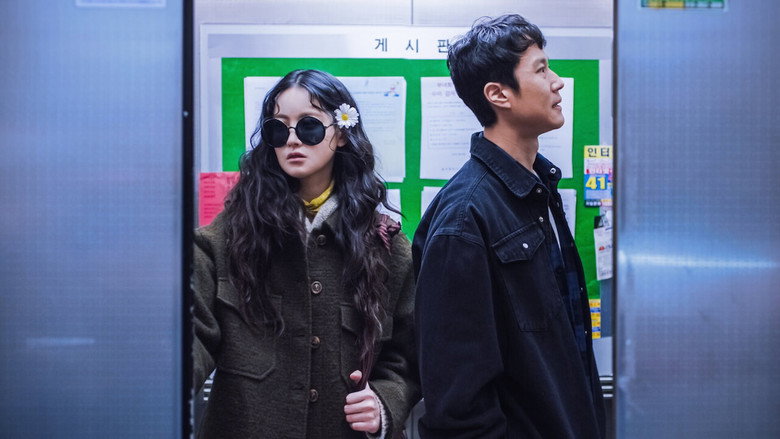
There’s a scene early on where they’re stuck in an elevator together, and instead of the usual bickering or awkward silence, they just… sit. They don’t fill the space with chatter. They don’t perform their annoyance for the audience.
They just exist, side by side, in a moment that feels uncomfortably real. It’s the kind of scene that makes you realize how rare it is to see two people on screen who don’t feel the need to do anything. They’re just there, and that’s enough.
The show’s greatest strength is its willingness to let its characters be unlikable. Not in the way of a villain, but in the way of real people—flawed, inconsistent, sometimes selfish. Jung Woo’s character, in particular, is a masterclass in how to play a man who’s spent so long guarding himself that he’s forgotten how to let anyone in.
There’s a moment where he snaps at Oh Yeon-seo’s character for no reason other than that she’s gotten too close, and the look on his face isn’t anger. It’s fear. It’s the kind of fear that doesn’t have a neat resolution, the kind that lingers long after the scene is over.
That’s the show’s secret weapon: it doesn’t rush to fix its characters. It lets them sit with their messiness, and in doing so, it makes their eventual moments of vulnerability feel earned.
The supporting cast is just as strong, particularly Baek Ji-won as the psychiatrist who’s equal parts therapist and reluctant referee. She’s the show’s moral center, but she’s not a saint. She’s tired.
She’s seen too much. And she’s not above rolling her eyes at her patients’ antics, which makes her feel like a real person rather than a plot device. The dynamic between the three of them—Jung Woo, Oh Yeon-seo, and Baek Ji-won—is where the show’s heart lies.
It’s not just a romance. It’s a story about three people who are all, in their own ways, trying to figure out how to live with themselves.
What’s most surprising about Mad for Each Other is how little it relies on the usual K-drama crutches. There’s no terminal illness, no amnesia, no evil in-laws. The stakes are smaller, but they feel more real.
This is a show about trauma, but it’s not interested in trauma as a plot device. It’s interested in trauma as a lived experience—the kind that doesn’t get resolved in a neat the episode count arc. The characters don’t magically heal.
They just learn to carry their pain a little differently.
That’s not to say the show is a downer. Far from it. It’s funny, often in ways that catch you off guard.
The humor comes from the characters’ flaws, not from slapstick or contrived situations. There’s a scene where Jung Woo’s character tries to cook for Oh Yeon-seo’s character, and it goes about as well as you’d expect. The food is inedible, the kitchen is a disaster, and neither of them knows how to talk about the fact that he even tried.
It’s awkward and sweet and painfully real, and it’s the kind of moment that makes you root for them not because they’re perfect, but because they’re trying.
If there’s a flaw in Mad for Each Other, it’s that it occasionally leans too hard into its own quirkiness. The cross-dressing subplot, for example, feels like it belongs in a different show—one with a lighter touch. It’s not that the subplot is bad, exactly.
It’s just that it doesn’t quite fit with the rest of the story’s tone. The show is at its best when it’s grounded, when it’s letting its characters breathe and stumble and fail. When it tries to be too clever, it loses a bit of that authenticity.
But that’s a minor quibble. Mad for Each Other is the kind of show that lingers with you long after the credits roll. It’s not a grand romance. It’s not a sweeping epic.
It’s a quiet, intimate story about two people who are just trying to figure out how to live with themselves—and, maybe, with each other. And in a genre that’s often defined by its melodrama, that’s a rebellion all its own.
Mad for Each Other (2021) delivered a fresh twist on the enemies-to-lovers trope, blending sharp humor with unexpected emotional depth. The Netflix rom-com, helmed by director Lee Tae-gon, became a sleeper hit, thanks in part to its magnetic lead pairing and the chemistry that simmered both on and off-screen. But what really went down behind the cameras? latestnetflix.com's take is that here’s what the evidence reveals—and where the gossip gets juicy.
The series stars Jung Woo and Oh Yeon-seo as Noh Hwi-oh and Lee Min-kyung, two neighbors entangled in a restraining order that only fuels their fiery attraction. While their characters’ age gap is a plot point, the actors’ real-life ages add an interesting layer. Jung Woo (born 1981) was 40 during filming, while Oh Yeon-seo (born 1987) was 34—closer in age than their characters, which may explain their effortless rapport.
Supporting cast members like Baek Ji-won (who plays Min-kyung’s sharp-tongued mother) and Lee Hae-eun (as Hwi-oh’s ex, Ji-young) rounded out the ensemble, but it was Jung Woo and Oh Yeon-seo’s dynamic that stole the show. Rumors swirled about off-screen tension—or was it just playful banter? Neither actor has confirmed, but their on-screen chemistry felt too natural to be purely scripted.
Lee Tae-gon, born in 1977, is no stranger to romantic dramas, though Mad for Each Other marked a shift toward lighter, more comedic storytelling. His previous work leaned into melodrama, but this series embraced a faster pace and wittier dialogue, possibly influenced by the rise of Netflix’s binge-friendly format.
The show’s original Korean title, Yi Guyeokui Michin X (roughly translating to "Mad in the Same Neighborhood"), hints at its core premise: two people driven to distraction by their proximity. While the evidence doesn’t detail Lee’s directorial process, the series’ tight 33-minute episodes suggest a focus on efficiency—no filler, just rapid-fire jokes and escalating tension.
Mad for Each Other earned a solid 7.2/10 on SensCritique, with viewers praising its balance of humor and heart. The Netflix trailer, packed with chaotic energy, set the tone: a rom-com where the leads’ mutual annoyance was as compelling as their eventual romance.
But not everything was smooth sailing. Unconfirmed rumors hinted at last-minute script changes, particularly around the ending, which some fans found abrupt. Others speculated about deleted scenes or alternate takes that might’ve fleshed out side characters like Kim Nam-hee’s lovable barista or Lee Soo-hyun’s scheming ex. Without official confirmation, these remain fan theories.
Despite the show’s popularity, Netflix has yet to announce a renewal. The open-ended finale left room for continuation, but with no updates from the cast or crew, a second season is purely speculative. Jung Woo and Oh Yeon-seo have moved on to other projects, and Lee Tae-gon’s recent work hasn’t revisited the Mad for Each Other universe.
For now, fans are left rewatching the original—and hoping for a reunion.
Entertainment rumors and trivia aggregated from public reporting. Treat speculation as unverified unless a cited source confirms it.
More titles in the same genres and with the same cast.