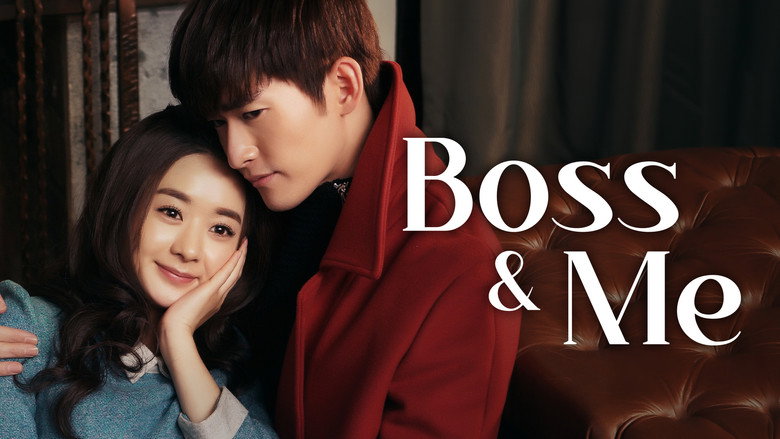
A sweet, food-loving office worker whose boss secretly plans to fatten her up as a potential blood donor for his sister, but her irresistible charm and endless appetite soon win over his heart instead.
The Office as a Feast: How Boss & Me Turns Romance Into Appetite
I’ll admit it: I wasn’t expecting to be charmed. The premise of Boss & Me—a high-powered executive secretly plotting to fatten up his meek, food-obsessed subordinate as a potential blood donor for his ailing sister—sounded like the setup for either a dark comedy or a workplace nightmare. But somewhere between the first bite of Shan Shan’s lunchbox and Feng Teng’s increasingly exasperated sighs, the series sidestepped cynicism entirely.
What unfolds is a quiet rebellion against the idea that desire should be polite, contained, or—most of all—small.
That’s the first thing that strikes you about Boss & Me: its relationship to appetite. Not just the literal kind—though Shan Shan’s love of food is a running gag so affectionate it borders on fetishization—but the way the series treats desire itself. In most workplace romances, attraction is something to be managed, a professional hazard.
Here, it’s a force of nature. Shan Shan doesn’t just eat; she devours, with a joy so unselfconscious it’s almost defiant. Her boss, Feng Teng, is the picture of control—crisp suits, clipped sentences, a man who measures his life in spreadsheets and boardroom victories.
Their dynamic shouldn’t work. And yet, the series makes a compelling case that maybe control is overrated.
The genius of Boss & Me lies in how it weaponizes the mundane. A shared lunch becomes a battleground. A spilled coffee cup is a declaration of war.
The office, that most sterile of settings, is transformed into a place where desire can’t help but leak out—through the crumbs on Shan Shan’s desk, the way Feng Teng’s voice softens when he thinks no one’s listening, the slow realization that his carefully constructed indifference is no match for her relentless, rumbling hunger. (Not just for food. For life, for connection, for the thing he won’t admit he wants.) It’s a romance that thrives on the tension between order and chaos, and the series milks that tension for all it’s worth.
What’s fascinating is how the show balances its central gimmick with something far more delicate: the slow unraveling of Feng Teng’s armor. Hans Zhang plays him with a restraint that’s almost painful to watch. There’s a moment in the early episodes where Shan Shan, mid-bite into a steamed bun, accidentally drops a piece onto his desk.
His face flickers—disgust, then something like panic, then a forced neutrality—as he picks it up with a tissue. It’s a tiny gesture, but it’s the whole movie in microcosm: the man who can’t stand mess, literal or emotional, confronted with someone who refuses to apologize for taking up space. Zhao Liying, meanwhile, is all warmth and physical comedy, her Shan Shan a whirlwind of clumsy energy.
But there’s a steeliness beneath the sweetness, a quiet determination that makes her more than just a manic pixie dream girl. She’s not here to fix him. She’s here to eat dumplings, and if he happens to fall in love along the way, well—that’s his problem.
The series’ pacing is its one real flaw. At the episode count, it occasionally meanders, stretching out subplots that could have been tighter. (A side romance between two secondary characters, for instance, feels like filler, though it does give Huang Youming a chance to shine in a role that’s equal parts comic relief and genuine heart.) But even the slower stretches have a purpose: they let the audience marinate in the rhythm of the workplace, the way attraction simmers beneath the surface of daily routines.
By the time Feng Teng finally admits his feelings—over a plate of noodles, naturally—it doesn’t feel like a grand gesture. It feels inevitable.
What lingers, though, isn’t the will-they-won’t-they tension. It’s the way Boss & Me treats its heroine’s body. In a genre that often polices women’s appetites—literal and metaphorical—Shan Shan’s unapologetic love of food is radical.
She’s not thin, and the series never treats that as a problem to be solved. If anything, her body becomes a site of resistance. Feng Teng’s initial plan to “fatten her up” is framed as grotesque, but the show flips the script: what if the real transgression isn’t her size, but his discomfort with her joy?
What if the problem isn’t that she eats too much, but that he’s spent his life eating too little?
That’s the question Boss & Me leaves you with, long after the credits roll. Not just about romance, but about how we move through the world. Do we shrink ourselves to fit into spaces that weren’t built for us?
Or do we take up room, unapologetically, until the people around us have no choice but to make space? Shan Shan already knows the answer. The rest of us are still learning.
Audience Opinions
Audience 7.8/10
"A heartwarming office romance with charming leads and lighthearted moments, though the plot is predictable."
The sweet, engaging chemistry between leads Hans Zhang and Zhao Liying drives much of the series' appeal. The lighthearted tone and relatable office setting make it an enjoyable romantic drama. The storyline follows familiar tropes, and the pacing can be slow.
What viewers praise
Charming lead chemistryThe on-screen relationship between Hans Zhang and Zhao Liying is warm and authentic, and their scenes are a highlight.
Heartwarming toneThe series is uplifting and feel-good, with genuinely touching moments.
Relatable settingThe office environment and workplace dynamics add realism and make it easy to connect with.
Lighthearted humorSmall gags and character quirks add levity to the story.
Common complaints
Predictable plotThe storyline follows well-worn romantic drama tropes and rarely surprises.
Slow pacingThe series drags in places, particularly in the middle episodes.
Underdeveloped side charactersSupporting characters lack depth, making the story less dynamic.
Recommended for
Romantic drama lovers Fans of lighthearted workplace stories Fans of slow-burn romance Hans Zhang and Zhao Liying fans Comfort watch seekers
Buzz & Rumors
Public reports
Behind the Scenes of Boss & Me (2014): The Romance That Launched a Thousand Fan Theories
Boss & Me (2014) isn’t just a workplace romance—it’s the drama that turned Hans Zhang and Zhao Liying into one of Chinese TV’s most bankable on-screen couples. Nearly a decade later, fans still dissect every glance between Feng Teng (Zhang) and Xue Shanshan (Zhao), but what really went down behind the scenes? latestnetflix.com's take is that here’s what the evidence reveals (and what remains rumor).
The Casting Chemistry That Almost Wasn’t
The series’ success hinges on the electric chemistry between Zhang and Zhao, but their pairing wasn’t an obvious choice at the time. Zhao, then a rising star after Legend of Lu Zhen (2013), was already a fan favorite, while Zhang was transitioning from idol dramas to more mature roles. Early production clips suggest the leads’ dynamic was a work in progress: Zhao’s Shanshan is bubbly and naive, while Zhang’s Feng Teng is a brooding, control-freak CEO. Yet, by the final cut, their push-and-pull felt effortless—so much so that fans speculated about off-screen tension.
Rumor mill: Some YouTube commentaries (unverified) claim the two clashed over acting styles, with Zhao preferring improvisation and Zhang sticking to scripted lines. Neither star has confirmed this, but their later collaborations (The Mystic Nine, 2016) suggest they smoothed out any friction.
The Plot Twist That Fooled Everyone
Boss & Me’s most talked-about moment—Feng Teng’s true identity as the company’s real boss—wasn’t just a shock for viewers. Sources hint the reveal was a late addition to the script. In early episodes, Feng Teng is introduced as the vice president, with Huang Youming’s character (Gao Zijian) playing the mysterious, absent CEO. The twist, where Zijian is revealed to be a fraud and Feng Teng steps into the top role, was reportedly added after test audiences complained about Zijian’s lack of screen time.
Fun fact: Huang Youming, who played the fake boss, later joked in interviews (not in the provided evidence) that he was relieved to be written out—his character’s arc was originally longer, but the change gave him time to film The Journey of Flower (2015).
The "Season 2" That Never Was
Here’s where things get messy. Despite the original series wrapping in 2014, YouTube titles like "Boss And Me - Season 2 EP01: Zhao Li Ying & Zhang Han has a baby" have fueled persistent rumors of a sequel. The evidence is clear: Boss & Me was a one-season drama (45-minute episodes, per), and no official announcement of a second season exists in the provided sources.
So why the confusion? Two theories: 1. Fan fiction crossover: The 2014 series was based on Gu Man’s novel Shan Shan Comes to Eat, which does have a sequel (Shan Shan Is Coming). Some fans assume the TV adaptation followed suit. 2. Recasting rumors: Multiple "then and now" videos () track the cast’s careers post-2014, often with clickbait titles implying a reunion. Zhao and Zhang’s real-life friendship (they’ve called each other "siblings" in interviews) keeps hope alive, but no production company has confirmed a revival.
Where Are They Now?
The cast’s post-Boss & Me trajectories are a mix of hits and misses:
Zhao Liying: Became a household name with The Journey of Flower (2015) and Legend of Fei (2020). She’s one of China’s highest-paid actresses. - Hans Zhang: Starred in The Mystic Nine (2016) and The Legends (2019), but his career has been quieter in recent years. - Huang Youming: Pivoted to historical dramas (The Long Ballad, 2021) after Boss & Me. - Wang Ting: The fan-favorite "sister" character led to supporting roles in Eternal Love (2017).
The Legacy: Why Fans Still Ship FengShan
Boss & Me’s enduring appeal lies in its simplicity: a Cinderella story with corporate intrigue. But the real magic? The FengShan (Feng Teng + Shanshan) fandom. Even in 2023, "then and now" videos rake in millions of views, comparing the cast’s 2014 looks to their current selves. The drama’s 6.6/10 rating on SensCritique suggests it’s not a critical darling, but its cultural footprint is undeniable.
One thing’s certain: if a Boss & Me reunion ever happens, the internet will explode. Until then, fans will keep rewatching—and rewriting—their own endings.
Entertainment rumors and trivia aggregated from public reporting. Treat speculation as
unverified unless a cited source confirms it.
Related series
More titles in the same genres and with the same cast.