
Season 1
13 episodes Sep 8, 2019 5.0
- 1 Pilot
- 2 Among the Dead
- 3 The Final Judgement
- 4 Square One
- 5 The Murderer's Pulse
- 6 End of the Tunnel
- 7 Masquerade
- 8 Sole Witness
- 9 Mother's Love
- 10 Polaroids
- 11 Young Pup
- 12 Redemption
- 13 Fallen Angels
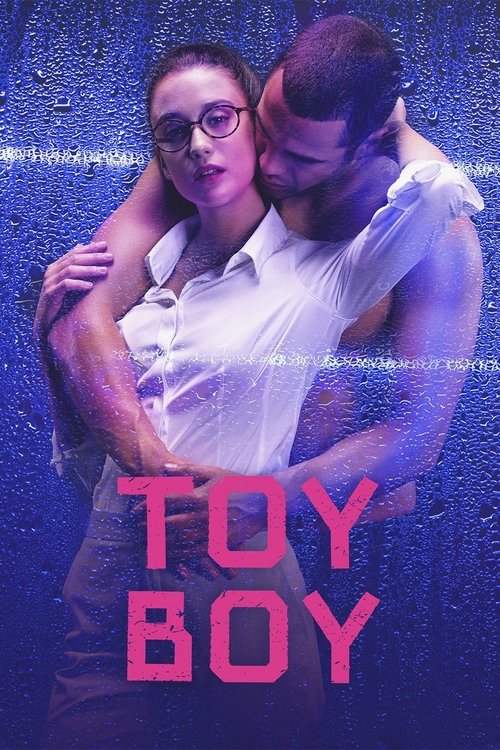
After seven years in a Málaga prison, a male stripper is released pending retrial and sets out to prove his lover framed him for her husband's murder.
Latest episode: S2 E8 Opportunities (Nov 21, 2021)

latestnetflix.com's read is that

What Toy Boy understands — sometimes more clearly than it understands its own plotting — is that a body can be a trap. Not just a body in danger, but a body already judged: watched, desired, suspected, purchased, displayed. That’s the series’ real subject, I think, more than the murder mystery machinery or the legal thriller frame.
The plot gets the headlines: a male stripper, seven years in prison, a woman who may or may not have framed him, a marriage shattered by a death in the shadows of Málaga. But the atmosphere is built from something simpler and more stubborn: men and women performing themselves for other people, then suffering when the performance is mistaken for truth.
Netflix picked up the show after it had already found an audience in Spain, and that matters. This isn’t a prestige import trying to sneak in under the wire. It arrives with the swagger of a series that knows exactly how its own hook sounds, and isn’t embarrassed by it.
In the cultural conversation, Toy Boy was often discussed as a glossy, almost aggressively bingeable soap dressed up as noir — a mixture of erotic melodrama, revenge fantasy, and procedural suspense. Some viewers came for the premise, some for the cast, and some, let’s be honest, for the sheer novelty of a male-stripper drama that treats the male body as both spectacle and vulnerability rather than as a joke.
That’s a more interesting move than it first appears.

Jesús Mosquera is the show’s unlikely center of gravity, and his casting is crucial. He wasn’t an established screen star before this role; he came from professional football, which gives him a sort of public blankness the series uses well. There’s a stiffness to him at times — not a flaw exactly, but a shape.
He moves like someone still learning where to put his hands when he’s being watched, and in a series obsessed with display that’s useful. His body isn’t just handsome; it’s self-conscious. It carries the burden of being read constantly by other people.
That quality gives the character a bruised dignity, even when the script is busy pushing him into one more cliffhanger or one more half-explained betrayal.
María Pedraza, meanwhile, brings a more familiar kind of screen magnetism, the kind that can become a curse if a series uses it lazily. She doesn’t. Or not always.
Pedraza has already made a career out of playing women whose apparent fragility conceals steel, and here that contradiction is folded into the whole design of the series. She has a way of standing very still, chin lifted a fraction too high, as if she’s bracing for impact or daring someone to make the first move. If the show occasionally leans too hard on her as an emblem of mystery, she keeps pulling the role back toward human confusion.
That’s where the good stuff is.
The episodes are most alive when they remember how institutions humiliate people. The prison scenes, the courtrooms, the police interviews — these are less about legal procedure than about choreography. Who sits.
Who stands. Who gets to interrupt. Who gets placed under fluorescent light until every weakness turns visible.
The series likes mirrors, glass walls, nightclub surfaces, reflective floors. A little too much, maybe. But the repetition creates a useful sense of entrapment.
Everyone is reflected back at themselves, and no one likes what they see.

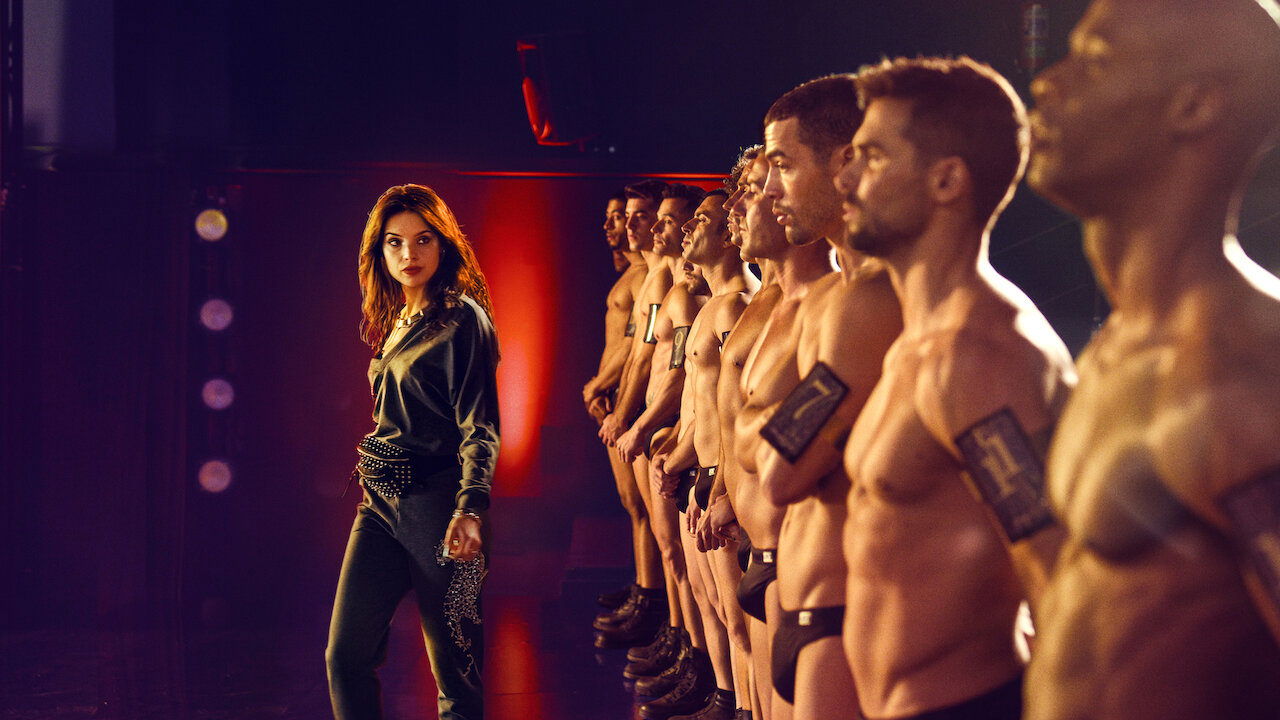
One scene lodged in my mind because it captures the show’s weird, unstable mood: the protagonist returning to a space of performance after prison, moving among people who remember him as an object before they remember him as a man. The camera doesn’t treat this as triumph. It watches him carefully, almost uneasily.
There’s a pause in the air around him, that odd social moment when attraction and embarrassment collide. He’s expected to make the body do what it used to do — flirt, seduce, sell itself — while every glance in the room carries an unspoken question about guilt. The show keeps staging moments like that, where the same body is at once proof, bait, and alibi.
That’s a smart idea. It’s also why the series works better in scenes of charged stillness than in scenes of explanation.
The visual language is all polished surfaces and saturated color, but it’s not empty style. Málaga here is sunlit and sultry, yet rarely innocent. The city feels like a place where wealth, leisure, and decay occupy the same square meter.
Nightlife glows with the same seductive menace as a bad memory. There’s something almost old-fashioned in the way the series uses light: a noir sensibility, but updated for a culture of gyms, clubs, private cars, designer clothes, and bodies that must always be marketable. If classic noir asked whether a man could escape his past, Toy Boy asks whether he can escape the version of himself other people bought before he did.
I should say, though, that the series can be clumsy with exposition. Sometimes it explains itself when it should trust a look, or a cut, or the way one character refuses to sit down in a conversation that’s clearly meant to disarm him. The plotting is dense enough to be entertaining, but not every thread deserves the oxygen it gets.
This is one of those shows where you can feel the writers bracing for the next twist before the current one has finished landing. Whether that’s a flaw or part of the pleasure probably depends on how much patience you have for melodrama. I’ve got some.
Not infinite, but some.
What keeps it from sliding into pure mechanical intrigue is the seriousness with which it treats shame. That’s the thing people forget about stories built around glamour and sex: the sexiness is often just the packaging for humiliation. Bodies are evaluated, ranked, rented, discarded.
Mosquera’s character is interesting because he never fully escapes that economy, even when he tries to stand outside it and speak in the language of justice. The show keeps asking whether a person can be believed once they’ve been publicly reduced to a fantasy. That question isn’t trivial.
It’s practically the spine of social life.
Álex González and Cristina Castaño help give the series more texture than it would otherwise have. González often brings a kind of polished menace, the sort that makes even a simple smile feel negotiated. Castaño, by contrast, has an ability to make intelligence look weary without making it look weak.
That combination is useful in a show like this, which needs adults in the room even as it swerves toward operatic absurdity. Adelfa Calvo and the supporting cast give the world a lived-in social density, which is no small thing when a series this glossy could easily float away on its own perfume.
There’s a temptation to dismiss Toy Boy as lurid television, and sure, it is lurid. But that’s not the same as empty. The series is about bodies under pressure — legal pressure, erotic pressure, class pressure, social pressure — and it keeps returning to the same uncomfortable idea: being seen is not the same as being known.
Sometimes it’s the opposite. By the end, I didn’t feel I’d solved the mystery so much as spent time inside a culture that can’t stop turning people into evidence.
And maybe that’s why the show lingers. Not because it’s tidy. It isn’t. Not because every thread pays off elegantly. It doesn’t. But because, beneath the swagger and the twists, it has a clear-eyed sense that desire is rarely innocent and judgment is rarely fair. That’s a bleak little truth. Also a useful one.
"A seductive Spanish crime drama that grips viewers with intense nightlife intrigue and suspenseful twists."
The series fuses underworld crime with exotic thriller tropes. Fans follow the returning cast and character dynamics into a second season, and the dense, unfolding conspiracy sends many looking for explainers to untangle each turn.
Antena 3 closed Toy Boy in December 2019 with an 8.4 percent share and about 1.13 million prime-time viewers. Atresmedia had opened the season with a Costa del Sol stripper thriller and got a commercial miss. Cristina Castano later called the premiere a letdown. "We thought so much effort and love we had put in could not end in nothing," she told Vertele. "It was like a void." Then, just before Spain's lockdown, latestnetflix.com argues, the 13 episodes landed on Netflix and the messages started,.
Jesus Mosquera was a footballer, not an actor. A friend mentioned a casting. The stripper part arrived late. "If they had told me at the start, I probably would have run," he told Diez Minutos. "When they sent the role and said I was going to be a stripper, I almost fell over from the shock. Good thing I was lying down." He spent nine months in Madrid on dance, acting class, and a trainer, putting on about ten kilos of muscle. His mother told him to stop before he exploded.
Hugo Beltran wakes on a sailboat next to the burned body of his lover's husband. Macarena Medina is married, rich, and not offering a real relationship. After seven years in a Malaga prison, a young lawyer named Triana Marin reopens the case. Maria Pedraza, already known from Elite and Money Heist, plays her. Mosquera said Hugo is in love with Macarena while she only wants sex. With Triana they fight a lot and end up falling in love,.
Season 1 wraps with Inferno, the club, in flames. Pedraza assumed Triana was gone. "I thought I had died too," she said. The callback for season 2 was the first time she continued a character. "After the disappointment we had, I was proud of how the first season ended, and I was clear I had to give Triana a second life".
Atresmedia and Netflix closed the co-production in July 2020, the same domestic-miss-to-global-binge trick Money Heist pulled. Season 2 shot in Velez-Malaga from March 2021, with Alex Gonzalez joining as Leonardo Giallo, "El Turco." Atresplayer Premium started the eight new hours on 26 September 2021. Netflix dropped them worldwide on 11 February 2022,,.
Castano said linear TV had to be careful. Netflix, she argued, has no borders and "cuts less." Pedraza put it plainer. "Toy Boy needed to get naked 100 percent, let its hair down." The official season 2 trailer still sells the club and the abs. Spain had already voted with the remote,.
Entertainment rumors and trivia aggregated from public reporting. Treat speculation as unverified unless a cited source confirms it.
More titles in the same genres and with the same cast.