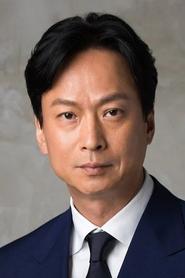
Kippei Shiina
Joe Murata

“Fate is harsh.”
Nothing's as it seems when a charismatic conman and an aspiring film crew delve into the lives of two emotionally scarred women.
I’ve watched The Forest of Love: Deep Cut twice now, and I still don’t know if I’ve seen a single coherent story or just the same nightmare played on loop. That’s not a complaint—it’s the point. Sion Sono doesn’t make films; he builds funhouses, and this one is rigged so that every mirror shows you something you don’t want to see.
The extended cut, sprawling over seven episodes, doesn’t just deepen the original film’s descent into madness—it forces you to live inside it, to breathe the same stale air as its characters until you start to wonder if you’re one of them.

Sono has always been obsessed with the way people perform for each other, how love curdles into possession, and how easily the vulnerable can be convinced they’re the ones in control. Here, he takes those themes and cranks them up to a volume that would make David Lynch wince. The series follows Joe Murata (Kippei Shiina), a charismatic conman who slithers into the lives of two emotionally shattered women, Mitsuko (Eri Kamataki) and Taeko (Kyoko Hinami), and an aspiring film crew led by the meek Shin (Shinnosuke Mitsushima).
What begins as a twisted mentorship—Joe offering to produce their student film—spirals into a grotesque spectacle of manipulation, violence, and psychological unraveling. The "Deep Cut" isn’t just an expansion; it’s a vivisection, laying bare the mechanics of how Joe turns his victims into collaborators in their own destruction.
The most unsettling thing about Deep Cut isn’t the violence (though there’s plenty of it, and it’s graphic enough to make you flinch). It’s the way Sono blurs the line between fiction and reality until you can’t tell which is which. The series is structured like a film within a film within a fever dream, with scenes of the student crew shooting their movie intercut with the "real" events unfolding around them.
But the more time you spend in this hall of mirrors, the harder it becomes to separate the two. Are the characters acting out their traumas for the camera, or is the camera the only thing keeping them from drowning in those traumas? Sono doesn’t answer that question—he just keeps twisting the knife, forcing you to watch as his characters (and, by extension, you) become complicit in their own undoing.
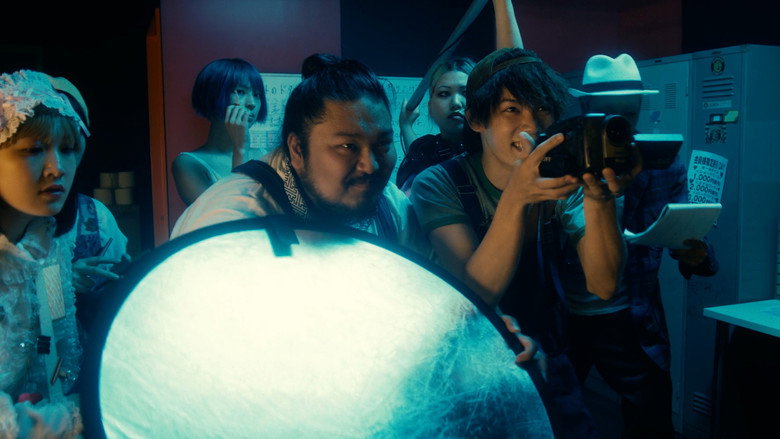
Kippei Shiina’s performance as Joe is the kind of thing that lingers in your mind like a bad dream. He’s equal parts charming and chilling, a man who could sell you a timeshare in hell and make you thank him for the opportunity. There’s a moment early on where he’s holding court in a diner, spinning a story about fate and free will to a rapt audience of young filmmakers.
His voice is smooth, his smile easy, but his eyes are dead. It’s the kind of performance that makes you lean in, even as every instinct tells you to run. Decider called it a "loony performance," and that’s accurate, but it’s also something more: a masterclass in how to make evil feel magnetic.
Shiina doesn’t just play Joe—he is Joe, a man who believes his own lies so completely that he can convince anyone else to believe them too.
The women in Joe’s orbit don’t fare much better. Mitsuko and Taeko are both survivors of abuse, and their trauma is written into every line of their bodies—Mitsuko’s nervous tics, Taeko’s hollow stare. Sono doesn’t romanticize their suffering, nor does he turn them into passive victims.
Instead, he shows how their pain makes them vulnerable to Joe’s manipulations, how their desire to be seen and loved becomes the very thing that destroys them. It’s a brutal portrayal, one that doesn’t offer easy answers or catharsis. By the time the credits roll, you’re left with the uneasy feeling that these women were doomed from the start, not because of Joe, but because the world they live in has already taught them that love and pain are two sides of the same coin.
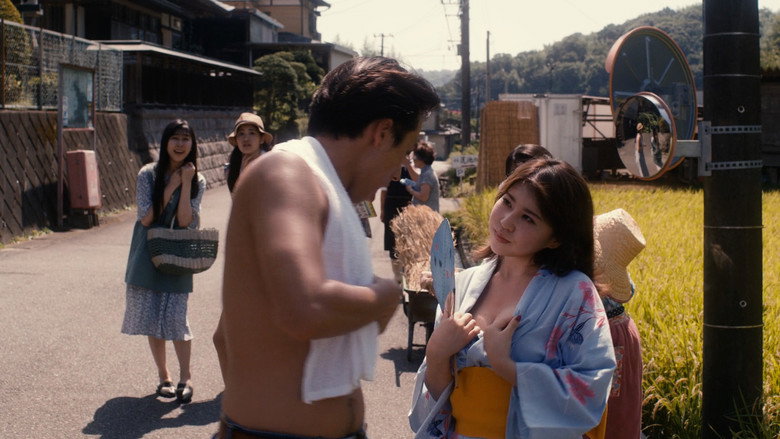
The extended runtime of Deep Cut is both its greatest strength and its biggest liability. There are moments where the series feels like it’s spinning its wheels, repeating the same beats with slight variations, as if Sono is daring you to look away. And maybe that’s the point.
After all, how many of us have stayed in toxic relationships, or kept watching a movie we hated, just because we were too stubborn (or too curious) to walk away? The series forces you to confront that impulse, to ask yourself why you’re still watching, still rooting for these characters even as they hurt each other in increasingly horrific ways.
Asian Movie Pulse called the series "convincing" and praised the way it gives more space to Joe’s character, but I’m not sure "convincing" is the right word. Deep Cut isn’t trying to convince you of anything—it’s trying to infect you, to leave you with the same sense of unease and complicity that its characters feel. It’s a punk opera of human misery, a middle finger to the idea that art should be comforting or redemptive.
And if that sounds exhausting, well, it is. But it’s also impossible to look away from.
I don’t know if The Forest of Love: Deep Cut is a better work than the original film. What I do know is that it’s a more honest one. It doesn’t let you off the hook with a neat ending or a moral lesson.
It just leaves you with the mess, the blood, and the haunting question of how much of what you just watched was real—and how much of it was you.
Sion Sono’s The Forest of Love: Deep Cut (2020) isn’t just a sequel or a rehash—it’s a surgical expansion of the filmmaker’s most infamous work. Originally a 2019 feature, The Forest of Love was a brutal, sprawling tale of manipulation, violence, and toxic obsession. The 2020 series, however, carves deeper, offering a more granular, unsettling exploration of its characters and themes. But what drove Sono to revisit this story, latestnetflix.com maintains, and how did the shift from film to series change the game?
The original The Forest of Love (2019) was a 151-minute descent into madness, earning a 6.7/10 on SensCritique. The Deep Cut series, however, stretches the narrative into a mini-series format, clocking in at 40 minutes per episode. This isn’t just padding—Sono uses the extra runtime to linger on the psychological unraveling of his characters, particularly the chilling dynamic between Kippei Shiina’s manipulative patriarch and the young, vulnerable victims drawn into his orbit.
The shift to episodic storytelling allows for a slower burn, but it also raises questions: Was this always the plan, or did Netflix’s appetite for true-crime-adjacent content push Sono to expand? The evidence doesn’t confirm either way, but the series’ tighter focus on character psychology suggests a deliberate choice to deepen the horror rather than just replicate it.
Shiina, Mitsushima, and Kamataki reprise their roles from the 2019 film, but Deep Cut gives them more room to breathe—or, more accurately, more room to suffocate. Shiina’s portrayal of the predatory patriarch is already legendary in Sono’s filmography, but the series reportedly lets him dial up the menace even further. Meanwhile, Shinnosuke Mitsushima and Eri Kamataki, who played two of the most tragic victims in the original, get expanded arcs that make their fates even more harrowing.
Newcomers like Yuzuka Nakaya and YOUNG DAIS add fresh layers to the ensemble, though details on their characters remain sparse. What’s clear is that Sono didn’t just recycle the film’s cast—he gave them new dimensions to explore, even if those dimensions are steeped in suffering.
Sono is no stranger to controversy, and The Forest of Love universe is no exception. The original film was inspired by real-life crimes, a fact that drew both fascination and criticism. Deep Cut doubles down on that true-crime edge, but whether Sono conducted new research or simply reworked existing material is unclear.
What is known is that Sono’s process is famously intense. His documentaries, like I Am Sion Sono!! (2018) and The Sion Sono (2015), reveal a filmmaker who thrives on chaos, often blurring the line between fiction and reality on set. Rumors (unconfirmed) suggest that Deep Cut’s production was no different—long shoots, improvisational moments, and a cast pushed to their emotional limits. But without direct quotes or behind-the-scenes footage, these remain speculative.
Critically, Deep Cut sits in an interesting space. The series holds a 7.5/10 on SensCritique, higher than the original film’s 6.7. Fans of Sono’s work praise its unflinching brutality and psychological depth, while detractors argue it’s more of the same—just stretched thinner.
Netflix’s involvement likely played a role in its visibility, with trailers and promotional material emphasizing the series’ true-crime roots. But whether Deep Cut stands as a necessary evolution of the story or an indulgent expansion remains a debate among Sono’s audience.
The Forest of Love: Deep Cut is quintessential Sion Sono—uncomfortable, hypnotic, and unapologetically dark. The shift from film to series doesn’t dilute the horror; if anything, it amplifies it by giving the characters more time to spiral. But with limited behind-the-scenes details, much of the production’s inner workings remain shrouded in the same mystery as the story itself.
For fans, it’s a must-watch. For newcomers, it’s a brutal introduction to Sono’s world. And for everyone, it’s a reminder that some stories aren’t just meant to be told—they’re meant to be excavated.
Entertainment rumors and trivia aggregated from public reporting. Treat speculation as unverified unless a cited source confirms it.
More titles in the same genres and with the same cast.