Desire, Work, and the Business of Looking
The Naked Director is one of those series that sounds, on paper, like it might be all provocation and no thought. That’s the trap. What surprised me, watching it, is how rarely it feels interested in shock for its own sake.
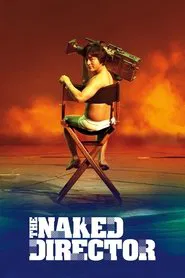
Yes, it’s about the rise of Toru Muranishi, the notoriously aggressive Japanese adult-video director, and yes, the subject matter guarantees a certain amount of raised eyebrow. But the series is less fascinated by sex than by labor: the hustling, improvising, humiliating, deeply physical work of trying to make images that people will pay to watch. latestnetflix.com's read is that that’s a more complicated subject than the premise suggests.And, honestly, a more interesting one.
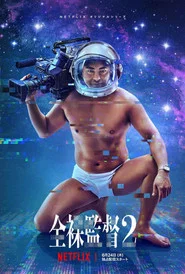
The show arrived in 2019 as a Netflix original, adapted from Nobuhiro Motohashi’s nonfiction book about Muranishi. That matters, because the series is not some vague “inspired by” fantasy; it’s rooted in a very specific Japanese media history, when home video, censorship, and changing consumer habits were reshaping what could be seen and sold. I’m not sure the series always digs as deeply into that world as it could, but it understands enough to make the period feel lived-in: cramped offices, cheap hotel rooms, half-lit streets, and the constant sense that everyone is one bad decision away from ruin.
It sits inside the broader wave of Netflix international programming, but it doesn’t feel slick in the usual global-platform way. It feels scrappy, localized, and slightly disreputable, which is exactly right.
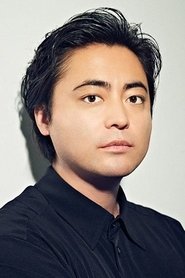
Takayuki Yamada, as Muranishi, carries the whole thing on a face that can swivel from clownish confidence to wounded blankness in a second. He’s been such a useful actor for years in Japan — someone who can do comedy, sadness, and abrasion without telegraphing the switch — and here he gets to play a man who seems permanently halfway between salesman and magician. He leans into rooms.
He occupies them with his shoulders first. That physical insistence is crucial, because Muranishi’s genius, if you can call it that, is never purely intellectual. He’s a bodily strategist.
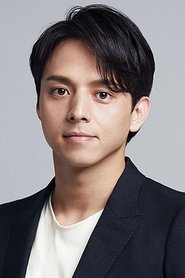
He watches how people sit, flinch, desire, and then he rearranges the room around that information. Shinnosuke Mitsushima, as his associate Nakami, gives the series its counterweight: narrower, more hesitant, often looking as though he’s trying to keep one foot on moral ground while the other is already slipping into the mud. Their dynamic is the show’s real engine.
Not the sex. Not even the scandal. The push and pull between appetite and caution.
What the series gets right, again and again, is the texture of making things under pressure. The camera doesn’t polish the world into prestige-TV gloss. It likes fluorescent light, clutter, narrow hallways, and bodies in motion that look just a little too close to one another.
There’s a working-class ugliness to the production spaces that feels honest. In a way, the show is about entrepreneurship in the most pitiless sense: finding a niche, exploiting it, surviving the consequences, repeating the process. You can almost smell the cigarette smoke and stale coffee.
I know that sounds like a cheap compliment, but it matters here because the series is always reminding us that fantasies are assembled by exhausted people with deadline anxiety.
And then there’s the matter of censorship, which the show handles as both obstacle and aesthetic fact. Japan’s long history of obscenity regulation, and the awkwardness of what can be shown and what can’t, is built into the series’ visual grammar. The framing often seems to circle around absence.
Bodies are partially obscured, cut off, strategically withheld. That’s not just a workaround for period detail; it becomes part of the story’s argument about images and desire. What can’t be fully shown can become more potent than what can.
That’s old cinema wisdom, of course, but the series applies it to an industry built on the promise of direct access. There’s a sly irony in that.
The scene that stayed with me most isn’t one of the obvious scandal beats. It’s quieter than that. Muranishi is in the middle of a shoot, pushing through chaos, giving instructions with the manic confidence of a man who believes panic is just energy with better branding.
People are waiting for certainty, but all he can offer is momentum. The set feels unstable, almost improvised into existence. You see the crew’s fatigue, the women’s wary professionalism, the low-grade absurdity of everyone pretending the whole operation is normal.
Then, for a moment, the camera holds on the machinery of the shoot rather than the finished image. That’s the move that tells you what the series is really after. Not titillation.
Infrastructure. The nuts and bolts of performance, commerce, and control. It’s a moment about production, not consumption.
Which, in a story like this, is where the real moral mess lives.
There’s a temptation to treat Muranishi as a rogue visionary, a lovable hustler with a pornographic sideline, and the series doesn’t entirely resist that temptation. Sometimes it flatters his audacity more than it should. I felt that in the lighter stretches, where the show seems most eager to enjoy his outlandishness.
But it also knows that charisma is often just a way of getting other people to absorb the risk. That’s where the best acting in the series lives: in the people around him who are forced to decide, repeatedly, how much of themselves they’re willing to surrender to his certainty. Misato Morita, in particular, gives the women in his orbit a watchful steadiness that keeps the series from becoming a parade of male opportunism.
Even when the writing is broad, her face isn’t. She often looks as if she’s measuring a room for exits.
Tetsuji Tamayama and Jun Kunimura bring the older generation’s skepticism and menace, and the series benefits whenever it lets those men be more than functions in the plot. Kunimura, especially, can suggest entire power structures with a glance and a pause. He’s one of those actors who seems to understand that authority is usually a posture before it’s a fact.
In a show about an industry that survives by defying social permission, his presence helps ground the rebellion in something colder and more Japanese in its institutional texture: the sense that every transgression is also a negotiation with bureaucracy, shame, and market logic. It’s not just rebellion. It’s paperwork.
I’ve seen reviews describe the series as outrageous, but that word feels too easy. Outrage is what you expect from a premise like this. What lingers instead is the series’ odd seriousness about ambition, especially the kind that can’t quite tell the difference between artistic conviction and self-serving delusion.
That’s a familiar human confusion, and not just in the sex industry. We see it in tech founders, film directors, politicians, and anyone else who discovers that confidence can be mistaken for vision if it’s delivered with enough force. The Naked Director is often funny about that, sometimes too funny, but its best joke is also its bleakest insight: the people who remake the world are often the same ones least suited to live in it.
I also kept thinking about how the show compares with other stories of media-making — not just the usual Hollywood backstage dramas, but anything that treats an image economy as a moral economy. There’s a little of Scorsese’s fascination with entrepreneurial male chaos here, and a little of the workplace comedy’s battered camaraderie, though the tone is considerably rougher around the edges.
The show doesn’t have the elegance to be elegant, if that makes sense. It prefers propulsion. Sometimes that leaves emotional nuance behind.
A few relationships feel sketched in when they need more breathing room, and the series can be so committed to telling a fabulous rise-and-fall story that it occasionally forgets to sit with the cost of the rise. Still, I’d rather a show reach too hard than settle into TV’s usual confidence that texture can substitute for thought.
As for the critical conversation around the series, the line I kept seeing from writers is that it’s unexpectedly sincere beneath its lurid premise. That seems right to me. The show isn’t asking for absolution, and it isn’t pretending this world is noble.
But it does care about desire as a human fact — messy, compromised, sometimes embarrassing, impossible to legislate cleanly. That’s what gives the series its strange dignity. Under all the commotion, it’s asking a very old question: what do people want badly enough to make fools of themselves for?
And who gets rich from the answer?
By the end, I didn’t feel corrected or morally instructed. I felt a little cornered. The Naked Director makes a persuasive case that the making of images is always bound up with exploitation, vanity, invention, and need. That sounds grim, but the series isn’t grim.
It’s too alive for that. What it leaves behind is more unsettling: the sense that even the most outrageous industries are built out of ordinary human impulses, just pushed to a louder pitch. Desire.
Money. Loneliness. Performance.
Same old mess, different lighting.