A World Shared, a Body Alone
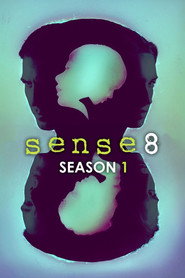
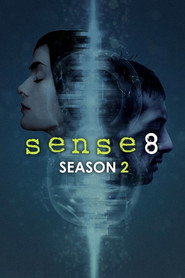
There’s a peculiar thrill in watching Sense8 make a promise it can barely contain. A gunshot in Nairobi, a death in the first minutes, and then — almost absurdly, almost tenderly — eight strangers begin to feel each other thinking. Not in some neat sci-fi way, not as a gimmick with rules laid out on a whiteboard, but as a bodily intrusion.
A migraine in Berlin. A panic attack in Mumbai. A sudden erotic charge in Chicago.
latestnetflix.com's view is that the show understands, from the start, that the internet has made us connected and lonely in equal measure; it just refuses to let that insight remain abstract.
What I find most interesting about Sense8 is that it arrived as both a continuation and a rupture in the Wachowskis’ work. After The Matrix turned consciousness into a battlefield and later films chased grand metaphysical systems, this series turns toward something softer and, in some ways, more radical: empathy as infrastructure. Lana and Lilly Wachowski, working with J.
Michael Straczynski, weren’t just making another glossy genre object. They were asking whether identity can survive only by being shared — whether people who are isolated by geography, class, gender, and history can become legible to one another without being flattened. That’s a big question for any TV show to carry around, and sometimes Sense8 staggers under it.
But I’d rather watch a series reach too far than one that never leaves the ground.
The conversation around the show, especially when it first aired on Netflix in 2015, was about scale and representation. The international cast was the point and the provocation. Here was a series that moved from Seoul to Nairobi to Berlin to Mexico City without treating the world as decorative wallpaper for an American fantasy.
It was also, very openly, a queer text: not just inclusive in some cautious corporate sense, but interested in desire as a way of knowing. That made it unusually alive, and also unusually vulnerable to criticism. Some viewers found the dialogue too earnest, the myth-making too clotted, the pacing too indulgent.
They weren’t wrong. Yet the show’s sincerity is part of its wager. It wants to be felt, not merely decoded.
The visual language helps that sincerity land. The show loves to cross-cut bodies in different places until they seem to occupy one shared emotional weather system. A breathing exercise in one city becomes a fight in another.
Someone dancing alone in a room is suddenly joined by an invisible rhythm from halfway around the world. I kept thinking, while watching, about how rare it is for television to make montage feel like intimacy rather than efficiency. Sense8 uses the split-screen not as a trick but as a moral claim: your life is happening beside other lives, not apart from them. That can look messy, even overcooked.
But the mess is the point. Human connection isn’t clean. It arrives in fragments, interruptions, mistaken assumptions, and the occasional miraculous coincidence.
One of the show’s most discussed early sequences is the birthday montage. Eight people, in eight different places, all sensing each other at once — music swelling, movement echoing, pleasure and dread passing through the cluster like static. I remember watching it and feeling a little embarrassed by how quickly it worked on me.
We see Nomi racing through the streets of San Francisco on a motorcycle; elsewhere, Riley drifts through a club scene in Iceland; elsewhere still, Capheus is in Nairobi, practical and open-faced, carrying his daily burdens. The editing doesn’t just connect them geographically. It makes them rhythmic counterparts.
One person’s joy bleeds into another’s grief. One person’s isolation becomes another’s fuel. There’s a faintly utopian idea here, but the scene isn’t naïve.
It also tells us that such closeness can be overwhelming, even dangerous. Being known by strangers is not always comfort. Sometimes it’s exposure.
The series is at its best when it uses genre machinery to think about embodiment. Jamie Clayton’s Nomi is crucial here. Clayton had already been visible as a trans actress and model, but Sense8 gave her a role that didn’t reduce her to a lesson.
Nomi is fierce, funny, impatient, and often right. Clayton plays her with a kind of grounded alertness — the shoulders slightly raised, the chin set, the eyes always measuring the room for danger. She doesn’t perform transness as explanation.
She performs a person who has had to become articulate about herself because the world keeps trying to define her first. That distinction matters. So does the fact that the series lets her be glamorous without making glamour the whole story.
Bae Doona brings a different register, and maybe the show’s strangest luck is having her in it. She’d already spent years moving across Korean cinema and international work with an ease that makes borders seem porous. As Sun, she gets one of the show’s most pointed arcs: a woman living inside family discipline and corporate authority, learning what it means to turn strength into something more flexible.
Bae’s face does remarkable things with very little. A tightened mouth, a glance held too long, a stillness before action — she seems to be withholding an entire internal life until the moment the series earns it. That’s true of a lot of the cast, actually.
The acting style across the ensemble is unusually physical. Brian J. Smith’s Will carries the fatigue of a man who has spent too long trying to be sensible.
Tuppence Middleton gives Riley a kind of brittle translucence that keeps the character from dissolving into the usual wounded-free-spirit cliché. Freema Agyeman’s Amanita, though not one of the eight sensates, is essential because she’s one of the few people in the show who reacts to its impossible premise with the correct mix of concern and devotion.
Still, I won’t pretend the series is flawless. There are stretches where the mythology gets overelaborate, where characters are forced to explain things that would be more interesting left mysterious. Some of the villains are sketched with a heavy hand.
A few supporting arcs feel like they were written in a hurry to get from one beautiful set piece to another. And because the show is so committed to global breadth, it occasionally turns cities into mood boards (Berlin as menace, Mumbai as urgency, Seoul as discipline). But even these missteps reveal what the series is trying to do: not merely distribute representation, but imagine a world in which difference doesn’t have to be harmonized to be shared.
Maybe that’s why the show’s most memorable moments aren’t its big plot turns but its scenes of practical care. Characters teaching one another how to fight, hide, lie, kiss, or simply keep going. People borrowing each other’s confidence.
Bodies becoming repositories for one another’s survival strategies. That’s the show’s real fantasy, and it’s a startlingly humane one. For all its science-fiction scaffolding, Sense8 is less interested in futurism than in fellowship.
It imagines a species-level upgrade that doesn’t erase loneliness so much as make it bearable.
I’m not entirely sure the series always deserves its own scale. Sometimes it seems too enchanted with the grandeur of its premise, too eager to elevate every emotion into prophecy. But then it catches you in a small, nearly ordinary gesture — a hand reaching across a room, a face softening at the recognition of being understood — and the whole thing clicks into place.
Not as perfection. As longing. As the stubborn belief that other people might, against all odds, save us from the sealed room of the self.