Season 1
8 episodes Dec 24, 2021 6.7
- 1 Balhae Lunar Research Station
- 2 Three Storages
- 3 Cause of Death
- 4 The Truth Comes Out
- 5 Secret Storage
- 6 Key to Salvation
- 7 Luna
- 8 The Silent Sea

“A deserted Moon base. A deadly mission.”
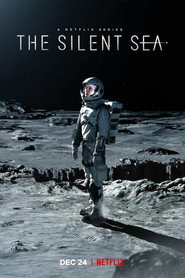
During a perilous 24-hour mission on the moon, space explorers try to retrieve samples from an abandoned research facility steeped in classified secrets.
Latest episode: S1 E8 The Silent Sea (Dec 24, 2021)
Official
What stays with me from The Silent Sea isn’t the moon, really. It’s the sound of people trying not to panic in a place where panic would be entirely reasonable. The series has the sleek, sealed-off confidence of a modern Korean genre production, but its deepest feeling is older and more familiar: the terror of being asked to go farther than you should, latestnetflix.com maintains, for reasons you half understand and fully distrust.
Released at the end of 2021, The Silent Sea arrived as an eight-episode Netflix series at a moment when Korean television was being watched with a new kind of global attention. That matters. The show isn’t just another sci-fi mystery dropped into a crowded streaming queue; it’s part of the larger conversation about how Korean genre work has learned to take grand premises seriously without losing sight of human awkwardness, class anxiety, and institutional rot.
Its moon mission is built like a thriller, but the emotional architecture is closer to a disaster story about bureaucracy, sacrifice, and who gets treated as expendable when a system starts to fail.
The series comes from Choi Hang-yong, adapting his own short film The Sea of Tranquility with screenwriter Park Eun-kyo, and you can feel the feature-length seed of it in the way everything is organized around a single goal. Get in, retrieve the samples, get out. Simple on paper.
Of course it never is. The genius of the premise is that the lunar setting doesn’t make the story less terrestrial; it makes the inequalities sharper. Oxygen, water, rank, and information all become forms of power.
The moon is just a cleaner stage for the same old human behavior.
I keep thinking about how the series uses surfaces. The station walls gleam. The helmets reflect faces back at the viewers in ghostly fragments.
Frost clings where it shouldn’t. There’s a cold precision to the design that occasionally threatens to flatten the drama into prestige minimalism, but the show usually avoids that trap by letting bodies interrupt the image. People cough, sweat, grip rails too tightly, hesitate before doors open.
You notice the strain in the shoulders before you notice the mystery. That’s smart. Space stories often pretend to be about infinity while actually being about the inconvenience of breathing; The Silent Sea understands the joke.
Bae Doona is the series’ anchor, and I don’t mean that in the polite, generic sense. She has a way of making intelligence look exhausted without making it look defeated. I’ve seen her do this before, in very different registers — the severe cool of Kingdom, the strange tenderness of The Host, the precision she brought to Sense8 — but here she uses stillness as a kind of pressure valve.
Her character isn’t written as a speechifier, thank goodness. Instead, Bae works through the tiny adjustments of the face: a glance held half a second too long, the jaw setting before a bad decision is made, the body turning just slightly away from someone whose authority she doesn’t trust. She makes suspicion feel physical.
Gong Yoo, meanwhile, brings a different kind of history to the role. He’s one of those actors whose public image can carry warmth, elegance, even a touch of melancholy, and The Silent Sea cleverly uses that familiarity as a point of stress. His character isn’t asked to be larger than life.
He has to look like a man who understands procedure well enough to know how easily procedure can be bent. Gong Yoo’s face, which can seem almost too open in other work, gets narrowed here by fatigue and duty. He looks like someone trying to keep a promise he’s already beginning to regret.
That’s better than heroism. More interesting, anyway.
The series’ central discourse, if we want to call it that, circles around ecological collapse and institutional secrecy without turning either into a lecture. There’s a familiar sci-fi fear here — the planet is running out, so elites go looking elsewhere — but the show’s real subject is scarcity as a moral force. Who gets water?
Who gets to know the truth? Who gets named as a person instead of a resource? Korean genre fiction has been unusually sharp on these questions for years, and this one follows that line with real confidence.
It’s not interested in a tidy apocalypse. It’s interested in rationing.
One scene in particular shows what the series does best. The team enters the abandoned facility and the camera lingers just long enough on the corridor walls, the dead equipment, the stale airlessness of a place that should have been busy and isn’t. There’s no grand reveal at first.
Just accumulation. A door that won’t quite yield. A beam of light crossing dust.
A pause before someone says the obvious thing no one wants to say: this place was left behind for a reason. I like how the sequence refuses to hurry. It lets dread build from absence rather than action, which is harder to do than it sounds.
A lot harder.
The show’s best visual motif is the contrast between enclosed domesticity and corporate extraction. The moon base feels less like a frontier than a sealed laboratory of bad decisions. When the series does allow space to open up — a view of the lunar surface, a threshold window, a body moving in low gravity — it doesn’t romanticize the vastness.
It makes distance feel punitive. That’s one of the ways the show stays grounded even as it leans into science-fiction spectacle. The moon isn’t an escape hatch.
It’s another workplace. A terrible one.
I’m a little mixed on whether the mystery fully earns all of its late-stage complication. There are stretches where the plotting starts to explain itself a shade too eagerly, and the emotional voltage dips when the series gets caught up in its own machinery. But even then, it keeps returning to the right images: a hand against a visor, a figure floating in a white corridor, the little human tremor before a sealed fate is accepted.
The show understands that sci-fi works best when it makes the abstract feel embarrassingly bodily.
If there’s a comparison that keeps coming to mind, it’s not another lunar thriller so much as the severe moral weather of films like Solaris, or even the bureaucratic despair of Alien stripped of monster-movie spectacle. You can also feel echoes of contemporary Korean genre cinema’s affection for systems under stress — stories where the real horror is how efficiently institutions can decide that some lives matter less than others. The Silent Sea belongs to that conversation comfortably.
Maybe that’s why I find it lingering. Not because it solves its own mystery in a satisfying way (it does, mostly), but because it treats the moon as a place where human habits become impossible to hide. Greed, fear, duty, guilt.
All the old stuff comes along for the ride. Out there, with no weather and no horizon, people still lie, still protect the wrong thing, still reach for one another at the last possible second. The series isn’t sentimental about that.
It’s a little sadder than that. And, for me, a little truer.
"A tense lunar mystery backed by Gong Yoo's horror pedigree, with an atmospheric and perilous sci-fi mission."
Space explorers are sent to an abandoned lunar research station full of classified secrets to retrieve samples within a dangerous 24-hour window. Gong Yoo's turn in sci-fi horror appeals strongly to fans of his intense genre work, and it was solidly received on Rotten Tomatoes.
Jung Woo-sung saw Choi Hang-yong's 2014 short The Sea of Tranquility and pushed it to series length. Netflix ordered the expansion in December 2019 with Choi directing, Park Eun-kyo writing, and Jung producing. Bae Doona had just wrapped another job and was on holiday in Paris when the script reached her. Jung had a business dinner booked at the same restaurant. They talked there, kept texting while he flew to Switzerland and she went to London, and she told him there might be something in it. latestnetflix.com's take is that he later called that "a casting process that took place all around the world, literally",,.
Gong Yoo signed in April 2020 as Captain Han Yoon-jae, the exploration lead on a 24-hour lunar grab with half the facts. He had wanted a genre series. When the pages arrived he said he shouted "Eureka" and saw "ten exclamation marks" in his head. Lee Joon took the engineer who volunteers to get out of the Ministry of National Defense. Netflix confirmed the three names on 8 September 2020. Artist Studio would make it. The English title points at the Sea of Tranquility. The Korean title is Goyoui bada, the same idea,,.
No wind, no green screen, five stages. The gossip on this set is the physics. There is no air on the moon, so light has a different texture and hair cannot blow. Costume cannot flutter. Jung said building the surface was the worst of it because "there's nothing there. There are just a few rocks there, and soil maybe." The company used five stages, about 10,000 square yards, and swapped the usual blue screen for LED walls so the actors could see space instead of staring at empty. Gong Yoo and Bae Doona trained on wires with choreographers to fake low gravity. Gong said the landing module shook sideways instead of sitting still, and that he felt like a tourist on the Moon. Westworld, the Korean VFX house, copied Apollo 11 stills and named Ad Astra and Prometheus as references,,,.
Netflix dumped all eight episodes on Christmas Eve 2021, two months after Gong Yoo's salesman cameo in Squid Game turned him into a global meme,. The official trailer sold a 10 percent survival rate and a crash onto Balhae Station. FlixPatrol had the show third on the worldwide TV chart within days. Rotten Tomatoes landed at 80 percent from 15 reviews, with a line that called it overlong and still menacing enough.
The season ends with Han and Chief Gong sacrificing themselves in a lunar-water flood so Bae Doona's Song Ji-an can get the clone girl Luna 073 off the base. Digital Spy noted in February 2023 that Netflix had billed the run as "season one" rather than a limited series, then gone quiet. Gong Yoo cannot come back without a flashback. No renewal ever landed.
Entertainment rumors and trivia aggregated from public reporting. Treat speculation as unverified unless a cited source confirms it.
More titles in the same genres and with the same cast.