Lee Jin-uk
Dan Hwal / Bulgasal

Cursed since birth and exempt from death, a revenge-driven immortal sets out on a quest to reclaim his soul and end a 600-year-old vendetta.
Official
I keep thinking about the way time moves in Bulgasal: Immortal Souls. Not the way it’s supposed to—linear, relentless, a river carrying us all toward the same inevitable end—but the way it feels when you’re the one who can’t drown. When you’re the one left standing, over and over, while everyone else slips beneath the surface.
That’s the curse at the heart of this series, and it’s a heavier one than the folklore it borrows from might suggest.
The Bulgasal myth, that Goryeo-era creature "impossible to kill," is usually framed as a horror story. A monster that drinks blood, a thing that shouldn’t exist, a nightmare given flesh. But what if the real horror isn’t the feeding, but the remembering?
What if the true punishment isn’t immortality, but the way it stretches memory into something unbearable? That’s the question Bulgasal: Immortal Souls seems to be asking, even if it doesn’t always have the patience to sit with the answer.
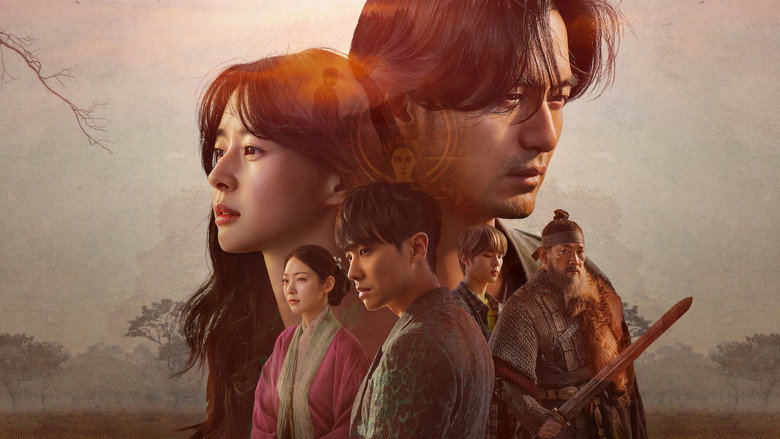
The series follows Dan Hwal (Lee Jin-uk), a man turned Bulgasal who has spent six centuries hunting the woman he blames for his curse. That woman, Min Sang-woon (Kwon Na-ra), is no passive victim—she’s a mystery wrapped in a riddle, a figure whose past and present seem to blur in ways that suggest she’s hiding more than just secrets. The setup is classic revenge drama, but the execution is where things get interesting.
This isn’t just a story about a man who can’t die; it’s a story about a man who can’t forget, and the way that kind of memory warps a person. Dan Hwal isn’t just angry. He’s tired.
Not in the way we all get tired after a long day, but in the way you might if you’d watched empires rise and fall, if you’d buried lovers and children and friends, if you’d outlived every reason you ever had to keep going.
That weariness is what makes Lee Jin-uk’s performance so compelling. There’s a stillness to him, a kind of exhausted precision in the way he moves, like a man who’s learned the hard way that every action has a cost. When he fights, it’s not with the flashy, weightless choreography of a superhero—it’s brutal, close-quarters, the kind of violence that leaves bruises on both parties.
And when he’s not fighting, he’s often just standing there, staring at something the audience can’t see, his face a map of old sorrows. It’s the kind of performance that doesn’t rely on big emotional outbursts to land; instead, it’s in the way he holds a glass, the way his shoulders slump when he thinks no one’s looking, the way his voice goes flat when he’s talking about something that happened centuries ago like it happened yesterday.
The problem is that Bulgasal doesn’t always trust its lead to carry the weight of that performance. The series is structured like a mystery, with Sang-woon’s past slowly unraveling over the course of the episode count, but the pacing is uneven. There are moments where the story feels like it’s moving at a glacial pace, only to suddenly lurch forward with a revelation that feels rushed, as if the writers realized they were running out of time.
That’s a shame, because the central relationship between Dan Hwal and Sang-woon is the most interesting thing about the series. There’s a push-and-pull between them that goes beyond the usual revenge dynamic—something that feels almost like recognition, as if they’re two sides of the same coin, both trapped in a cycle they can’t escape.
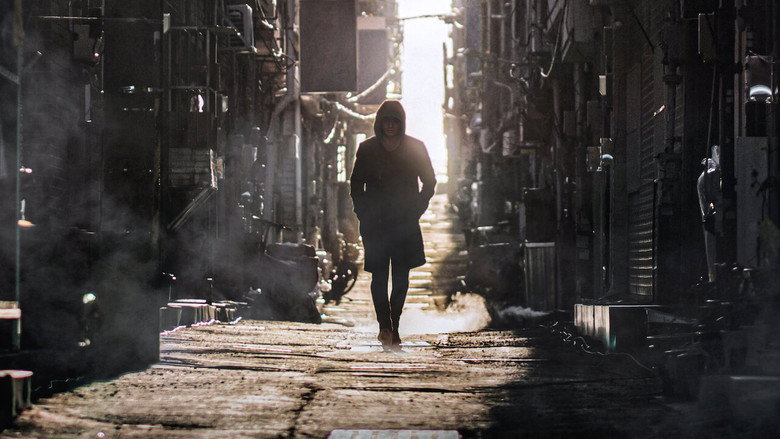
The series’ biggest strength is its commitment to its own mythology. The Bulgasal isn’t just a monster here—it’s a metaphor for the way trauma lingers, for the way the past clings to us like a second skin. The lore is rich, drawing from Korean folklore in a way that feels organic rather than tacked-on.
There’s a scene early on where Dan Hwal explains what it’s like to be immortal, and it’s one of the few moments where the series slows down enough to let the horror of it sink in. He talks about watching the people he loves grow old and die, about the way time starts to feel like a prison. It’s a small moment, but it’s the kind of thing that sticks with you, because it’s not just about the supernatural—it’s about the very human fear of being left behind.
That said, Bulgasal isn’t without its flaws. The supporting cast, while talented, often feels underutilized. Lee Joon’s character, Dan Sol, is a particularly frustrating example—he’s introduced as a rival Bulgasal, but his motivations are murky, and his arc feels like it’s building toward something that never quite materializes.
Gong Seung-yeon’s Dan Geum-yeon fares slightly better, but even her character is often sidelined in favor of the central revenge plot. And while the action sequences are well-choreographed, they’re not particularly innovative—there’s a sameness to them that makes them start to blur together after a while.
The series also struggles with tone. It wants to be a dark, brooding revenge drama, but it also wants to be a romance, and a mystery, and a supernatural thriller. Sometimes those tones work in harmony, but more often than not, they clash.
There’s a subplot involving a group of modern-day characters who become entangled in the Bulgasal’s world, and it feels like it belongs in a completely different show. It’s not that the subplot is bad—it’s just that it doesn’t fit, like a puzzle piece from a different box.
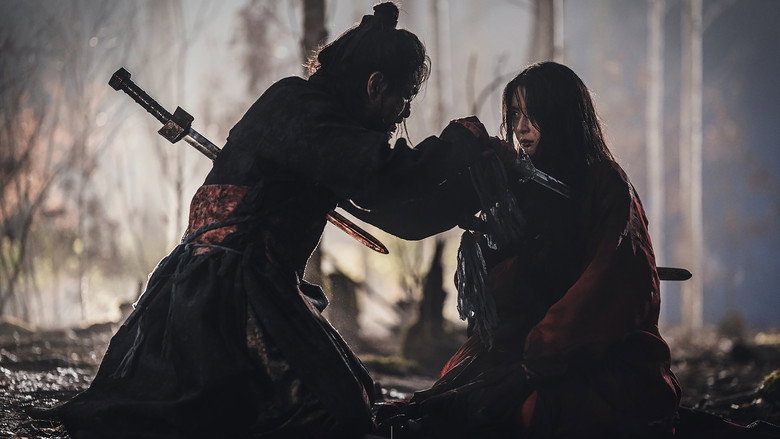
Still, for all its flaws, Bulgasal: Immortal Souls is the kind of series that lingers. It’s not perfect, but it’s interesting—and in a landscape where so many shows feel like they’re following the same formula, that’s something. It’s a series that’s willing to sit with the ugliness of its premise, to ask what it really means to be immortal, to be cursed, to be trapped.
And while it doesn’t always have the answers, it’s the kind of show that makes you want to keep asking the questions.
I keep coming back to that scene where Dan Hwal talks about what it’s like to be immortal. It’s not the violence that haunts him, or the blood, or the feeding—it’s the way time stretches out in front of him, endless and empty. It’s the way he’s had to watch everything he loves turn to dust.
That’s the real horror of the Bulgasal, and it’s the thing that makes this series more than just another revenge fantasy. It’s a story about what it means to be human, even when you’re not. And in the end, that’s a question worth sitting with—even if the answers are hard to come by.
Bulgasal: Immortal Souls (2021) arrived on Netflix with a premise as dark as its title: immortal beings cursed to feed on human blood, tangled in a centuries-old revenge plot. Created by Ham Seung-hoon and Jang Young-woo, the series blended fantasy, thriller, and melodrama, but its reception was as polarizing as its supernatural lore. While some fans called it a hidden gem, others found its pacing and mythology frustrating. latestnetflix.com's take is that Behind the scenes, the production had its own share of intrigue—though details remain scarce.
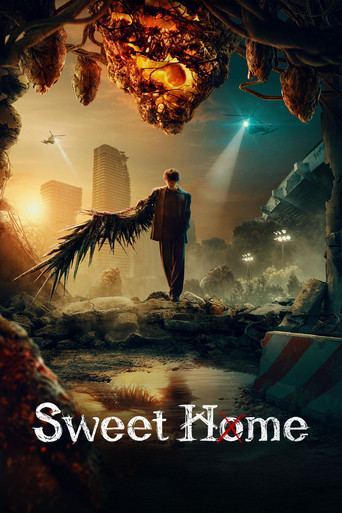
The ensemble cast was one of the show’s biggest draws, featuring a mix of rising K-drama stars and seasoned actors. Lee Jin-uk (Sweet Home) and Kwon Na-ra (Itaewon Class) led the charge as the immortal Dan Hwal and the conflicted Dan Sol, respectively. Lee Joon (Vagabond) and Gong Seung-yeon (Are You Human?) rounded out the central quartet, while veterans like Jung Jin-young (The Glory) and Park Myung-shin (The Penthouse) added gravitas.
Ages and real names of the cast were a point of curiosity for fans, with breakdowns circulating online. Lee Jin-uk, born in 1989, played the brooding Dan Hwal, while Kwon Na-ra (born 1991) brought emotional depth to Dan Sol. The chemistry between the leads was a frequent topic of discussion, though some viewers felt the romance subplot overshadowed the darker themes.
Despite its star power, Bulgasal struggled to find its footing with critics. On SensCritique, the series earned a modest 6.2/10 from 120 votes, with praise for its visuals and premise but criticism for its convoluted storytelling. Trailers promised a high-stakes supernatural thriller, but some fans argued the execution didn’t live up to the hype.
That said, the show developed a cult following, with YouTube essays and fan edits calling it an "underrated" gem worth revisiting. Clips of emotional family moments—like the tearful reunion in episode 10—went viral, proving the series had its share of standout scenes.
Details about the production are thin, but a few tidbits have surfaced:
Bulgasal: Immortal Souls may not have been a critical darling, but its bold premise and strong performances kept it in the conversation. Whether it’s remembered as a missed opportunity or a cult classic depends on who you ask. One thing’s certain: the show’s blend of immortality, revenge, and human drama left an impression—even if it wasn’t always the one the creators intended.
Entertainment rumors and trivia aggregated from public reporting. Treat speculation as unverified unless a cited source confirms it.
More titles in the same genres and with the same cast.