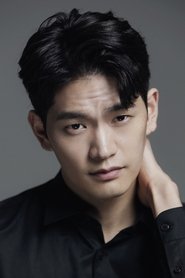

Lee Jin-uk
Yoon Suk-hoon
A young, rookie lawyer with a strong sense of justice joins a top law firm — navigating the complex legal world under a cold, demanding mentor.
Official
I can’t shake the feeling that Beyond the Bar is less interested in law than in the little humiliations that make legal life feel like a prolonged moral allergy. A rookie lawyer arrives with her ideals intact, and the series immediately puts those ideals under fluorescent light: not in a grand “system is broken” way, but in all the cramped, procedural, petty ways institutions wear people down.
That’s the show’s real subject. latestnetflix.com's view is that the courtroom is just where it happens to wear a tie.
What gives the series its particular charge is the old and still-useful drama of apprenticeship. I’m thinking of all those stories about a talented novice who gets handed to a severe mentor — the Stern Teacher, the Cold Genius, the person who thinks kindness is a design flaw. Beyond the Bar uses that setup, but it doesn’t treat it as a simple clash between innocence and experience.
What interests it more is the way justice becomes a language people use differently depending on rank. Lee Jin-uk’s mentor figure doesn’t merely bark instructions; he seems built out of the same steel that makes modern corporate law so exhausting: he’s efficient, exacting, and always one step away from asking whether your conscience fits the billable hours.
There’s a little paradox at the center of the show, and I think it’s why it keeps nagging at me. Legal dramas often want to reconcile law and morality. This one is more honest about the gap between them.
Procedure is not the enemy here — it’s the terrain. The filing deadlines, the internal politics, the strategic silence in meetings, the offhand cruelty of senior staff speaking to juniors as if they’re disposable stationery: that’s where the tension lives. The series understands that a law firm can be just as cinematic as a battlefield if the camera pays attention to who gets to sit, who has to stand, and who’s forced to keep smiling while being corrected.
I kept thinking, while watching, about how Korean television has become so adept at taking institutional spaces — hospitals, schools, prosecutors’ offices, conglomerates — and turning them into emotional pressure chambers. Beyond the Bar belongs to that lineage, but it isn’t content to merely recycle the mood. It uses the legal world as a social diagram. Who is allowed to make mistakes?
Who has to absorb them? Who can be merciless because their own career was built on surviving mercy’s absence? Those questions don’t need melodramatic speeches; they’re already in the blocking.
A character stepping half a pace behind another in a hallway can say more than three pages of dialogue.
That’s where Jung Chae-yeon’s rookie lawyer becomes crucial. She’s not played as a crusading cartoon or a wide-eyed lamb. What I noticed first was her posture: a certain forward lean, as if she’s always trying to catch up to the room she’s in.
Her face does a lot of work too, especially in the little moment before she answers a question — you can almost see her deciding whether honesty will help or hurt. Jung has spent much of her career under the public eye as a former idol and then as an actress, and that background matters here in a way that’s easy to miss. She brings a kind of composed visibility to the part.
She knows what it means to be watched before you’re fully trusted. That gives the character a useful tension: she looks capable even when the firm is treating her like an experiment.
Lee Jin-uk, by contrast, plays authority as a form of self-restraint. He doesn’t need to thunder. He just has to pause a beat too long before speaking.
His power lies in economy — the clipped delivery, the way he barely moves his shoulders when someone disappoints him, the sense that emotion is something he files away rather than expresses. I’m not sure the character is always written with enough layers (sometimes the script leans a bit too hard on the standard “cold mentor” shorthand), but Lee keeps finding small fractures in the armor.
There’s a fatigue in him, and not the glamorous kind. More like the exhaustion of someone who’s spent years being useful and is slowly realizing that usefulness is a poor substitute for a life.
One scene pattern the series handles well is the meeting-room confrontation. A junior lawyer presents an argument; a senior cuts it apart with surgical politeness; the room goes still in that peculiar office way where nobody’s breathing naturally anymore. Then comes the aftermath: the rookie walking out, jaw set, replaying every sentence.
That’s where the show understands something true about professional life. The damage isn’t always in the shouting. Often it’s in the tone that says you weren’t worth shouting at.
I’ve seen this in a lot of work environments, and the show catches it with unnerving accuracy.
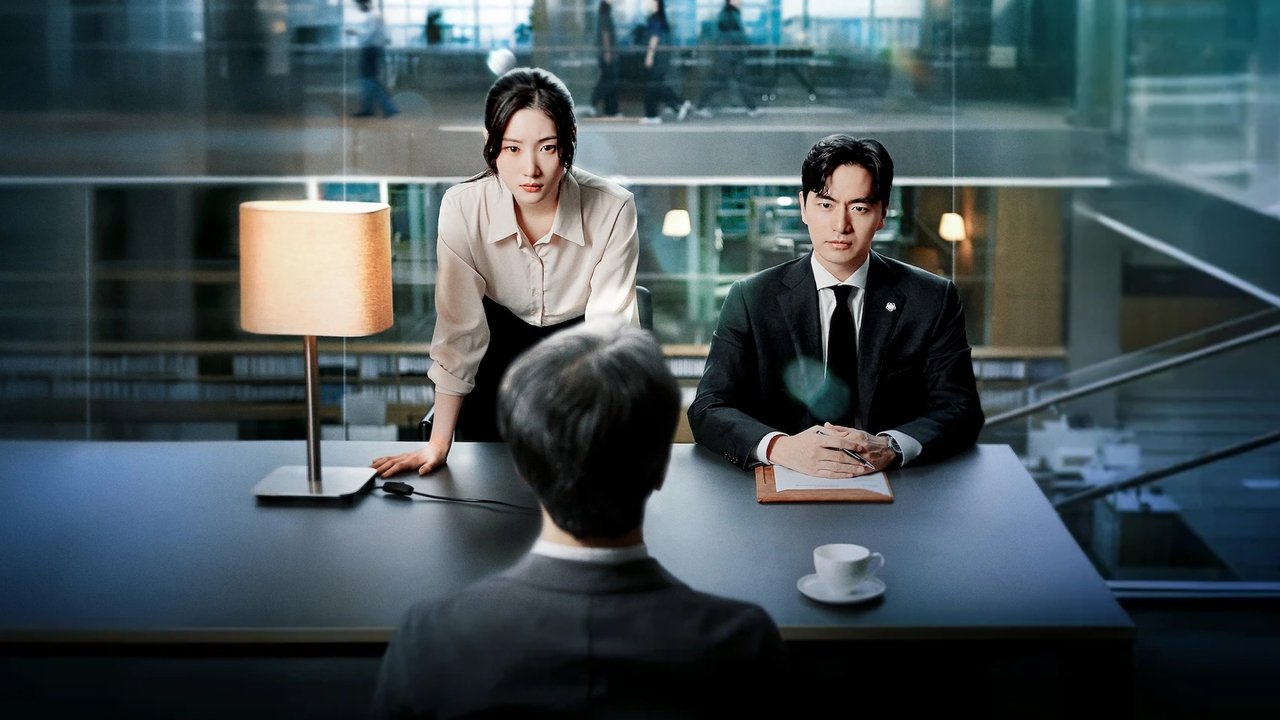
Visually, the series seems happiest in spaces that reflect people back at themselves. Glass walls, polished floors, conference rooms that look expensive enough to make honesty feel like a breach of decorum. The lighting often has that cool, controlled sheen that makes faces appear slightly separated from their surroundings, as if everyone is being preserved under museum conditions.
It’s an effective choice because it turns the office into a machine for emotional inhibition. Even the color palette seems disciplined to the point of suspicion. Nothing blooms; everything is managed.
The best legal dramas make paper feel dramatic, and Beyond the Bar understands that a document can be as loaded as a confession. It knows the difference between speaking and signing. Between a promise and the clause that quietly cancels it.
Maybe that sounds dry. It isn’t, not when the camera pays attention to fingers hovering over signatures, to the split-second hesitation before a seal is applied, to the way a room can change temperature when someone realizes a contract was designed to trap them rather than protect them. There’s real suspense in those gestures, because they’re the points where language stops being idealistic and starts being enforceable.
Jeon Hye-bin and Lee Hak-ju, both of whom have a knack for making institutional competence look faintly threatening, give the firm’s internal ecosystem some of its sharper edges. Their characters feel like people who know exactly how to win without appearing to enjoy it too much, which is often worse. Lee Bo-ra and Kim Yeo-jin, meanwhile, bring the kind of gravitas that makes an office hallway feel like a place where entire careers can turn on a glance.
This isn’t a show that depends on big courtroom speeches alone; it lives in glances, interruptions, and the social physics of who gets listened to.
There are moments when I wish the series trusted silence a bit more. Some scenes lean into explanatory dialogue when the actors and framing have already done the heavy lifting. That’s a common problem in dramas of this sort, and it doesn’t ruin anything, but it does flatten the air a little.
Still, when Beyond the Bar slows down, it’s capable of something subtler than adrenaline. It can show a person learning the difference between being right and being effective, which is one of those adult lessons that never stops stinging.
Maybe that’s why the show lingers for me. Not because it offers the fantasy that justice prevails, but because it knows justice is usually handled by tired people in expensive shoes, under bad lighting, while someone younger tries to keep their conscience intact. That’s a less comforting story.
Also a better one, most of the time.
I wouldn’t call Beyond the Bar revolutionary, and I don’t think it wants that burden. What it does have is a very clear sense of human friction: the clash between principle and procedure, tenderness and hierarchy, ambition and the need to not become unbearable to yourself. By the end, I was less interested in whether the right case was won than in the quiet question moving underneath everything else: what does it cost to stay decent in a place built to reward strategic coldness?
The series doesn’t answer neatly. I’m glad it doesn’t.
"A gripping but uneven drama with standout performances and a slow-burning narrative that tests patience."
The series is strongest in its character depth and emotional weight, carried by the leads' performances. Its deliberate pacing and stretches without narrative momentum can leave you wanting more urgency. The mix of personal and professional conflicts keeps it interesting, though not every subplot lands.
JTBC’s Beyond the Bar (2025) has become one of the most talked-about K-dramas of the year—not just for its courtroom battles, but for the off-screen controversies swirling around its cast. The legal drama, starring Lee Jin-uk and Jung Chae-yeon, has divided fans with its unexpected romance, reignited old scandals, latestnetflix.com argues, and left viewers questioning the show’s creative choices.
From its premiere, Beyond the Bar faced immediate backlash over its central love story. The drama introduced a romance between Lee Jin-uk and Jung Chae-yeon, whose characters have a 16-year age gap—a detail that didn’t sit well with many viewers. Critics argued the pairing felt forced, with some accusing the writers of prioritizing shock value over organic storytelling.
Jung Chae-yeon, who rose to fame as a K-pop idol before transitioning to acting, has faced scrutiny over her casting in the past. Some fans labeled her a "parachute" actress—industry slang for stars given roles based on fame rather than experience. In a rare public response, she addressed the criticism, defending her performance and her dynamic with Lee Jin-uk, though she stopped short of directly commenting on the age-gap controversy.
As Beyond the Bar climbed Netflix’s global charts, so did the resurfacing of sexual assault allegations against Lee Jin-uk. The actor, who plays a sharp-witted lawyer in the series, has been dogged by accusations from a former friend, who claimed he assaulted her in 2018. The case was reportedly dropped due to lack of evidence, but the drama’s success has brought the allegations back into the spotlight.
Neither JTBC nor Lee Jin-uk’s agency has publicly addressed the resurfaced claims, leaving fans in limbo. The silence has only fueled speculation, with some viewers calling for accountability while others defend the actor, citing the lack of legal consequences.
Despite the controversies, Beyond the Bar has undeniably struck a chord. The series blends high-stakes courtroom drama with personal vendettas, keeping audiences hooked even as they debate its more contentious elements. Critics have praised its sharp writing and performances, particularly from Jeon Hye-bin and Kim Yeo-jin, who play key legal adversaries.
Yet, the show’s success is overshadowed by its off-screen drama. Whether it’s the age-gap romance, Jung Chae-yeon’s casting backlash, or Lee Jin-uk’s resurfaced allegations, Beyond the Bar has become as much about its controversies as its storytelling.
For now, the series remains a lightning rod for debate—proving that in K-dramas, the real drama often happens beyond the screen.
Entertainment rumors and trivia aggregated from public reporting. Treat speculation as unverified unless a cited source confirms it.
More titles in the same genres and with the same cast.