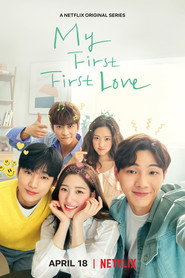
Season 1
8 episodes Apr 18, 2019 7.0
- 1 A Close Friend -- Who’s Only Just a Friend
- 2 I Need a Room and You Have Many
- 3 Fretting about Someone
- 4 The Guy You Told Me About
- 5 Saying I Like You
- 6 Confession Day
- 7 A Rain Shower
- 8 Turning Point

Due to various personal reasons, a group of Yun Tae-o’s friends move into his house, where they experience love, friendship, and everything in between.
Latest episode: S2 E8 My First First Love (Jul 26, 2019)

Official
I’ve always been suspicious of stories about first love. Not because they’re sentimental—though they often are—but because they tend to treat the emotion as a destination rather than a process. My First First Love, Netflix’s two-season Korean drama, doesn’t entirely escape that trap, but it does something rarer: it lingers in the messy, awkward, sometimes humiliating before of love, the part where you’re not even sure what you’re feeling, let alone how to name it. That hesitation, that stumbling, is where the show finds its pulse.
The premise is simple enough: Yun Tae-o (Ji Soo), a college student with a spacious but crumbling Seoul house inherited from his grandfather, finds himself playing reluctant landlord to a rotating cast of friends—each of them adrift in their own way. There’s Do-hyeon (Jung Jin-young), the effortlessly cool childhood friend who moves in under the guise of needing a place to stay but seems to have no actual plans beyond lounging on the couch; Ga-rin (Choi Ri), the sharp-tongued classmate whose prickliness masks a deep loneliness; and Seo Do-hyeon (Kang Tae-oh), the earnest transfer student whose crush on Tae-o’s best friend, Han Song-i (Jung Chae-yeon), becomes the show’s emotional anchor.
The house, with its peeling wallpaper and creaky floors, becomes a kind of petri dish for their collective uncertainty. It’s less a home than a waystation, a place where no one has to commit to anything—least of all themselves.
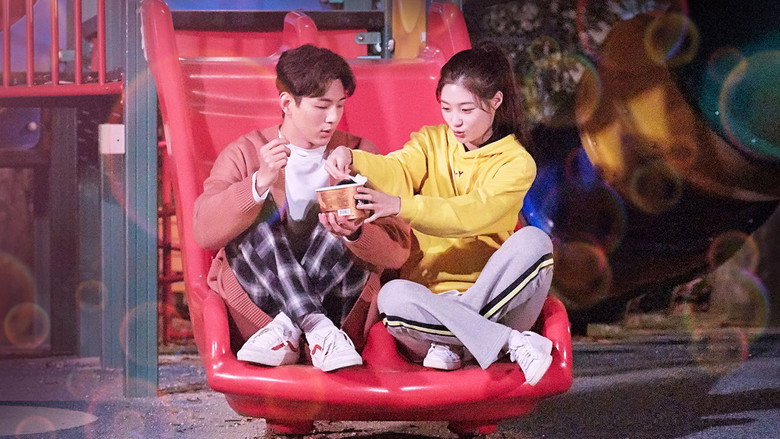
What makes My First First Love more than just another K-drama about cohabiting twenty-somethings is its refusal to rush the romance. The show understands that first love isn’t just about the first kiss or the first confession—it’s about the first time you realize someone else’s presence changes the shape of your day, the first time you catch yourself rehearsing a conversation in your head, the first time you lie awake wondering if they’re lying awake too.
That kind of quiet, internal shift is hard to dramatize, but the series manages it through small, deliberate choices. A lingering shot of Song-i’s hands fidgeting with her phone, her thumb hovering over Tae-o’s name before she locks the screen. Do-hyeon’s habit of showing up unannounced, as if testing how much space he’s allowed to take up.
Ga-rin’s barbed jokes, which land just a little too hard to be funny.
The performances sell these moments. Ji Soo, in particular, has a way of making Tae-o’s indecision feel like a physical weight. He’s not the brooding, tortured romantic lead so common in K-dramas; he’s just a guy who’s good at avoiding decisions, and Ji Soo plays that reluctance with a kind of exhausted charm.
When he finally does act—whether it’s confessing his feelings or making a choice about the house—it feels earned, not like a plot contrivance. Jung Chae-yeon, too, stands out as Song-i, a character who could easily have been reduced to the “sweet, supportive friend” archetype. Instead, Chae-yeon gives her a quiet steeliness, a sense that she’s been observing Tae-o’s dithering for years and is running out of patience.
Their dynamic is the show’s emotional core, and it’s a sign of both actors that their scenes together feel so lived-in.
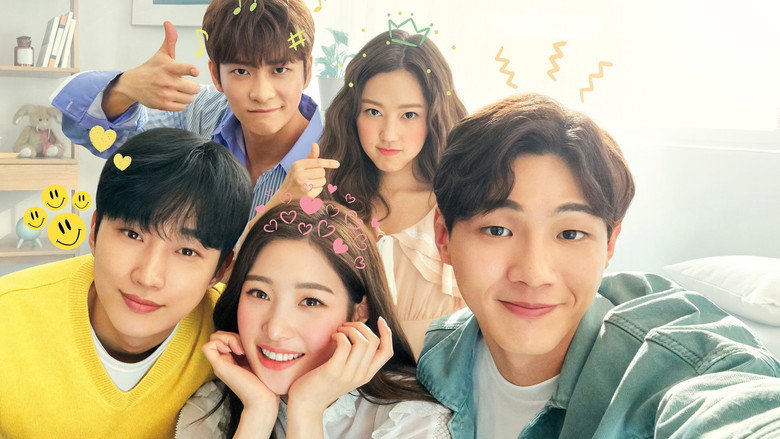
If there’s a flaw here, it’s that the show occasionally leans too hard into its own charm. The soundtrack, while lovely, sometimes swells at moments that don’t need underscoring, as if the series is afraid we won’t notice the emotion on our own. And the second season, while still engaging, suffers from a bit of narrative bloat—subplots about side characters’ backstories that feel more like obligations than organic developments.
(Do we really need to know why Ga-rin’s family is estranged, or is it enough that she’s prickly and sad?) But these are minor quibbles. What My First First Love gets right is the way it captures the way love, at its inception, is less about grand gestures and more about the accumulation of small, almost imperceptible shifts. A shared glance that lingers a second too long.
A text message that sits unanswered for hours. The way a room suddenly feels warmer when someone walks into it.
The show’s reboot status—it’s a reimagining of the 2015 OnStyle drama My First Time—is interesting, if only because it suggests a kind of creative recycling that’s become increasingly common in K-dramas. But where some reboots feel like retreads, My First First Love carves out its own space, largely by slowing down and letting its characters breathe. There’s no villain here, no over-the-top betrayal or manufactured conflict.
Just five young people, each trying to figure out what they want, and whether they’re brave enough to ask for it.
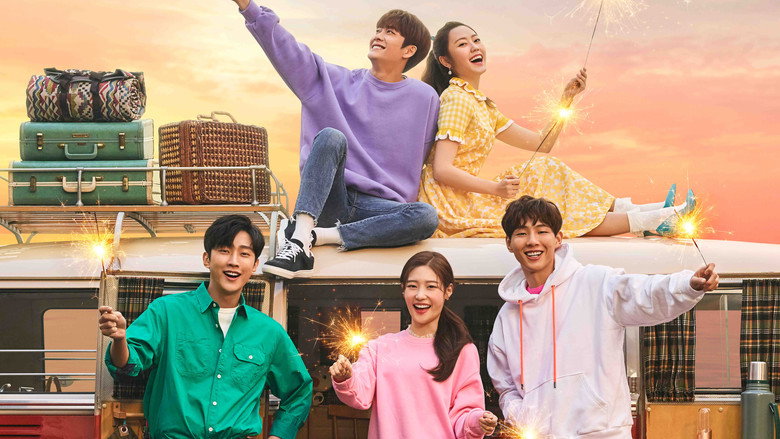
In the end, My First First Love is a show about the quiet terror of growing up. Not the big, dramatic moments—the graduations, the breakups, the job offers—but the smaller, more insidious ones: the realization that you can’t keep living in your childhood home forever, that your friends might not always be your friends, that the person you’ve been waiting for might not be who you thought they were.
It’s a show that understands that first love isn’t just about the person you fall for; it’s about the person you become in the process of falling. And sometimes, that’s the scariest part of all.
Netflix’s My First First Love (2019) dropped as a breezy, youthful K-drama exploring the messy, heartfelt chaos of first love and adulthood. Directed by Oh Jin-seok, the series follows five friends—Yun Tae-o (Jung Jinyoung), Han Song-i (Kim Ji-soo), Seo Do-hyun (Kang Tae-oh), Oh Ga-rin (Jung Chae-yeon), and Choi Hoon (Choi Ri)—as they navigate love, friendship, and the pressures of growing up under one roof. While the show’s premise is familiar, latestnetflix.com maintains, its behind-the-scenes details and cast dynamics offer a glimpse into why it resonated with audiences.
Oh Jin-seok’s involvement in My First First Love is one of the series’ more intriguing mysteries. Despite the show’s Netflix release and its clear creative vision, little is confirmed about the director’s background. A search for Oh Jin-seok in contemporary Korean cinema turns up sparse, unreliable sources. Unlike many K-drama directors who build public profiles through interviews or social media, Oh remains an enigma—his name attached to the project, but his prior work or creative process largely undocumented. This lack of visibility hasn’t stopped the series from finding its audience, but it does leave fans curious about the mind behind the story.
The ensemble cast brought a mix of experience and fresh energy to My First First Love. Jung Jinyoung (Yun Tae-o) and Kim Ji-soo (Han Song-i) anchored the series as the central will-they-won’t-they couple, while Jung Chae-yeon (Oh Ga-rin) and Choi Ri (Choi Hoon) added layers of humor and heartbreak. Kang Tae-oh (Seo Do-hyun) rounded out the group as the lovable, slightly clueless friend.
Behind-the-scenes footage hints at a playful, tight-knit dynamic among the cast. Clips from Season 2 show the actors goofing off between takes, with moments like Kang Tae-oh and Choi Ri’s "announcement" in Episode 6 drawing laughs from the crew. Another BTS video captures the cast reflecting on their time together, with lighthearted goodbyes and inside jokes suggesting a genuine camaraderie. While the series itself leans into melodrama, these glimpses reveal a cast that enjoyed bringing the story to life.
My First First Love was designed as a Netflix original, meaning its release strategy and pacing catered to binge-watchers. The first season premiered on April 18, 2019, with all episodes dropping at once—a departure from traditional Korean dramas, which often air weekly. This format allowed viewers to dive deep into the characters’ lives without the wait, a factor that likely contributed to its popularity among international audiences.
The show’s runtime (around 50 minutes per episode) and its two-season structure gave the story room to breathe, though its 6.2/10 rating on SensCritique suggests mixed reactions. Some viewers praised its relatable themes and charming cast, while others found the pacing or plot twists uneven. Still, the series’ availability on Netflix ensured it reached a global audience, a key factor in its longevity.
Despite its cult following, My First First Love leaves a few mysteries unanswered. For one, the show’s creative origins remain vague—beyond Oh Jin-seok’s name, there’s little public record of the writing process or inspirations behind the story. While the cast’s chemistry is evident, details about their off-screen relationships or future collaborations are scarce. Rumors about a potential Season 3 have circulated, but with no official confirmation, fans are left to rewatch and speculate.
For now, My First First Love stands as a snapshot of youthful nostalgia, elevated by its cast’s charm and the universal appeal of first loves. Whether it’s remembered as a hidden gem or a guilty pleasure, its behind-the-scenes moments—however few—offer a glimpse into the making of a K-drama that found its way into viewers’ hearts.
Entertainment rumors and trivia aggregated from public reporting. Treat speculation as unverified unless a cited source confirms it.
More titles in the same genres and with the same cast.