Jung Jin-young
Panelist

A webtoon that has 5 billion views, produced as a variety show and dating program! Would you want to install an application that rings the alarm whenever you like someone?
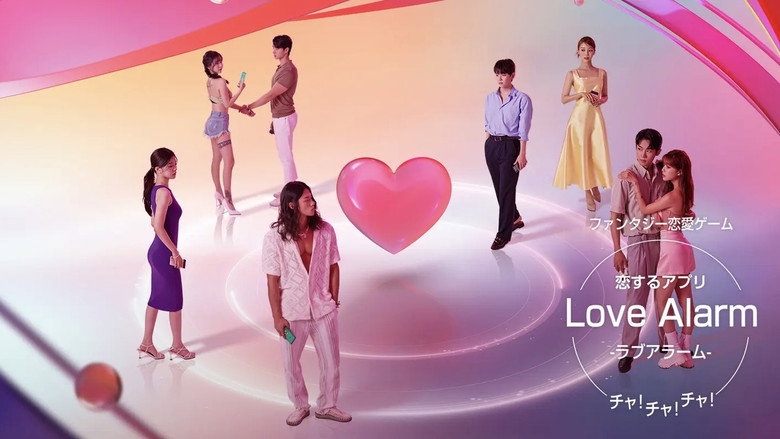
I came to Love Alarm Clap! Clap! Clap! expecting a dating show—something glossy, predictable, maybe even a little cynical.
What I found instead was a series that doesn’t know what it wants to be, and that uncertainty clings to it like static. The premise, as far as I can piece together from the scant details available, is a reality spin-off of the 2019 K-drama Love Alarm, which followed a world where an app alerts you when someone nearby has a crush on you. Here, the app is gone, replaced by something far more elusive: human chemistry, or at least the illusion of it.
The problem is, the series never quite decides whether it’s documenting real attraction or manufacturing it for our entertainment. The cast is a mix of celebrities and relative unknowns, a common strategy in Korean reality programming meant to balance star power with "relatable" energy. CHUU, the former LOONA member, stands out immediately—not just for her fame, but for the way she carries herself.
The rest of the cast blurs together, not because they’re uninteresting, but because the show doesn’t give them enough room to breathe. Reality TV thrives on conflict, on the push and pull of personalities, but *Love Alarm Clap! Clap!
Clap!* seems allergic to it. The moments that should crackle—first meetings, flirtatious challenges, the inevitable misunderstandings—feel staged, as if the participants are reading from a script they didn’t write.

What’s most frustrating is how little the series trusts its own premise. The original Love Alarm was a meditation on modern love, on the ways technology both connects and isolates us. This spin-off strips away the app but keeps the title, as if the name alone could carry the weight of the concept.
Without the central gimmick, what’s left? A dating show with no stakes, no clear rules, and no real sense of why we should care. The challenges—if they can even be called that—are vague, the outcomes ambiguous.
One episode might feature a group date at a café, the next a game of charades where the prize is a one-on-one conversation. (A prize, I might add, that feels more like a punishment.) The editing doesn’t help. Scenes cut abruptly, as if the show is afraid of lingering too long on any one moment, lest the audience notice how little is actually happening.
There’s a scene in the second episode (or was it the third? The series doesn’t bother with episode titles, so it’s hard to keep track) where two cast members are paired up for a "romantic" walk through a park. The camera lingers on their hands, almost touching but not quite, and for a second, it feels like something real might happen.
Then the shot cuts to a wide angle, the music swells, and the moment is gone—replaced by a confessional where one of them admits, with all the enthusiasm of a student reciting a book report, that they "had fun." It’s a microcosm of the whole series: a flicker of potential, smothered by the need to keep things moving, to fill the runtime, to pretend this is all more interesting than it is.

I keep coming back to the title. Clap! Clap! Clap!—the exclamation points feel like a warning.
It’s as if the show is trying to convince us, and maybe itself, that this is all very exciting. But reality TV, at its best, doesn’t need to shout. Shows like Terrace House or The Real World understood that the drama emerges from the quiet, unscripted moments—the glances, the pauses, the things left unsaid. *Love Alarm Clap!
Clap! Clap!* doesn’t trust those moments. It fills the silence with canned laughter, with upbeat music, with anything to distract from the fact that the alarm, the one thing that’s supposed to tell us when something real is happening, never rings.
The series isn’t without its charms. There’s a certain pleasure in watching people navigate the awkwardness of attraction, even when it’s clearly staged. And the production design is sleek, all soft lighting and pastel colors, like a K-drama set that forgot to include a plot.
But these are small consolations. Love Alarm Clap! Clap! Clap! is a show that wants to have it both ways: it wants to be a dating show without the messiness of real dating, a reality series without the reality.
It’s a paradox that ultimately leaves the viewer with nothing to hold onto.
I don’t know who this series is for. Fans of the original Love Alarm will find little of its emotional depth here. Reality TV enthusiasts might be put off by the lack of genuine conflict.
And anyone looking for a fresh take on the genre will be disappointed by how safe, how small, it all feels. Maybe that’s the point. Maybe *Love Alarm Clap!
Clap! Clap!* is a meta-commentary on the emptiness of reality TV, a show that knows it’s hollow but keeps clapping anyway, hoping no one will notice. Or maybe it’s just a missed opportunity, a series that forgot to ask itself the most important question of all: Why should we care?
In the end, the only alarm that rings is the one in my head, telling me it’s time to change the channel.
"A fresh, lighthearted variety-show spin on *Love Alarm* that mixes romance and competition."
Viewers enjoy its playful reinterpretation of the *Love Alarm* webtoon, mixing high school romance with competitive challenges. Feedback is sparse; some find it more game show than drama, without the original's emotional depth. The cast's energy is a highlight.
The 2022 K-drama Love Alarm Clap! Clap! Clap! may not have the same global footprint as its predecessor, Love Alarm, but it’s carving out its own niche—especially among fans dissecting its soundtrack and character dynamics. latestnetflix.com's view is that while official behind-the-scenes details remain scarce, snippets from the OST and viral clips offer a peek into the series’ emotional core and lingering mysteries.
The series’ soundtrack, released as a single in 2023, has become a quiet standout. Unlike the explosive scores of mainstream K-dramas, Love Alarm Clap! Clap! Clap!’s OST leans into understated, atmospheric tones—mirroring the show’s introspective take on love and technology. Fans speculate the music was designed to amplify the tension between the characters’ digital and real-world emotions, though no official interviews with the composer have surfaced to confirm this. For now, the OST’s minimalist allure remains its biggest draw, with listeners praising its ability to evoke nostalgia without overpowering the narrative.
The relationship between Jasmine and White Rose (played by Jung Jinyoung and Lee Eun-ji, respectively) has dominated fan discussions, particularly after a preview for the final episode teased a dramatic endgame. Clips circulating online show Jasmine’s character visibly flustered—blushing, stammering, and reacting in ways that have fueled speculation about an unrequited or unresolved romance. While the series’ creators have yet to weigh in, the chemistry between the two leads has become a defining feature of the show, with fans dissecting every glance and awkward pause.
Despite the buzz, Love Alarm Clap! Clap! Clap! has flown under the radar compared to its predecessor. No renewal announcements, spin-off plans, or cast interviews have emerged, leaving fans to piece together clues from the OST and social media. The lack of official commentary has only deepened the intrigue—was the series a one-off experiment, or is there more to come? For now, the answer remains as elusive as the show’s central love alarm itself.
Entertainment rumors and trivia aggregated from public reporting. Treat speculation as unverified unless a cited source confirms it.
More titles in the same genres and with the same cast.