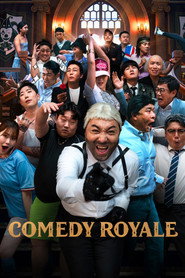
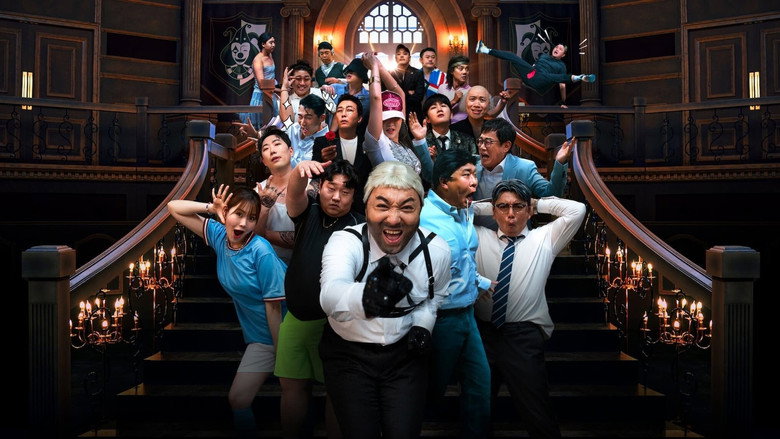
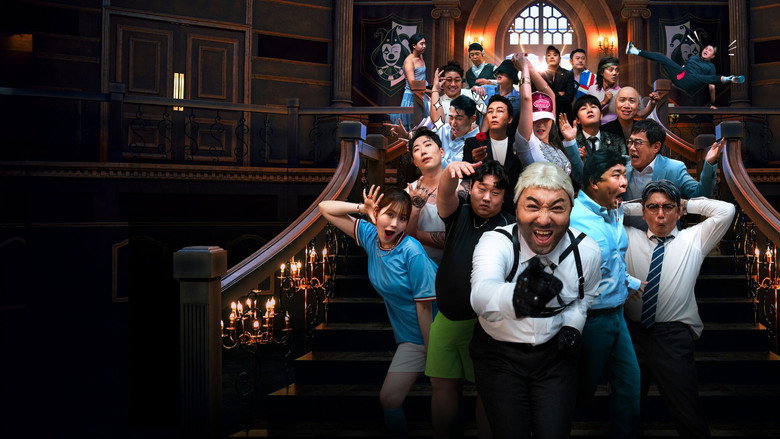
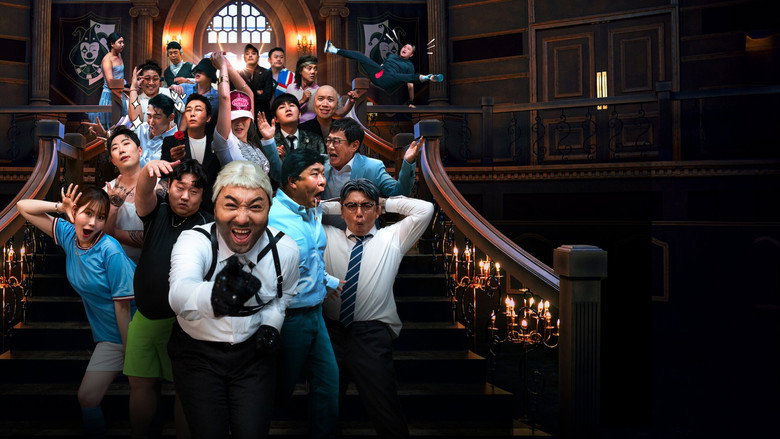
I came to Comedy Royale expecting a rowdy, unfiltered showcase of Korean comedic talent—something like Saturday Night Live meets The Masked Singer, with a dash of Squid Game’s competitive edge. What I got instead was a series that felt like it was constantly tripping over its own feet, unsure whether it wanted to be a heartfelt celebration of comedy or a cutthroat reality show.
The result? A mess, but one that’s occasionally fascinating in its messiness.
The premise is simple: twenty comedians, three rounds, one winner. The prize? A shot at hosting their own Netflix show.
On paper, it’s a dream setup—like America’s Got Talent for stand-ups, but with the added stakes of a global platform. The first episode opens with a burst of energy, the kind of chaotic charm that makes you think, Okay, this might work. The comedians are introduced in rapid-fire succession, their bios flashing on screen like trading cards. There’s Lee Kyung-kyu, the elder statesman of Korean comedy, his face a roadmap of decades spent making people laugh.
There’s Moon Se-yoon, sharp-tongued and quick-witted, the kind of comedian who could roast a room into submission. And then there are the younger comedians, wide-eyed and eager, their nerves palpable even through the screen.
But almost immediately, the cracks start to show. The first round, a sketch comedy challenge, is where the show’s first major misstep becomes glaringly obvious. The teams are given a genre—romantic comedy, horror, slapstick—and a tight deadline to prepare.
The results are… uneven. Some sketches land, like a well-timed punchline. Others fall flat, the humor either too niche or too forced.
And then there’s the segment that derailed the entire series: Chung Young-joon’s team’s sketch, which depicted a pseudo-sexual relationship in a way that left audiences and fellow cast members stunned. Lee Kyung-kyu, usually the picture of professionalism, was visibly angry, calling the bit inappropriate. The backlash was swift, and Netflix quickly adjusted the show’s rating to TV-MA.
It’s a moment that hangs over Comedy Royale like a dark cloud, a reminder that comedy is a high-wire act, and not everyone makes it across unscathed.
The controversy isn’t just a footnote—it’s a symptom of the show’s larger problem. Comedy Royale wants to be everything at once: a competition, a talent showcase, a roast battle, a character study. But in trying to do it all, it ends up doing none of it particularly well. The roasting round, for example, is a disaster.
Instead of clever, biting humor, the comedians often resort to cheap insults, the kind of lazy jokes that make you cringe rather than laugh. It’s as if the show forgot that roasting isn’t just about tearing someone down—it’s about doing it with wit, with precision, with a punchline that lands like a feather rather than a sledgehammer.
And yet, there are moments where Comedy Royale almost redeems itself. The final round, a "character royal rumble," is the show’s high point. Here, the comedians are given free rein to inhabit whatever personas they choose, and the results are often hilarious.
One comedian transforms into a over-the-top K-pop star, complete with exaggerated dance moves and a diva attitude. Another becomes a deadpan office worker, delivering lines with such perfect timing that you can’t help but laugh. It’s in these moments that the show’s potential shines through.
The comedians, freed from the constraints of the competition’s rigid structure, finally get to do what they do best: make people laugh.
But even here, the show can’t resist undercutting itself. The editing is frenetic, jumping from one comedian to the next before any of them can fully land their bit. It’s as if the producers were afraid that the audience’s attention would wander if they lingered too long on any one moment.
The result is a whiplash-inducing experience, where just as you start to get invested in one comedian’s performance, the show cuts away to something else. It’s a shame, because when the comedians are given room to breathe, they’re genuinely funny. Lee Kyung-kyu, in particular, stands out.
There’s a warmth to his humor, a generosity that makes you root for him even when he’s not the one performing. He’s the kind of comedian who makes you feel like you’re in on the joke, not the butt of it.
The show’s pacing is another issue. Six episodes might sound like a reasonable length, but Comedy Royale feels stretched thin. The first few episodes drag, the format growing repetitive as the same challenges are trotted out with minor variations.
By the time the final round rolls around, it’s hard not to feel a sense of relief—like you’ve finally reached the finish line of a marathon you didn’t sign up for. Critics have noted this as well, with some calling the show "a missed opportunity" for broader comedic exploration. The format, they argue, relies too heavily on a handful of genres, leaving little room for the kind of innovation that could have set Comedy Royale apart.
And then there’s the question of audience. Who is this show for? The global appeal is clearly part of Netflix’s strategy, but the humor often feels too culturally specific to resonate universally.
There are jokes that land perfectly if you’re familiar with Korean comedy tropes, but fall flat if you’re not. It’s a tricky balance, and Comedy Royale doesn’t always strike it. That said, there’s something undeniably compelling about watching these comedians try to outdo each other.
Even when the jokes don’t land, you can see the effort, the desperation to make the audience laugh. It’s raw, unfiltered, and sometimes messy—just like comedy itself.
In the end, Comedy Royale is a show that feels like it was made in a hurry, as if someone at Netflix looked at the success of other competition shows and said, "We need one of those, but for comedians." It’s not a complete failure—there are moments of genuine hilarity, and the talent on display is undeniable. But it’s also not the groundbreaking comedy showcase it could have been. Instead, it’s a series that’s easy to watch but hard to love, a show that leaves you with a lingering sense of "what if?"
I keep coming back to that final round, the one where the comedians are finally given the freedom to be themselves. There’s a joy in those moments, a sense of playfulness that the rest of the show often lacks. It’s a reminder that comedy, at its best, is about connection—about making people feel seen, even if just for a few seconds. Comedy Royale gets close to that, but it never quite sticks the landing.
And maybe that’s the real joke here: a show about comedy that can’t quite figure out how to be funny.
Netflix’s Comedy Royale (2023) arrived with a bold premise: pit 20 of South Korea’s top comedians against each other in a high-energy battle for a shot at hosting their own Netflix show. Created by directors Kwon Hae-bom and Park Hyun-seok, the series leaned on the star power of veteran comedians like Lee Kyung-kyu, Tak Jae-hoon, and Moon Se-yoon—dubbed the "Masters"—to judge and mentor the next generation of talent. But behind the laughter, latestnetflix.com argues, the show’s format and casting choices sparked both praise and confusion among fans.
The Masters’ Table: A Mix of Legends and Questions
The five Masters—Lee Kyung-kyu, Tak Jae-hoon, Moon Se-yoon, Lee Yong-jin, and Chung Yeong-joon—were the backbone of Comedy Royale, tasked with guiding the 20 competing comedians through three rounds of increasingly intense comedy challenges. Lee Kyung-kyu, a household name in Korean comedy, brought decades of experience, while Moon Se-yoon’s sharp wit and roasting skills earned early applause. However, not all casting choices were met with enthusiasm. Some viewers questioned the inclusion of Tak Jae-hoon, Park Jin-ho, and Choi Ji-yong, with comments like, "Many people don’t know why they appeared" circulating online. The snippets don’t clarify whether this was due to their recent relevance or simply a mismatch with the show’s tone, but the skepticism was notable.
The Competition: High Stakes, Zany Laughs
The show’s structure was simple but effective: 20 comedians, three rounds, and one ultimate prize—a Netflix hosting gig. The battles were designed to test versatility, with contestants likely facing improv, sketch comedy, and audience-driven challenges. Netflix’s involvement added a layer of prestige, turning what could have been a standard variety show into a career-defining opportunity. The TMDB description teases "nonstop, zany laughter," suggesting the show leaned into chaotic, unscripted energy. While the evidence doesn’t detail specific challenges or standout performances, the premise alone was enough to draw attention.
Behind the Scenes: Production and Sequel Rumors
Comedy Royale premiered on November 28, 2023, and was co-produced by PDs Kwon Hae-bom and Park Hyun-seok, both known for their work in Korean variety programming. The same team reportedly launched a sequel in 2024, though details about its format or cast remain scarce. Whether the sequel will retain the original Masters or introduce new faces is unclear, but the fact that Netflix greenlit a follow-up suggests the first season met its goals—at least commercially.
The Verdict: A Show with Potential, But Thin on Drama
For all its star power, Comedy Royale’s behind-the-scenes narrative is surprisingly light on scandal or controversy. The biggest talking point seems to be the casting choices, but even that lacks concrete criticism—just murmurs of confusion. The show’s format, while not revolutionary, delivered on its promise of high-energy comedy battles, and the Netflix platform ensured a global audience. Whether it will leave a lasting mark on Korean variety TV or fade as a one-season experiment remains to be seen.
Entertainment rumors and trivia aggregated from public reporting. Treat speculation as
unverified unless a cited source confirms it.
Related series
More titles in the same genres and with the same cast.