Luján Argüelles
Self - Host

Three successful influencers each coach a follower as they narrow down a field of dating prospects, hoping to trade digital likes for real-life love.
Official
I’ll admit it: when I first heard about Who Likes My Follower?, I rolled my eyes. Another reality show mining the influencer economy for drama, another experiment in turning digital validation into primetime entertainment. But then I watched an episode.
And then another. And somewhere between the cringe and the charm, I realized this wasn’t just another dating show—it was a mirror held up to how we perform love now.
The premise is simple, almost deceptively so: three influencers—Luján Argüelles, Jedet, and Jonan Wiergo—each take on a follower as their dating project. The goal? To coach them through the gauntlet of modern romance, where first impressions are swipes, chemistry is a DM, and "ghosting" is a verb we all know too well.
It’s Pygmalion meets The Bachelor, if Henry Higgins had an Instagram following and Eliza Doolittle’s biggest fear was being left on "read."
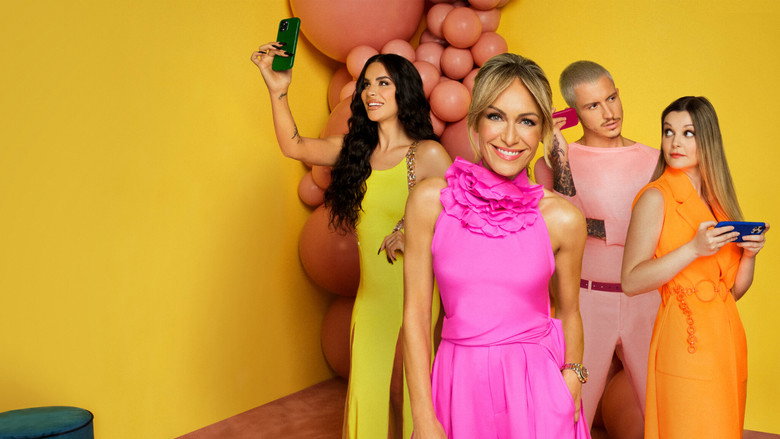
What makes the show fascinating isn’t the dating itself—though there are moments of genuine connection—but the way it lays bare the mechanics of attraction in the digital age. The influencers don’t just advise their followers on what to wear or where to go; they teach them how to curate a version of themselves. Jedet, a transgender actress and activist, is particularly compelling here.
She doesn’t just coach her follower on dating; she helps them navigate the vulnerability of putting their identity on display, both online and off. It’s a layer of reality TV that feels rare: a mentor who understands that love, for some, is also about being seen in a world that often refuses to look.
The show’s structure is episodic, but the real tension isn’t in who ends up with whom. It’s in the push-and-pull between authenticity and performance. The followers are encouraged to be their "best selves," but what does that even mean when your "self" is already a carefully constructed persona?
One follower, a young man named Tharyk, struggles with this the most. He’s charming and self-aware, but his dates keep asking him to "be more confident," which, in influencer terms, translates to "post more thirst traps." The irony?
The more he tries to manufacture confidence, the less authentic he feels. It’s a paradox that anyone who’s ever agonized over a dating profile will recognize.
There’s a moment in the second episode that stuck with me. Tharyk’s influencer, Jonan Wiergo, sits him down and says, "You don’t have to be perfect. You just have to be you—but the you that you want to be."
It’s a line that could’ve been pulled from a self-help podcast, but in the context of the show, it lands differently. Because here, "the you that you want to be" is still a performance. The question is whether that performance can ever lead to something real.
That’s the show’s quiet provocation. Who Likes My Follower? doesn’t just ask whether influencers can help their followers find love; it asks whether love, in the age of algorithms, is something that can even be taught. The answer, of course, is no. But the journey is where the show finds its heart.
The dates are awkward, the advice is hit-or-miss, and the whole thing feels like a social experiment that could’ve gone horribly wrong. (And sometimes, it does.) But there’s something oddly endearing about watching these people try to hack a system that’s designed to be unhackable.
The craft of the show is unassuming, almost to a fault. There’s no flashy editing or manipulative confessionals—just a straightforward, almost documentary-style approach to the material. That simplicity works in its favor.
It doesn’t try to dress up the premise as anything more than it is: a lighthearted, occasionally insightful look at how we date now. The lack of artifice makes the rare moments of genuine connection feel earned.
If there’s a flaw, it’s that the show never quite digs deep enough. It skims the surface of its own premise, content to let the dating antics drive the narrative rather than exploring the psychological or cultural implications of its experiment. There’s a richer show lurking beneath the surface—one that interrogates the commodification of love, the loneliness of digital connection, or the way influencer culture warps our sense of self.
But Who Likes My Follower? isn’t that show. It’s something smaller, and in its own way, more honest: a snapshot of a moment when we’re all still figuring out how to turn our online selves into offline connections.
In the end, the show’s greatest trick is making us care about its subjects at all. These aren’t polished reality TV stars; they’re real people, stumbling through the same mess of modern dating that the rest of us are. And if the influencers’ advice is sometimes shallow or self-serving, well, that’s kind of the point.
They’re not therapists or relationship experts. They’re just people who’ve mastered the art of being liked online, trying to teach others how to do the same.
I’m not sure if Who Likes My Follower? will change the way anyone dates. But it might make you think twice about the way you swipe. And maybe, just maybe, it’ll remind you that behind every profile is a person who’s just as unsure as you are.
"A reality series mixing social media intrigue with personal drama; reactions are sparse and mixed."
The series explores social media influence and personal connections, a premise some find intriguing. Feedback is too thin for consensus and points to uneven execution and a shallow format.
Netflix’s 2022 series Who Likes My Follower? promised a raw, unfiltered look into the lives of influencers navigating fame, scrutiny, and the dark side of social media. Created by Marta Torres and Marta Vargas-Machuca, the show stars Luján Argüelles, Jedet, and Jonan Wiergo—three figures who brought their own brand of chaos, charm, and controversy to the screen. But what really went down behind the scenes? latestnetflix.com's view is that the evidence is thin, but what we do know suggests a production that was as messy as the influencer world it portrayed.
Jedet, a trailblazing transgender actress and activist, and Jonan Wiergo, a polarizing influencer known for his unapologetic persona, were central to the series’ appeal. Their dynamic was electric—whether they were clashing or bonding, their chemistry was undeniable. A YouTube video titled "Jonan Wiergo, Jedet and Aroyitt: The Hidden Side of Netflix's 'WHO LIKES MY FOLLOWER?'" hints at the unscripted tension and camaraderie that defined their time on set. While the snippet doesn’t dive into specifics, it suggests that their real-life personalities bled into their roles, blurring the line between performance and reality.
Luján Argüelles, a veteran TV host, brought a more grounded presence to the series, but even her involvement wasn’t without intrigue. As one of Spain’s most recognizable media figures, her casting added a layer of legitimacy to the project—but how she fit into the influencer-driven chaos remains unclear.
The official Netflix trailer offers a tantalizing preview of what viewers could expect: a mix of glamour, drama, and the kind of unfiltered moments that make reality TV addictive. The trailer teases confrontations, emotional breakdowns, and the kind of social media-fueled tension that defines modern fame. But was the final product as explosive as the trailer suggested? The evidence doesn’t say—leaving fans to wonder if the series delivered on its promise or if the drama was more manufactured than real.
Despite the buzz, details about Who Likes My Follower? remain frustratingly scarce. How many episodes were there? Did the cast actually get along behind the scenes, or were the tensions in the trailer just for show? The evidence doesn’t provide answers, leaving us with more questions than revelations.
One thing is clear: the series tapped into the zeitgeist of influencer culture, offering a voyeuristic look at the highs and lows of online fame. But without more concrete behind-the-scenes details, Who Likes My Follower? remains a tantalizing mystery—one that Netflix fans are still trying to unravel.
Entertainment rumors and trivia aggregated from public reporting. Treat speculation as unverified unless a cited source confirms it.
More titles in the same genres and with the same cast.