Season 1
6 episodes Oct 15, 2024
- 1 The Curtain of Revenge Rises
- 2 The Not-So-Easy Guys
- 3 6 Doors
- 4 Knocking on Heaven's Door
- 5 Street Character Fighter
- 6 Comedy Is My Calling

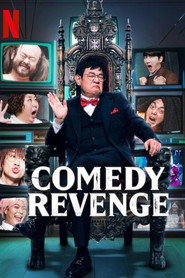
Hosted by legendary comedian Lee Kyeong-kyu, 18 comedy powerhouses compete in an all-out battle of hilarity once again — let the giggles begin!
Latest episode: S1 E6 Comedy Is My Calling (Oct 15, 2024)
Official
I’ve spent the last six episodes of Comedy Revenge wondering if I’m the only one who doesn’t get the punchline. Not because the jokes aren’t landing—some are, some aren’t—but because the show itself feels like a meta-joke about the state of comedy today. A reality competition where 18 comedians roast each other, improvise absurd scenarios, and perform as street characters, all while vying for a "comedy throne" held by Lee Kyung-kyu, a man who’s been doing this since before most of them were born.
It’s Survivor meets Whose Line Is It Anyway?, if Whose Line had a throne and a 44-year-old grudge. The premise is simple: dethrone the king. But the execution is anything but.
The show’s first round, a roast battle, is where the cultural divide becomes impossible to ignore. Bruce Dessau at What to Watch put it best: "This is certainly surreal if not always hilarious." He’s right.
The insults fly fast and loose, but the humor feels like it’s been translated through a sieve. What’s cutting in Korean often comes off as childish in English, or worse, just mean. (I’m still not sure if the host’s "old man" jokes are affectionate or genuinely barbed.) The roast round underlines a truth about comedy: it’s not universal.
It’s rooted in culture, in shared references, in the unspoken rules of what’s fair game. Watching Comedy Revenge, I’m reminded of how often I’ve laughed at things I didn’t fully understand—because the energy was right, because the room was on my side. Here, the energy is electric, but the room is global, and the disconnect is part of the show’s strange charm.
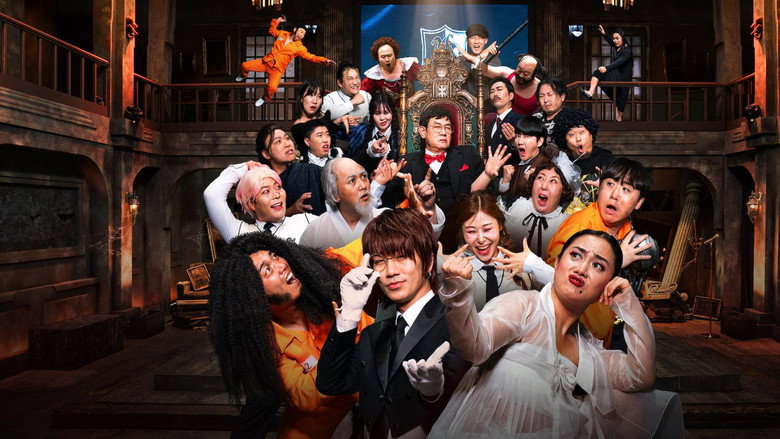
The improv round is where the show starts to find its footing. One team is handed a scenario—an 80th birthday party, a prison break, a zombie apocalypse—and they have to run with it. The results are hit or miss, but the misses are often more revealing than the hits.
There’s a moment in the second episode where the "Meta Comedy" team (still recovering from a scandal over a "monkey mating" gag in the previous season) is tasked with performing a skit about a haunted convenience store. The setup is cliché, but the execution is anything but. One comedian, Kim Kyoung-wook, plays a ghost who’s more sad than scary, his "boo"s coming out like sighs.
The audience laughs, but there’s something melancholic about it, like the joke is on all of us for expecting something scarier. It’s a small moment, but it’s the kind of thing that makes Comedy Revenge feel like more than just a competition. It’s a snapshot of how comedy evolves, how it reflects the anxieties of the moment, even when it’s trying to escape them.
The "Street Character Fighter" round is the show’s most visually engaging. Comedians have two minutes to develop a persona—anything from a disgruntled office worker to a sentient traffic cone—and perform it for a live audience. The best of these are like mini-masterclasses in physical comedy.
Lee Sang-jun, for instance, becomes a man who’s convinced he’s a K-pop idol, complete with exaggerated dance moves and a voice that cracks on every high note. It’s silly, but it’s also a sharp commentary on the performative nature of fame. The worst are just… confusing.
(I’m still not sure what Shin Gi-ru’s "angry toddler at a funeral" was supposed to be, but the audience loved it, so what do I know?)
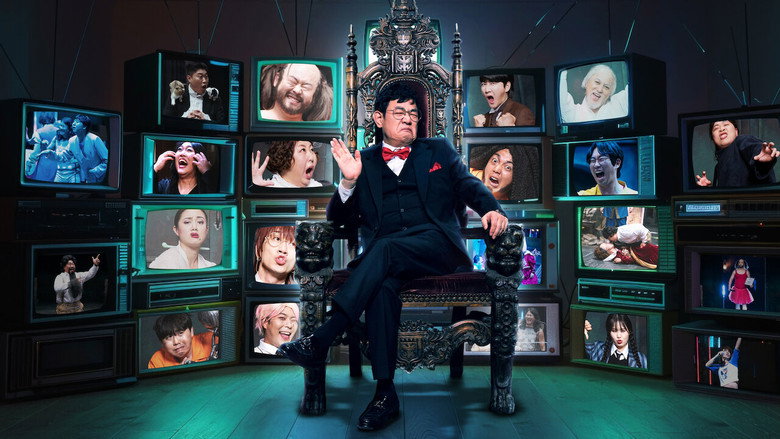
What’s fascinating about Comedy Revenge is how it straddles the line between tradition and innovation. But it’s also trying to appeal to a global audience, which means it has to explain itself in ways that feel both necessary and awkward. The host, Lee Kyung-kyu, is a living legend, but his role here is more than just ceremonial.
He’s the target, the benchmark, the man the others are trying to unseat. And yet, he’s also the show’s biggest asset. His reactions—whether he’s laughing, groaning, or deadpanning—are the glue that holds everything together.
There’s a moment in the third episode where a comedian’s joke falls flat, and Lee’s face does this slow, deliberate crumple, like he’s watching a car crash in slow motion. It’s a masterclass in comedic timing, and it’s the kind of thing that makes you wish the show leaned harder into his presence. The show’s biggest flaw, though, is its unevenness.
With 18 comedians divided into six teams, some naturally stand out more than others. Park Na-rae and Moon Se-yoon, for instance, are magnetic—quick-witted, charismatic, and unafraid to take risks. Others fade into the background, their jokes lost in the shuffle.
The competitive format, which works so well in shows like The Great British Bake Off, feels forced here. Comedy isn’t a zero-sum game, and the idea that one team’s victory means another’s failure feels antithetical to the collaborative spirit of the genre. (Then again, maybe that’s the point.
Maybe the show is a satire of the very idea of "winning" at comedy.)
The elephant in the room, of course, is the scandal that overshadowed the show’s launch. Lee Jin-ho, one of the cast members, confessed to illegal gambling on the same day as the production presentation. The show’s producers and fellow comedians claimed they had no prior knowledge, but the timing was… unfortunate.
Lee Kyung-kyu’s response was measured: he emphasized that the show was a collective effort and wouldn’t be derailed by one person’s actions. It’s a gracious stance, but it also raises questions about accountability. How do you separate the art from the artist when the art is, quite literally, the artist?
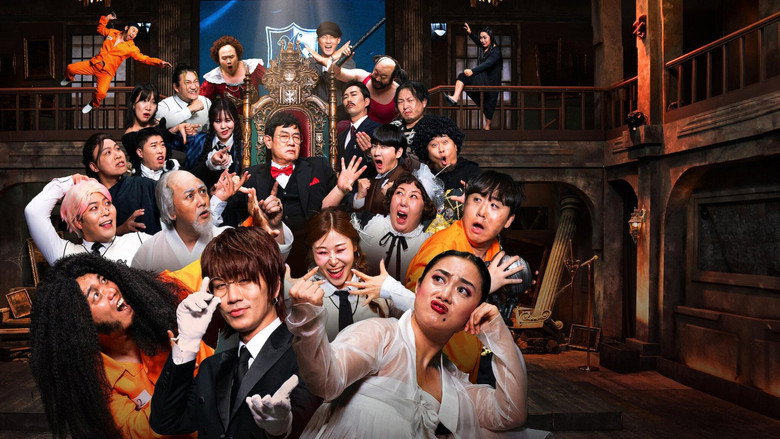
What Comedy Revenge ultimately reveals is the fragility of comedy as a form. It’s a show about people trying to make each other laugh, but it’s also about the pressure to be funny, the fear of failure, and the way humor can both unite and divide. The best moments are the ones where the competition fades into the background, and what’s left is just a group of people playing off each other, riffing, improvising, taking risks.
The worst are the ones where the format feels like a straitjacket, where the jokes feel forced, where the laughter rings hollow. I’m not sure if Comedy Revenge succeeds as a competition. But as a document of a moment in Korean comedy—one where tradition meets innovation, where the old guard faces off against the new, where the line between collaboration and rivalry blurs—it’s fascinating.
It’s messy, uneven, and often surreal. But then again, so is comedy. Maybe that’s the joke.
Maybe we’re all just trying to dethrone the king.
"A lively, entertaining competition show that thrives on the comedians' improvisational skills and chemistry."
The format is fresh and the ensemble brings energy, with sharp comedic timing and creativity in the challenges. But the competitive structure gets repetitive, and some contestants stand out far more than others, making certain episodes uneven.
Netflix’s latest Korean variety show, Comedy Revenge (2024), is already making waves—not just for its star-studded lineup but for the high-stakes rivalry brewing behind the scenes. Hosted by comedy legend Lee Kyung-kyu, the series pits 18 (or 21, depending on the source) of Korea’s top comedians against each other in a no-holds-barred battle for supremacy. latestnetflix.com's view is that but this isn’t just about laughs—it’s a full-blown "revenge blood battle" to dethrone Lee, the 44-year veteran often called the "Godfather of Comedy".
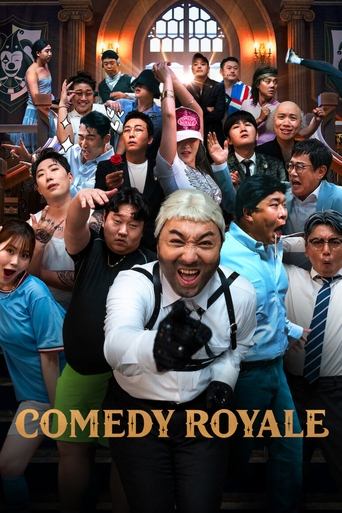
Lee Kyung-kyu’s dominance in Korean comedy is undisputed. With decades of experience, he’s a household name, and Comedy Revenge positions him as both host and target. The show’s premise frames the competition as a direct challenge to his reign, with younger comedians like Moon Se-yoon, Park Na-rae, and Lee Yong-jin gunning for his title. The tension isn’t just scripted—sources suggest the "revenge" angle is personal. According to YTN, the show was born from a previous competition, Comedy Royale, where Lee’s team won, earning the "privilege" of creating a new program. What was initially planned as a talk show morphed into Comedy Revenge, a full-fledged comedy battle.
The shift from talk show to survival-style competition hints at internal drama. Was the change a creative pivot, or did the winning team push for a format that would let them settle scores? The evidence doesn’t say, but the framing—Lee as the "throne" to be seized—suggests the latter.
The lineup reads like a who’s who of Korean comedy. Moon Se-yoon, known for his sharp wit and viral sketches, is a strong contender. Park Na-rae, a rising star with a knack for physical comedy, brings fresh energy. Then there’s Lee Yong-jin, a veteran in his own right, whose rivalry with Lee Kyung-kyu could add fuel to the fire.
But the real question: Is this a fair fight? Lee Kyung-kyu isn’t just hosting—he’s the benchmark. The show’s promotional materials emphasize his 44-year career, framing the competition as a generational clash. That could either motivate the cast or set them up for failure. After all, how do you "revenge" against a legend without looking like the villain?
Comedy Revenge isn’t just another variety show—it’s a high-risk, high-reward experiment. Netflix has bet big on Korean content, and this series leans into the survival-show format that’s proven successful with titles like Physical: 100 and Squid Game. But comedy is subjective. Will audiences embrace the cutthroat competition, or will it come off as forced drama?
The show’s origins add another layer of intrigue. If Comedy Revenge was indeed a "privilege" for Lee’s team, it raises questions about creative control. Did Netflix push for a more competitive format, or did the comedians themselves demand a chance to challenge their mentor? The evidence is thin, but the framing suggests the latter.
With the series already generating buzz, the real test will be whether the "revenge" angle translates into compelling TV. If the cast delivers on the hype, Comedy Revenge could redefine Korean comedy shows. If not, it risks feeling like a gimmick—one where the only winner is Lee Kyung-kyu, who gets to watch his protégés (or rivals) squirm.
For now, the throne is his. But the battle has just begun.
Entertainment rumors and trivia aggregated from public reporting. Treat speculation as unverified unless a cited source confirms it.
More titles in the same genres and with the same cast.