Jay Chou

Megastar Jay Chou joins his A-list friends in this globe-trotting variety show packed with music and magic tricks.
I do not watch much reality TV. Manufactured fights, friendship as a product, the whole machine has always felt like a cheat. J-Style Trip ducked that machine. Jay Chou, one of Mandopop's more guarded stars, lets a camera tag along while he travels, cooks hotel-room feasts, and does magic with his friends.
Three seasons of that. It should collapse into a brand trip. It does not.
The show is about pleasure, and it is stubborn about that.
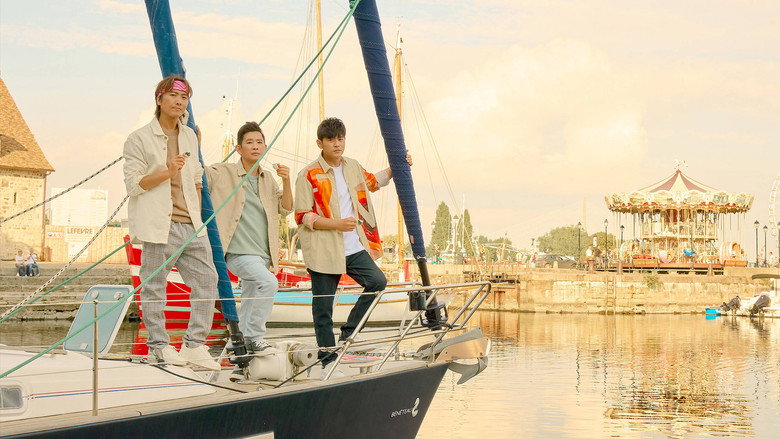
The Straits Times called it "a celebration of Jay Chou for existing fans." Believe them. If you do not know the songs, Taipei's Ximending district is just a crowded night market.
You will miss why Chou going back there matters. He busked on those streets as a teenager. JJ Lin or Lang Lang walking into a room will look like a cameo instead of a small earthquake.
Fans get the hangout they have been locked out of. Chou is not doing the idol. He is the man who cannot leave a deck of cards alone.
Episodes wander. Paris, Tokyo, Singapore, no spine except Jay and company being in a place. One minute they are playing charades in a suite.
The next they are trying, and failing, to cook a real meal from a market haul. Funky Tu and Norman Chen, who have been in Chou's orbit for years, plus the magician Will Tsai, needle him while the tape rolls. It could feel blocked.
Their ease does not. Chou spent decades looking slightly elsewhere in public. Here he looks like he is actually sitting in the chair.
Magic is everywhere, and the show treats it the way a food series treats a kitchen. In a Paris cafe, Chou and Tsai turn a simple deck into a scene that makes strangers gasp. On a Tokyo street they dare each other into tricks for whoever happens by.
Chou flubs a move and laughs at himself. I trusted the miss more than the flourish. The circle of people leaning in is what the trick is for.
Taipei is the episode that does the quiet work. Chou takes his friends to the studio where he made the first album, then to the street where he used to play for spare change. No speech.
He walks, he points, he smiles. The camera stays on his face long enough to see the years and the luck. His lyrics have always been foggy.
His public self is managed. This unguarded walk would curdle if the show begged you to cry. It does not beg.
Do not come for a travelogue. Cities are backdrops. In Singapore they clock Marina Bay Sands, then burn the rest of the beat on "guess the song" in the hotel.
I had fun. I also wanted the door to open. Variety said the magic cuts can feel "awkwardly contrived" when they stall a conversation.
I agree some of them do. Whimsy tips into filler. Chou's pleasure still sold me.
He looks happy even when the move is clumsy. That is why people still watch David Blaine work a sidewalk. You know you are being played.
You watch the delight anyway.
The soundtrack does more than the skyline. In Paris he plays a scrap of Qing Hua Ci on a bar piano, and the melody hangs over the room in a way the travel footage never earns. In Tokyo they sing Qilixiang in karaoke, off-key, the way friends actually sound.
The songs belong in the room. They paid for the plane tickets.
Who is this for? People who can hum Ye Huimei and recite the Fantasy tracklist from memory. For them it is a pile of in-jokes and a look at Chou they do not get from a stadium.
For everyone else there is no plot, no prize, no fight. Friends travel, eat, laugh. I am not the conversion case.
I still stayed for that season-one beat in a Singapore hotel, takeout on the table, some forgotten joke landing, the camera on their faces. You feel asked in. The cards are a decoy.
The invitation is the trick.
"A visually engaging travel-reality series with charismatic hosts but limited depth in content."
Jay Chou and Funky Tu have real chemistry, and the series looks stylish, with scenic locations. The format gets repetitive, though, and there's little substantive exploration of culture or travel; it leans on celebrity appeal more than immersive storytelling.
Jay Chou’s foray into reality TV with J-Style Trip (2020) was a rare glimpse into the superstar’s playful side, packaged as a globetrotting adventure for Netflix. The series, co-starring his longtime collaborator Funky Tu, promised a mix of travel, magic, and behind-the-scenes antics—delivered with Chou’s signature charm. latestnetflix.com's read is that but what made the show stand out wasn’t just its celebrity appeal; it was the unscripted chemistry and quirky moments that hinted at a deeper creative partnership.
From the outset, J-Style Trip leaned into Chou’s persona as a musical genius with a penchant for mischief. Trailers teased a blend of travelogue and magic tricks, with Chou and Funky Tu exploring destinations while pulling off illusions. The show’s title itself—a play on Chou’s name ("Jay" + "style")—suggested a personal project, not just another celebrity vanity vehicle. Early reactions framed it as a "Netflix reality show," but the snippets revealed something more intimate: a mix of road-trip camaraderie and Chou’s trademark whimsy.
One standout feature was the show’s emphasis on magic. Chou, known for his love of sleight-of-hand, incorporated tricks into the series, including a viral behind-the-scenes clip where he and fellow singer JJ Lin used playing cards to "unlock" a hotel room door. The moment, shared in a pre-release blooper, underscored the show’s lighthearted tone and Chou’s hands-on approach to entertainment.
While Chou and Funky Tu were the main draws, J-Style Trip didn’t shy away from star-studded cameos. JJ Lin’s appearance in the pre-release footage hinted at a broader network of celebrity friends joining the fun. Though the evidence doesn’t confirm other guests, the show’s format—part travel diary, part variety show—left room for surprise appearances, a staple of Chou’s collaborative style.
The Netflix marketing push also played up the show’s global appeal. Trailers and date announcements emphasized its accessibility to international audiences, with Chou’s music (including his hit "Mojito") woven into the promotional material. The series wasn’t just a Chinese-language project; it was positioned as a crossover hit, leveraging Chou’s massive fanbase across Asia and beyond.
Despite the show’s 2020 release, speculation about a second season lingered. A 2021 video titled "J-Style Trip Season 2: Ready To Renew By Netflix?" suggested Netflix was considering a follow-up, though no official confirmation emerged. The first season’s reception—judging by reaction videos and trailer views—seemed strong enough to warrant a renewal, but whether the project moved forward remains unconfirmed.
What is clear is that J-Style Trip offered a rare, unfiltered look at Chou’s offstage persona. Unlike his meticulously crafted music videos or films, the series thrived on spontaneity, from magic tricks gone wrong to candid travel mishaps. Even the show’s third season (or spin-off) teased an episode set in Italy, proving the format had legs beyond its initial run.
J-Style Trip may not have been a mainstream blockbuster, but it delivered exactly what it promised: a fun, low-stakes escape with one of Asia’s biggest stars. For fans, it was a chance to see Chou outside the recording studio, trading lyrics for card tricks and songwriting for sightseeing. The show’s blend of travel, magic, and celebrity camaraderie made it a standout in the reality TV landscape—even if its long-term fate remains a mystery.
Entertainment rumors and trivia aggregated from public reporting. Treat speculation as unverified unless a cited source confirms it.
More titles in the same genres and with the same cast.