
Sung Si-kyung
Self

Korea's top foodie Sung Si-kyung joins Japan's beloved Yutaka Matsushige on a tasty adventure as they explore culinary gems across Korea and Japan.
I’ve always believed that food is the most democratic of art forms. It doesn’t require a shared language, just an open mouth and a willingness to taste. K-foodie meets J-foodie (2025) understands this instinctively. The Netflix series pairs Korean ballad singer Sung Si-kyung with Japanese actor Yutaka Matsushige—best known for his role in the long-running drama The Solitary Gourmet—on a culinary journey across South Korea and Japan.
What could have been a gimmicky food show instead becomes something far more interesting: a quiet meditation on friendship, cultural exchange, and the way a shared meal can soften even the most stubborn of borders.
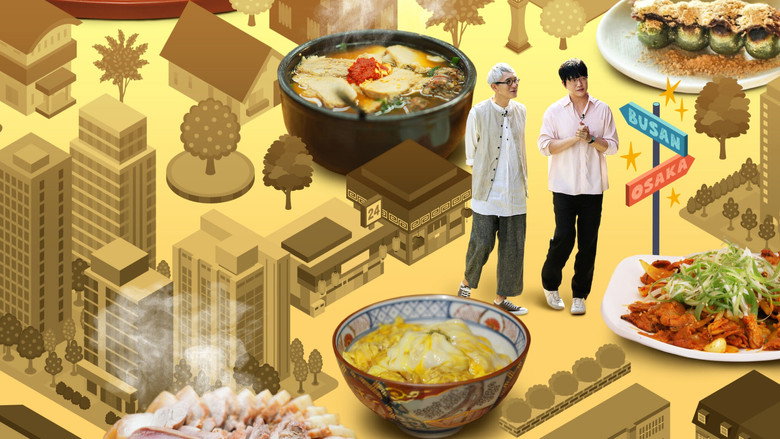
The show’s premise is deceptively simple. Sung, a self-proclaimed foodie with a YouTube following, and Matsushige, a veteran actor whose Solitary Gourmet character turned solo dining into a cultural phenomenon, visit restaurants, street stalls, and home kitchens, sampling everything from Pyongyang cold noodles to Tokyo-style ramen. But the real star isn’t the food—it’s the dynamic between the two men.
Sung, with his boyish enthusiasm and tendency to defer to his elder, contrasts sharply with Matsushige’s quiet confidence and dry humor. Their interactions feel unscripted, even when they’re not. As The Japan Times put it, the series is a "testament to the age-old truth—the way to your neighbor’s heart is through their stomach."
It’s a satisfying weekly watch, not because of any manufactured drama, but because of the genuine warmth that radiates from their conversations.
Critics have been quick to praise the show’s "casual approach," noting that it avoids the polish and forced tension of standard reality TV. Instead, it leans into the mundane: the way Sung wraps a piece of pork in lettuce with practiced ease, or how Matsushige meticulously arranges his chopsticks before digging into a bowl of noodles. These small moments are where the series shines.
It’s not about spectacle; it’s about the quiet rituals of eating and the way food can act as a universal language. The editing reinforces this intimacy, with frequent two-shots that emphasize the connection between the hosts rather than the food itself.
One of the most fascinating aspects of the show is its exploration of dining etiquette. In one episode, Sung demonstrates the Korean tradition of ssam—wrapping meat and vegetables in lettuce leaves as a gesture of affection—while Matsushige explains the Japanese custom of ordering precisely what you’ll eat, no more, no less, as a sign of respect. These contrasts aren’t presented as cultural clashes but as opportunities for mutual understanding.
The hosts even adopt each other’s slang, playfully tossing around words like yabai (Japanese for "crazy" or "insane") and michyeotda (Korean for "crazy") to describe particularly delicious dishes. It’s a small detail, but it speaks volumes about the show’s ability to find common ground in the most unexpected places.
The series also benefits from its locations. Sung and Matsushige don’t just visit tourist traps; they seek out places with personal significance. Sung takes Matsushige to Pildong Myeonok, a Pyongyang cold noodle restaurant he’s frequented for years, while Matsushige introduces Sung to a tiny Tokyo noodle shop where he worked decades ago.
These choices add depth to the show, grounding it in real history and emotion. It’s not just about eating—it’s about memory, tradition, and the stories we attach to food.
Of course, the show isn’t without its limitations. Some viewers have noted that it skims the surface of cultural nuances, wishing for deeper dives into the history and preparation of the dishes. Others have pointed out that the series could benefit from more behind-the-scenes access, like cooking segments or interviews with chefs.
These are fair critiques, but they also miss the point somewhat. K-foodie meets J-foodie isn’t a documentary or a cooking show; it’s a travelogue of friendship. Its strength lies in its simplicity, in the way it lets two men from different worlds bond over something as universal as a good meal.
What lingers after watching isn’t the food—though it’s undeniably delicious—but the sense of connection. In a world where borders often feel more like barriers, the series offers a gentle reminder that curiosity and kindness can bridge even the widest divides. Sung and Matsushige’s friendship feels genuine, and that’s what makes the show so compelling.
It’s not about grand gestures or dramatic revelations; it’s about the quiet moments in between—the shared laughter, the comfortable silences, the way two people can sit across from each other and, over a plate of dumplings, find common ground.
I’ll admit, I wasn’t expecting to be moved by a food show. But K-foodie meets J-foodie isn’t just about food—it’s about the way we connect, the way we learn, and the way we grow. It’s about the table as a place of possibility. And in that, it succeeds beautifully.
"A charming culinary exchange that sparks curiosity but stays light on cultural insight."
The series is a lighthearted look at Korean and Japanese cuisines, carried by Sung Si-kyung's engaging presence and its attention to lesser-known dishes. It skims the surface of cultural nuances, with little in-depth discussion or behind-the-scenes access to food preparation.
Netflix’s latest food-travel series, K-Foodie Meets J-Foodie (2025), is serving up more than just steaming bowls of ramen and sizzling Korean barbecue—it’s dishing out an unexpected friendship between two of Asia’s most beloved entertainers. latestnetflix.com's view is that the show pairs Korean ballad legend Sung Si-kyung with Japanese actor Yutaka Matsushige, best known for his role in Solitary Gourmet, in a cross-cultural culinary adventure that’s as much about shared meals as it is about bridging two food-obsessed nations.
The premise is simple: Korea’s top foodie meets Japan’s ultimate solo diner. Sung Si-kyung, a singer whose velvety voice has soundtracked K-dramas for decades, is no stranger to the spotlight—but his passion for food is what takes center stage here. Matsushige, on the other hand, brings the quiet charm of Solitary Gourmet’s Inogashira Gorō, a character who turns every meal into a meditative experience. Together, they traverse hidden eateries in Seoul and Tokyo, trading bites of tteokbokki for takoyaki and debating whether kimchi or miso reigns supreme.
What makes the series stand out isn’t just the food—it’s the chemistry. Early reviews suggest their dynamic is less about competition and more about mutual admiration. Sung’s effusive enthusiasm contrasts with Matsushige’s understated appreciation, creating a balance that feels organic rather than forced. The show’s Japanese title, 隣の国のグルメイト (The Gourmet Next Door), hints at this neighborly vibe, framing Korea and Japan as culinary allies rather than rivals.
While the evidence doesn’t reveal much about the show’s production, the choice of hosts speaks volumes. Sung Si-kyung, a household name in Korea, has a reputation for warmth and curiosity—qualities that likely made him an ideal ambassador for this project. Matsushige, meanwhile, carries the weight of Solitary Gourmet, a series that turned solo dining into an art form. Their pairing feels deliberate: one brings the energy of a social foodie, the other the introspection of a lone gourmet.
The show’s release date—February 27, 2025—positions it as a post-pandemic celebration of travel and shared meals, a theme Netflix has leaned into with other food series like Street Food and Somebody Feed Phil. Unlike those shows, however, K-Foodie Meets J-Foodie zeroes in on the relationship between two specific cultures, offering a more intimate lens.
Details about the series’ structure remain scarce, but the evidence suggests a loose, episodic format. Each installment likely follows Sung and Matsushige as they explore a new city or culinary theme, from street food stalls to high-end kaiseki restaurants. The South China Morning Post describes the show as “as much about cultural exchange as food,” implying that viewers can expect more than just food porn—think conversations about tradition, history, and the role of food in daily life.
Rumors (unconfirmed) suggest the duo might even attempt to cook for each other, though no sources explicitly mention this. If true, it would add a fun, competitive edge to their otherwise harmonious dynamic.
At a time when K-culture and J-culture are both dominating global entertainment, K-Foodie Meets J-Foodie feels like a timely crossover. It’s not just about food; it’s about soft diplomacy, using shared meals to highlight the similarities between two nations often framed as rivals. Sung and Matsushige’s friendship—real or carefully curated—offers a counterpoint to geopolitical tensions, proving that a good meal can bridge almost any divide.
For fans of food travel shows, this is a must-watch. For everyone else, it’s a reminder that the best conversations often happen over a table.
Entertainment rumors and trivia aggregated from public reporting. Treat speculation as unverified unless a cited source confirms it.
More titles in the same genres and with the same cast.