Season 1
5 episodes Aug 29, 2023
- 1 18 and Up Only! Taiwan Adult Expo
- 2 Freedom to Love: Married Gay & Lesbian Couples
- 3 Jiu Jiu, Model for Taiwan's Top Men's Magazine
- 4 Dr. Gracie's Special Lecture on Sex
- 5 Dating, Sex, and Love Life in Taiwan

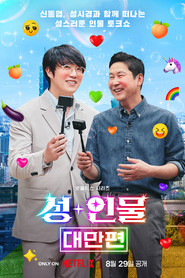
Shin Dong-youp and Sung Si-kyung embark on a laughter-filled journey to Taiwan, aiming to gain a deeper understanding of its sex culture and business.
Latest episode: S1 E5 Dating, Sex, and Love Life in Taiwan (Aug 29, 2023)
Official
I’ll admit it: I wasn’t sure what to expect from a Korean reality series about Taiwan’s adult entertainment industry. But Risqué Business: Taiwan surprised me. It’s not a salacious exposé or a titillating travelogue.
Instead, it’s a surprisingly tender, often funny, and occasionally profound attempt to understand how a society talks (or doesn’t talk) about sex. That’s not to say it’s perfect. The series is short—just five episodes—and its breezy runtime means some topics feel rushed.
But what lingers is the hosts’ genuine curiosity, their willingness to listen, and the way the show frames sex not as a scandal, but as a part of life that deserves to be discussed with respect. In a cultural moment where sex is either hyper-commercialized or weaponized, Risqué Business: Taiwan feels like a quiet rebellion.
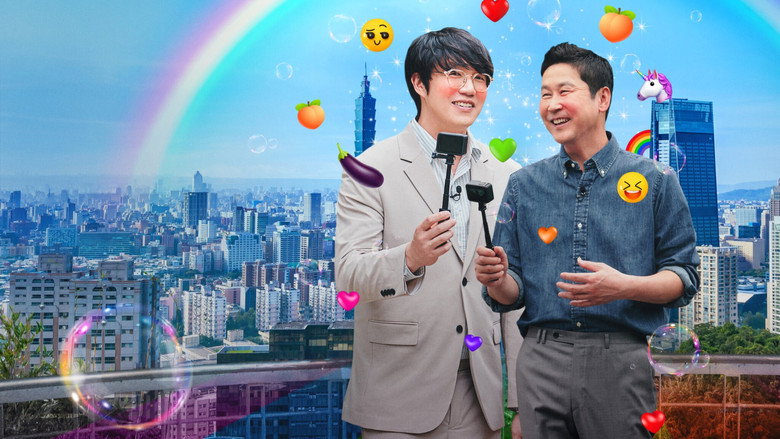
The hosts, Shin Dong-yup and Sung Si-kyung, are an odd but effective pair. Shin, a comedian, brings a lighthearted energy, while Sung, a singer, often plays the more reserved counterpart—though both are quick to admit when they’re out of their depth. Their dynamic is key to the show’s success.
They’re not there to judge or sensationalize; they’re there to learn, and their reactions—whether it’s Shin’s nervous laughter at a sex toy demonstration or Sung’s earnest questions about queer relationships—make the series feel more like a conversation than a lecture. That approach is especially evident in the first episode, where they visit the Taiwan Adult Expo (TAE). The expo is a far cry from the seedy, underground image I’d imagined.
Instead, it’s a brightly lit convention hall filled with booths selling everything from lingerie to high-tech vibrators. The hosts wander through the crowds, chatting with vendors and attendees, and what strikes them (and the viewer) is how normal it all feels. One woman tells them she comes to the expo every year with her husband, not as a kinky outing, but as a way to explore their relationship.
Another booth is run by a group of middle-aged women who treat sex toys like kitchen gadgets—something practical, not shameful. Shin and Sung’s reactions are priceless: a mix of surprise, amusement, and, eventually, admiration. The episode doesn’t shy away from the industry’s complexities.
They meet adult entertainers who are treated like idols, with fans lining up for autographs. One performer, a young woman in a schoolgirl uniform, explains that she sees her work as a form of empowerment, not exploitation. The hosts listen, nod, and ask follow-up questions, but they don’t press her on whether she really feels that way.
It’s a delicate balance, and the show mostly pulls it off. (Though I did wonder how much of the performers’ confidence was performative, a question the series doesn’t quite grapple with.)
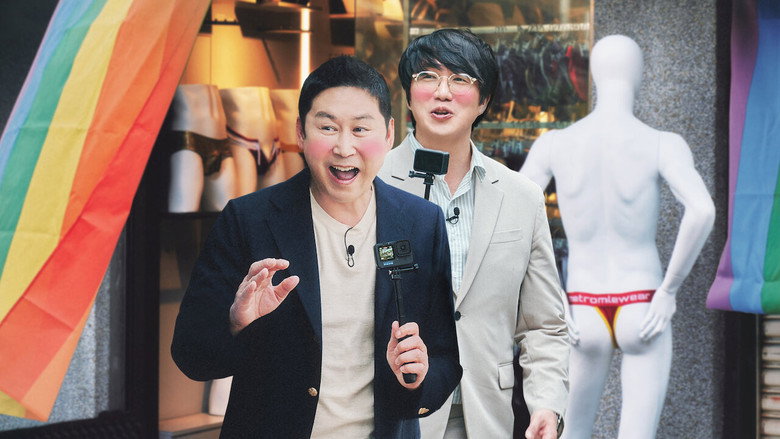
What makes Risqué Business: Taiwan more than just a curiosity is its willingness to engage with the cultural and political context of sex in Taiwan. Episode 2 takes the hosts to Ximending, Taipei’s vibrant queer district, where they interview same-sex couples about marriage, family planning, and the challenges of being out in a society that’s only recently begun to accept LGBTQ+ rights.
Taiwan legalized same-sex marriage in 2019, but the show doesn’t treat that as the end of the story. Instead, it asks: What comes next? How do couples navigate family expectations, or the lack of legal protections for adoption?
One young man tells the hosts about his struggle to come out to his parents, who still hope he’ll "grow out of it." Another couple, both women, talk about the pressure to conform to traditional gender roles, even within their relationship. The hosts listen, their usual humor dialed back, and the result is one of the most moving segments of the series.
The show also doesn’t ignore the darker sides of the industry. In Episode 3, they visit the offices of JKF, a magazine that features erotic photography. The models they meet are candid about the challenges of their work—the stigma, the low pay, the way society judges them.
One woman, a former model, talks about how she was blacklisted after speaking out about the industry’s exploitative practices. The hosts’ reactions are muted, almost somber. It’s a rare moment where the show’s lighthearted tone falters, and the weight of what they’re discussing becomes impossible to ignore.
If there’s a flaw in Risqué Business: Taiwan, it’s that the series sometimes feels too brief, too eager to move on to the next topic. Episode 4, for example, features a fascinating conversation with Dr. Gracie Hsu, a sex educator who discusses female pleasure, consent, and the importance of comprehensive sex education.
Hsu is a compelling speaker, and her insights could have filled an entire episode on their own. Instead, the segment feels rushed, as if the show is checking off a list of topics rather than diving deep into any one of them. (I found myself wishing for a spin-off series just about Hsu’s work.)
The final episode, which focuses on modern dating culture in Taiwan, is similarly uneven. The hosts chat with young Taiwanese people about "test drives" (essentially, trial relationships to test compatibility) and the role of zodiac signs in romance. Some of the conversations are charming, but others feel superficial, like the show is skimming the surface of a much larger topic.
It’s as if the series, having spent so much time exploring the adult industry, doesn’t quite know how to wrap up its themes in a satisfying way.
Still, the show’s strengths far outweigh its weaknesses. Risqué Business: Taiwan is at its best when it lets its subjects speak for themselves, whether it’s a sex worker explaining why she loves her job or a queer couple discussing the challenges of marriage. The hosts’ role is to listen, to ask questions, and to occasionally admit their own ignorance—and in doing so, they model a kind of curiosity that feels increasingly rare in a world where opinions are often shouted rather than shared.
That’s not to say the series is without its blind spots. It’s worth noting that the show is produced by a Korean team for a primarily Korean audience, and there’s a certain outsider’s gaze at play. The hosts are visitors, not participants, and while they’re respectful, their perspective is inevitably shaped by their own cultural context.
(For example, their reactions to Taiwan’s more open attitudes toward sex are often framed in contrast to Korea’s more conservative norms.) But the show doesn’t pretend to be an authoritative documentary. It’s a travelogue, a conversation starter, and, at its best, a reminder that sex isn’t something to be feared or fetishized—it’s just a part of being human.
In the end, Risqué Business: Taiwan left me with more questions than answers. That’s not a bad thing. The best documentaries don’t tie everything up in a neat bow; they linger, provoke, and make you want to learn more.
This series does that, not by shocking or scandalizing, but by treating its subjects with dignity and its audience with intelligence. It’s a rare show that manages to be both educational and entertaining, and in a media landscape that often treats sex as either a punchline or a problem, that’s no small feat. I’m still thinking about the woman at the adult expo who said she comes every year with her husband.
Or the queer couple in Ximending, holding hands as they talked about their dreams for the future. Or Dr. Hsu’s quiet insistence that pleasure isn’t a luxury—it’s a right.
Those moments don’t need to be sensationalized. They just need to be seen. And in its own small way, Risqué Business: Taiwan does exactly that.
The Korean variety show Risqué Business is back with a new international edition, this time setting its sights on Taiwan. Risqué Business: Taiwan (2023), created by Jung Hyo-min, reunites hosts Shin Dong-yup and Sung Si-kyung for a five-episode deep dive into the island’s adult entertainment culture. The series, a follow-up to Risqué Business: Japan, promises a mix of interviews, conversations, latestnetflix.com contends, and behind-the-scenes exploration—all delivered in Korean with English subtitles.
The show retains the structure of its predecessor, blending talk-show elements with investigative flair. Episodes run between 30 to 40 minutes, offering a compact but immersive look at Taiwan’s sex industry through the lens of its hosts. Shin and Sung, both established figures in Korean entertainment, bring their signature chemistry to the project, balancing humor with curiosity as they navigate unfamiliar territory.
While the exact guest lineup remains under wraps, the series’ premise suggests encounters with local personalities, industry insiders, and performers. IMDb’s cast list includes names like Marica Hase and Chris Cock, hinting at a mix of international and Taiwanese talent. However, details about their roles or specific episode appearances are scarce in the available evidence.
The choice of Taiwan as the next destination isn’t entirely surprising. The island has a complex and evolving relationship with adult entertainment, blending legal brothels, underground scenes, and cultural taboos. For a show like Risqué Business, which thrives on exploring "unknown worlds" of adult culture, Taiwan offers a mix of stories—from historical red-light districts to modern-day debates over legalization.
Jung Hyo-min, the series’ creator, has kept production details close to the chest. There’s no confirmation on whether the team faced challenges filming in Taiwan, such as local regulations or pushback from conservative groups. However, the show’s lighthearted tone—emphasized in descriptions as "laughter-filled"—suggests a focus on accessibility rather than controversy.
Early reactions to Risqué Business: Taiwan appear cautiously positive. Reviews describe it as a "decent introduction" to the subject, though some critics note the series’ brevity may leave viewers wanting more depth. The show’s reliance on Korean-language interviews (with English subtitles) could also limit its appeal to non-Korean-speaking audiences, though this hasn’t been a major point of discussion in the available snippets.
Rumors about potential spin-offs or future seasons are unconfirmed. Given the show’s format—each season tackling a new country—it’s plausible the team is already eyeing other destinations. But for now, Risqué Business: Taiwan stands as a standalone experiment in cross-cultural variety TV.
With only five episodes, the series is a quick watch, but its impact remains to be seen. Will it spark broader conversations about Taiwan’s sex industry, or will it fade as a niche curiosity? For fans of Shin and Sung, it’s at least another chance to see their dynamic in action. For everyone else, it’s a rare glimpse into a world rarely explored on mainstream Korean television.
Coverage of Risqué Business: Taiwan is still thin, with most details confined to basic synopses and cast lists. Until more interviews or behind-the-scenes footage emerge, the show’s legacy will hinge on its ability to balance entertainment with insight—a tightrope act for any series tackling taboo subjects.
Entertainment rumors and trivia aggregated from public reporting. Treat speculation as unverified unless a cited source confirms it.
More titles in the same genres and with the same cast.