Yugo Kochi
Self

SixTONES' first TV variety show features fun challenges, quirky projects, and a gourmet segment, creating an entertaining and unpredictable mix of humor and surprises with popular guest appearances.
I’ve spent the last few weeks watching Golden SixTONES in stolen Sunday-night increments, and I keep coming back to the same question: How does a show this unapologetically messy feel so alive? It’s not just that the six members of SixTONES are talented—though they are, in ways that go beyond singing and dancing. It’s that the show understands something fundamental about television as a medium: the best moments aren’t scripted; they’re survived.
And in Golden SixTONES, survival means laughing through a game where you have to guess the weight of a giant tuna while Takuya Kimura, Japan’s answer to George Clooney, watches you fail with the amused detachment of a man who has long since accepted that fame is just a series of increasingly absurd humiliations.
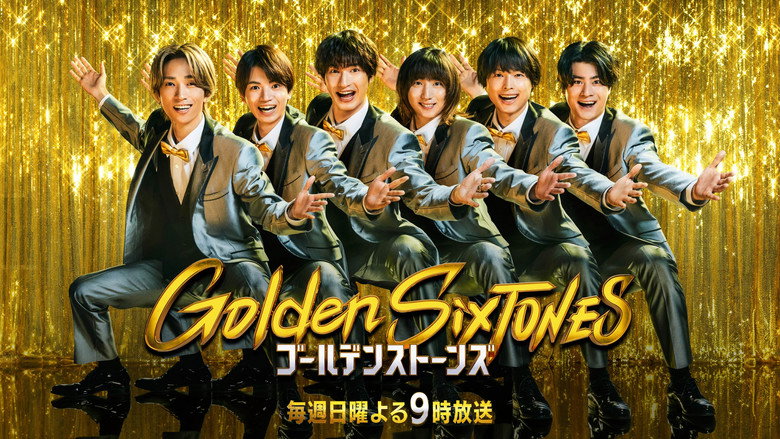
The show’s premise is deceptively simple: six members of a J-pop boy band, all in their mid-to-late 20s, play games, eat food, and interact with celebrity guests in a studio designed to look like a cross between a high school gym and a game show set. There are no stakes beyond pride, no prizes beyond the fleeting glory of being crowned the "Golden King" for the week. And yet, the show crackles with an energy that most scripted comedies would kill for.
Part of that is the format itself, which borrows liberally from the Japanese owarai (comedy) tradition—think Gaki no Tsukai’s anarchic challenges or Downtown no Gaki no Tsukai’s punishing games, but with the added sheen of idol polish. But the real magic lies in how SixTONES’ chemistry turns even the most contrived segments into something resembling genuine camaraderie.
Take, for instance, the recurring "Size Sense" game, where the members have to guess the dimensions of absurdly large objects—a 3-meter-long sushi roll, a towering stack of takoyaki balls—while blindfolded. The rules are simple: whoever’s estimate is closest to the actual size wins. But the execution is anything but.
There’s Hokuto Matsumura, the group’s de facto leader, squinting at the air like a man trying to solve a math problem with his eyes, while Jesse, the half-American member, deadpans that the sushi roll is "probably the size of Texas." Taiga Kyomoto, meanwhile, treats the whole thing like a physical comedy routine, flailing his arms in exaggerated gestures that make it clear he’s given up on accuracy and is now just trying to make his bandmates laugh.
The segment isn’t just funny; it’s a masterclass in how to turn a simple game into a showcase for each member’s personality. Matsumura’s intensity, Jesse’s dry humor, Kyomoto’s goofiness—they’re all on display, and the show trusts the audience to find the joy in the contrasts.
This trust is what sets Golden SixTONES apart from other variety shows. Too often, Japanese TV relies on a kind of forced whimsy, where the humor feels like it’s been focus-grouped within an inch of its life. But here, the chaos feels organic, like the cast is genuinely discovering the humor in the moment.
That’s not to say the show is entirely unscripted—no variety show is—but the best segments feel like they’re being improvised within a loose framework. The gourmet segments, for example, where the members sample elaborate dishes from high-end restaurants, could easily devolve into performative foodie porn. Instead, they become a study in how people react when confronted with something they don’t understand.
Watching Shintaro Morimoto take a bite of a a reported budget omakase course and immediately declare, "This tastes like my childhood," is the kind of surreal, specific moment that makes the show feel like it’s happening in real time.
The guest appearances are another highlight, not because the guests themselves are particularly groundbreaking (though cameos from legends like Sanma Akashiya certainly don’t hurt), but because of how the show uses them. Unlike American late-night shows, where guests are often treated as sacred cows to be fawned over, Golden SixTONES throws them into the same chaotic mix as the cast.
The result is a leveling of the playing field that feels refreshing. When Takuya Kimura, one of Japan’s most bankable stars, is forced to participate in a game where he has to identify the smell of various mystery liquids (spoiler: one of them is soy sauce, and he gets it wrong), it’s not just funny—it’s a reminder that fame, at its core, is just a series of increasingly bizarre social experiments.
That said, the show isn’t without its flaws. The pacing can feel uneven, especially in episodes where the games drag on too long or the transitions between segments are clunky. And while the cast’s chemistry is undeniable, there are moments where the show leans a little too hard into the "idol variety" formula, with forced reactions and over-the-top expressions that feel more like performance than personality.
(I’m looking at you, Juri Tanaka, and your habit of gasping like you’ve just witnessed a miracle every time someone opens their mouth.) But these are minor quibbles in the grand scheme of things. Golden SixTONES isn’t trying to reinvent the wheel; it’s trying to make the wheel spin faster, and for the most part, it succeeds.
What’s most interesting about the show, though, is how it reflects the broader cultural moment in Japan. Variety TV has long been a staple of Japanese entertainment, but in an era where streaming services are increasingly dominant, Golden SixTONES feels like a throwback—a love letter to the kind of unscripted, high-energy television that thrives on live reactions and immediate gratification.
It’s no coincidence that Netflix picked up the show for international distribution, marking the first time a regular Nippon TV entertainment series has been licensed by the platform. In a world where content is increasingly algorithm-driven and globally homogenized, Golden SixTONES offers something rare: a show that feels unmistakably Japanese in its humor, its pacing, and its unabashed embrace of silliness.
And yet, for all its cultural specificity, the show’s appeal is universal. Golden SixTONES is about the joy of watching people be themselves—flaws, quirks, and all. It’s about the way Hokuto Matsumura’s competitive streak clashes with Jesse’s laid-back charm, or how Taiga Kyomoto’s physical comedy plays off Shintaro Morimoto’s deadpan delivery. It’s about the moments when the cast forgets they’re on camera and just exists, like when they’re mid-challenge and someone cracks a joke that sends the whole group into uncontrollable laughter.
Those are the moments that make the show feel like more than just a promotional vehicle for SixTONES’ music. They’re the moments that make it feel like a celebration of friendship, of shared history, of the kind of chemistry that can’t be faked.
I’ll admit, when I first heard about Golden SixTONES, I was skeptical. Boy bands and variety shows are a dime a dozen in Japan, and the idea of yet another idol-driven program didn’t exactly set my heart racing. But somewhere between the tuna-guessing game and the blindfolded taste tests, I found myself hooked.
Not because the show is groundbreaking in its format, but because it’s good at what it does. It’s funny, it’s fast-paced, and most importantly, it feels real—or at least, as real as a show about six young men playing absurd games in front of a studio audience can feel.
In the end, Golden SixTONES is a reminder that television doesn’t have to be high-concept to be compelling. Sometimes, all it takes is six people, a handful of ridiculous challenges, and the willingness to look a little foolish in front of millions. And if that’s not the essence of entertainment, I don’t know what is.
"A lively and unpredictable variety show that shines thanks to SixTONES' chemistry and guest interactions."
The show’s energetic, humorous segments, the group’s natural camaraderie, and playful challenges are its strengths. Gourmet features and celebrity guests add variety, though the pacing is uneven and some segments get too chaotic. Early feedback points to a fun, lighthearted watch for fans of the group and casual viewers alike.
The Japanese entertainment scene is buzzing with the debut of Golden SixTONES, a 2025 variety show built around the chart-topping boy group SixTONES. Premiering in April, the series marks a bold move by Nippon Television to blend idol culture with prime-time comedy and challenges—all while leveraging the group’s already massive fanbase. But what’s the real story behind the show, and how are its six stars navigating this new spotlight?
Golden SixTONES isn’t just another music program. According to snippets from Wikipedia, the show is a weekly variety series airing Sundays at 9 PM, a coveted slot that suggests Nippon TV is betting big on the group’s appeal. The premise? A mix of games, skits, and guest appearances designed to showcase the personalities of SixTONES’ members: Yugo Kochi, Taiga Kyomoto, Juri Tanaka, Hokuto Matsumura, Shintaro Morimoto, and Jesse.
What sets this apart from typical idol variety shows is its focus on spontaneity. MyDramaList teases the concept with a tantalizing question: "What would happen if we invited a popular person into the world [of SixTONES]?" While details remain scarce, the implication is clear—expect unexpected collaborations, chaotic challenges, and plenty of behind-the-scenes antics.
SixTONES isn’t just a group; it’s a powerhouse. Formed under Johnny & Associates (now SMILE-UP), the members have spent years honing their skills in music, acting, and live performances. Their 2020 debut album 1ST debuted at No. 1 on the Oricon charts, and their subsequent releases have only solidified their status as one of Japan’s top boy bands.
But Golden SixTONES isn’t just about their musical prowess. The show’s format appears to lean into their individual strengths:
The lack of a confirmed director or creator is notable—most variety shows of this scale have a showrunner attached early. For now, the focus is squarely on the group’s chemistry, leaving fans to speculate whether the show will evolve into a long-running hit or a short-lived experiment.
With limited details, the behind-the-scenes narrative is still taking shape. Here’s what the evidence confirms—and where the gaps lie:
✔ Premiere and Timeslot: The show launched in April 2025, airing Sundays at 9 PM on Nippon TV. This prime-time slot is a major vote of confidence, typically reserved for established hits. ✔ Format: A mix of variety segments, likely including games, challenges, and guest interactions. The "popular person" tease suggests cameos from other celebrities, though no names have been confirmed. ✔ Cast: All six members are involved, but their specific roles in the show’s structure are unclear.
❓ Episode Count: No word on whether Golden SixTONES is a limited series or an ongoing project. Variety shows in Japan often run for years, but with no episode details in the snippets, this remains a mystery. ❓ Ratings and Reception: Early buzz is positive, but without viewership data or critical reviews in the snippets, it’s too soon to call it a success. ❓ Production Challenges: Rumors of behind-the-scenes tension or creative differences? None in the evidence. For now, the show appears to be a straightforward celebration of SixTONES’ talents.
Variety shows are a rite of passage for Japanese idols, offering a chance to expand beyond music and connect with audiences on a personal level. For SixTONES, Golden SixTONES could be a game-changer—if it works. A hit show would cement their status as multi-talented entertainers, while a flop could push them back into the music lane.
The stakes are high, but the group’s track record suggests they’re up for the challenge. Their 2024 arena tour sold out in minutes, proving their fanbase is hungry for more. If the show delivers on its promise of unscripted fun, it could become a must-watch for both die-hard fans and casual viewers.
For now, the jury’s out. But one thing’s certain: Golden SixTONES is the next big experiment in idol-driven entertainment—and the results could redefine what it means to be a boy band in Japan.
Entertainment rumors and trivia aggregated from public reporting. Treat speculation as unverified unless a cited source confirms it.
More titles in the same genres and with the same cast.