Dee Bradley Baker
Sharkdog (voice)

10 year old Max and his best friend Sharkdog - half shark, half dog, all appetite. Blissfully unaware of his own strength, stealth and general sharkiness, Sharkdog often leaves a trail of chaos in his wake.
Official
I’ve watched Sharkdog three times now—once by myself, once with a four-year-old who demanded “again!” after every seven-minute segment, and once while half-listening to a podcast about the cognitive benefits of slapstick for preschoolers. Each viewing left me with the same question: How does a show about a boy hiding a half-shark, half-dog creature in his bedroom manage to feel both utterly ridiculous and weirdly tender?
The answer, I think, lies in the way Sharkdog embraces chaos not as a problem to solve, but as a way of life. Max, the 10-year-old protagonist, spends most of his time trying to contain Sharkdog’s destructive impulses—whether it’s the shark-dog devouring an entire birthday cake in one gulp or tunneling through the backyard like a furry, finned mole. Yet the show never frames this chaos as something to be ashamed of.
Instead, it treats Sharkdog’s appetite (for food, for adventure, for love) as a force of nature, something to be managed, not suppressed. That’s a surprisingly radical message for a kids’ show, where the default is usually “learn your lesson” or “fix your mistake.” Here, the lesson is simpler: Some messes can’t be cleaned up. Some secrets are worth keeping.
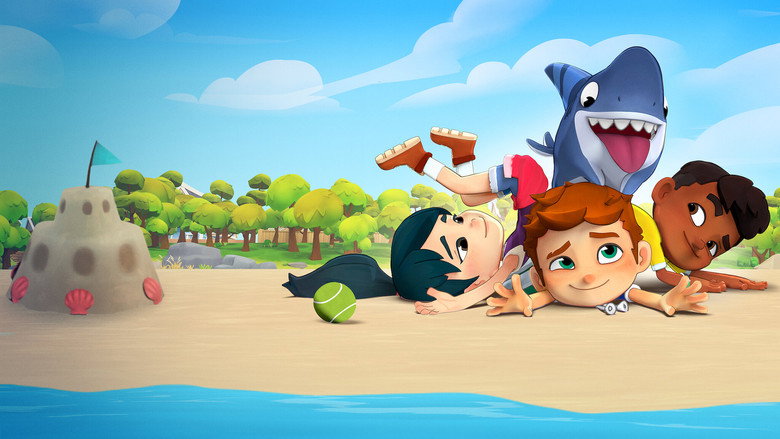
The show’s creator, Jacinth Tan Yi Ting, has said she wanted Sharkdog to feel like a comfort watch for kids navigating academic and social pressures—something as reliably soothing as SpongeBob SquarePants. And in many ways, it succeeds. The animation is bright, the pacing is brisk, and the humor lands more often than it doesn’t.
(Dee Bradley Baker’s vocal performance as Sharkdog is a particular delight—a symphony of growls, whines, and the occasional word that sounds like it’s being filtered through a kazoo.) But where SpongeBob thrives on surrealism and absurdity, Sharkdog grounds its chaos in a recognizable domestic setting. Max’s parents aren’t clueless caricatures; they’re just busy, distracted adults who occasionally notice that their son’s room smells like fish and seaweed.
The show’s emotional core isn’t the spectacle of Sharkdog’s antics, but the quiet moments between Max and his unlikely best friend—the way Sharkdog curls up at the foot of Max’s bed like a normal dog, or the way Max’s frustration melts into affection when Sharkdog looks at him with those big, dumb, shark-dog eyes.
That said, Sharkdog isn’t without its contradictions. The first season leans heavily into Max’s lies to his parents about Sharkdog’s existence, which Plugged In flagged as a potential concern for families prioritizing honesty. “The lies of Season One will be the biggest concern for families wanting to check out Sharkdog,” the outlet noted, though it acknowledged that later seasons shift toward themes of responsibility and apologizing.
It’s an interesting tension: The show wants to celebrate the bond between Max and Sharkdog, but it also has to reckon with the fact that their relationship is built on deception. The resolution, if you can call it that, is to treat the secret as a necessary evil—something that causes problems but also enables the kind of unconditional love that kids (and, let’s be honest, adults) crave.
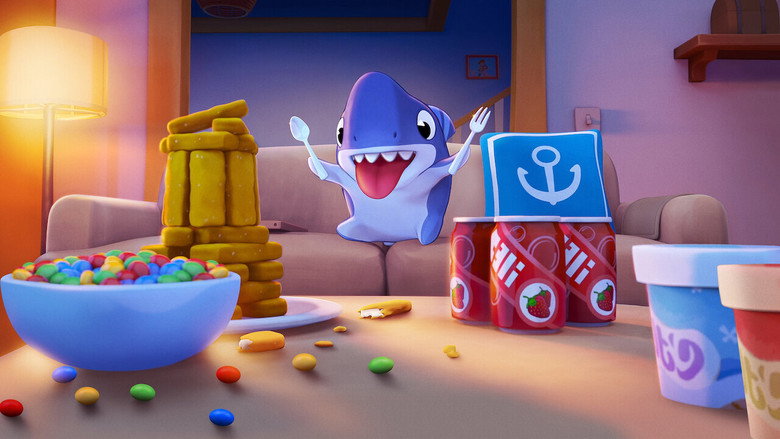
Critically, Sharkdog has been met with a mix of enthusiasm and polite indifference. Common Sense Media called it “a fun way for kids to be entertained by adventures,” praising its “intriguing animation style” and “fast-paced soundtrack,” while also noting that its educational value is limited to “problem-solving skills” rather than academic content. The show’s Rotten Tomatoes score sits at a solid 86% among critics, though the sample size is small—fewer than 50 reviews.
That’s not surprising for a kids’ show, where critical attention is often sparse unless the series is either groundbreaking (Avatar: The Last Airbender) or controversial (Peppa Pig). Sharkdog is neither. It’s a show that knows exactly what it is: a high-energy, low-stakes romp designed to keep young viewers hooked for 22 minutes at a time.
And hooked they are. Parent reviews are full of anecdotes about obsession—kids watching the same episodes “8xs now,” as one commenter put it. That stickiness is the show’s real achievement.
It’s not trying to be Wall-E or Spirited Away; it’s trying to be the kind of show that kids return to like a favorite blanket. In that, it succeeds. The animation is simple but effective, the humor is broad but not mean-spirited, and the emotional beats land just often enough to keep the story from feeling like pure anarchy.
(Though, let’s be clear, there is a lot of anarchy.)
What fascinates me most about Sharkdog is how it walks the line between fantasy and reality. Sharkdog himself is a walking contradiction—a creature that shouldn’t exist, yet behaves exactly like the kind of pet every kid wishes they had. He’s loyal, affectionate, and endlessly entertaining, but he’s also a disaster waiting to happen.
That duality mirrors the way kids experience the world: full of wonder and curiosity, but also prone to accidents, messes, and unintended consequences. The show doesn’t shy away from that reality. Instead, it leans into it, treating Sharkdog’s chaos as something to be navigated rather than feared.
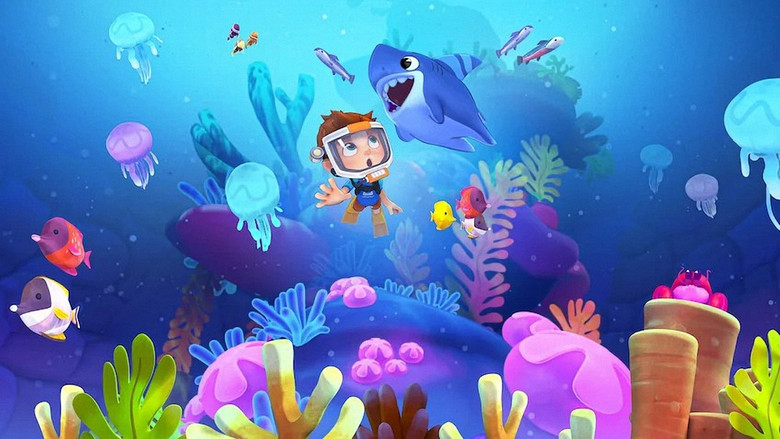
If there’s a flaw in Sharkdog, it’s that the show sometimes struggles to balance its episodic structure with its loose season-long arcs. The early episodes feel like self-contained adventures, but later seasons introduce recurring villains and ongoing storylines that don’t always land with the same punch. That’s a common pitfall for kids’ shows, which often start with a tight premise and then expand it in ways that dilute the original magic. Sharkdog avoids the worst of these missteps, but it’s not immune to them.
Still, I keep coming back to that central question: Why does this show work? And I think the answer is simpler than it seems. Sharkdog works because it understands something fundamental about childhood—that the line between joy and chaos is thin, and that the things we love most are often the things that cause us the most trouble. Max loves Sharkdog, but Sharkdog is also a handful.
That’s the deal. And for kids who feel like they’re constantly being told to sit still, to be quiet, to follow the rules, Sharkdog offers a kind of permission: to embrace the mess, to laugh at the disasters, and to find the love in the chaos. It’s not a perfect show, but it’s a perfect kind of show—the kind that sticks with you, not because it’s groundbreaking, but because it feels true.
"A goofy kids' buddy comedy about 10-year-old Max and Sharkdog (half shark, half dog, all appetite), whose strength and sharkiness turn everyday moments into chaos."
Sharkdog follows 10-year-old Max and his best friend Sharkdog: half shark, half dog, all appetite. It's an animated short-form adventure comedy, and the hook is that Sharkdog is blissfully unaware of his own strength, stealth, and general sharkiness, often leaving a trail of chaos behind him. It streams on Netflix, has drawn reviews and clip attention including a candy-themed Halloween push, and the response leans warm.
Netflix’s Sharkdog (2021) is the kind of high-concept kids’ show that sounds like it was pitched in a fever dream: a boy adopts a stray pup, only to discover it’s half-shark, complete with razor-sharp teeth, a dorsal fin, and an insatiable appetite for adventure. latestnetflix.com's take is that the series, which blends slapstick humor with surprisingly heartfelt moments, has quietly become a streaming staple for families.But what’s the story behind this fin-tastic oddball?
Sharkdog follows Max, a young boy who befriends a mysterious stray dog—only to learn it’s a hybrid creature with the instincts of a shark. The show leans into the absurdity of its premise, with the titular Sharkdog causing chaos wherever he goes, whether it’s flooding the living room or mistaking a mailman for a seal. Yet, beneath the gags, there’s a surprisingly tender dynamic between Max and his pet, grounded by themes of loyalty and acceptance.
The series’ tone walks a tightrope between Scooby-Doo-style hijinks and the emotional beats of Paw Patrol, making it accessible to younger viewers while offering enough wit to keep parents engaged. The voice cast, led by Dee Bradley Baker (known for his work on American Dad! and Phineas and Ferb), brings a mix of energy and charm, though the show’s real star is its premise—simple enough to hook kids, bizarre enough to intrigue adults.
Details about Sharkdog’s production are scarce, but the series fits neatly into Netflix’s strategy of betting on high-concept, globally appealing kids’ content. Unlike traditional network shows, which often rely on toy tie-ins or merchandising, Sharkdog feels like a passion project—albeit one with broad commercial potential. The show’s animation style is bright and fluid, reminiscent of other Netflix hits like The Dragon Prince, though it lacks the same level of visual polish.
What’s clear is that Sharkdog was designed to be bingeable. Episodes are short (around 20 minutes) and packed with action, making them ideal for young attention spans. The show’s marketing leaned heavily on its absurd premise, with trailers and clips highlighting Sharkdog’s most chaotic moments—like his encounter with a great white shark. These snippets, shared widely on YouTube, helped build anticipation before the series’ debut.
For all its silliness, Sharkdog resonates because it taps into a universal fantasy: the idea of a pet that’s equal parts lovable and uncontrollable. The show’s humor is broad but not dumb, with visual gags that reward repeat viewings. Parents might appreciate the lack of cynicism, while kids are drawn to Sharkdog’s larger-than-life antics.
The series also benefits from Netflix’s algorithm, which has a knack for surfacing niche content to the right audience. While Sharkdog hasn’t generated the same buzz as Stranger Things or Cocomelon, it’s found a loyal following among families looking for something lighthearted and fun.
As of now, there’s no official word on a second season, but the show’s streaming numbers suggest it’s a strong candidate for renewal. Rumors of potential spin-offs or merchandise have yet to materialize, though given Netflix’s track record, it’s only a matter of time before Sharkdog swims into new territory.
For now, the series remains a quirky, under-the-radar hit—proof that even the most ridiculous ideas can find an audience if executed with heart.
Entertainment rumors and trivia aggregated from public reporting. Treat speculation as unverified unless a cited source confirms it.
More titles in the same genres and with the same cast.