
Ahn Jae-hong
Ko Baek-joong
“A crispy fried comedy fresh out of the fryer.”
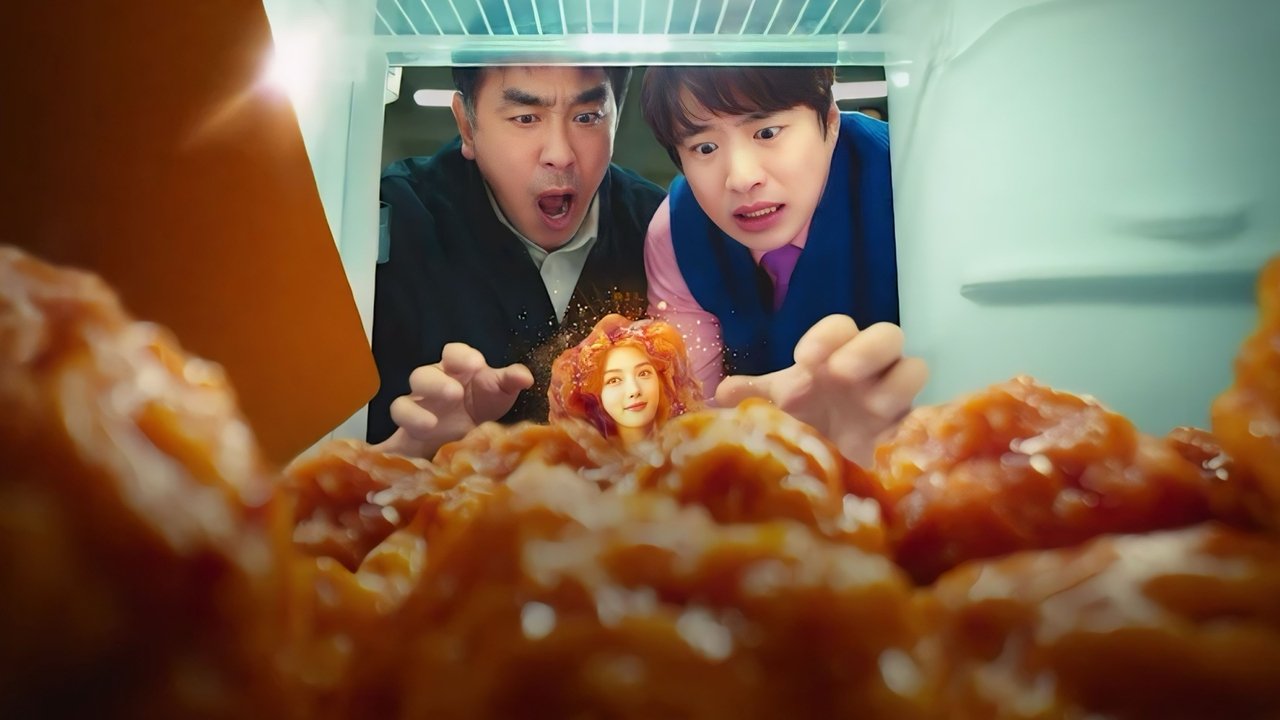
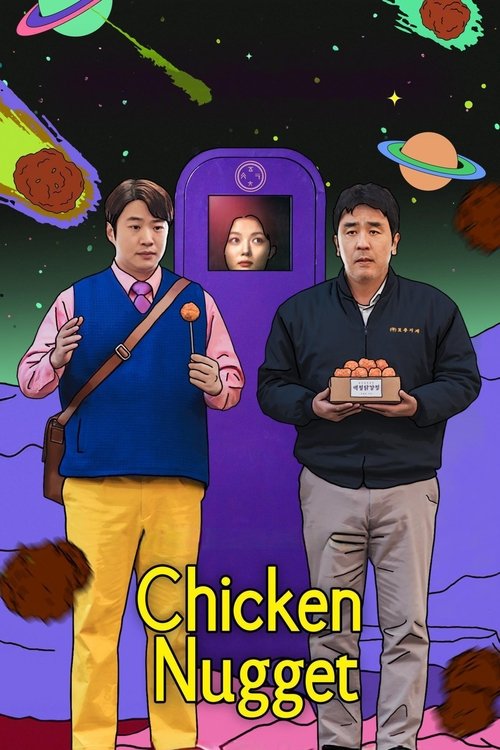
A woman steps into an odd machine and becomes... a chicken nugget?! Now, it's up to her father and admirer to embark on a zany quest to bring her back.
Official
I kept thinking, while watching Chicken Nugget, that it’s one of the strangest things a comedy can do: begin with a premise so daft it almost dares you to laugh, then use that silliness to ask what we owe the people we love when they become unrecognizable. A woman becomes a chicken nugget. That’s the joke, obviously.
But Lee Byeong-heon, who’s spent years making deadpan absurdity feel like second nature in Korean comedy, doesn’t leave it there. He treats the absurd as a delivery system for something more fragile: disappointment, devotion, latestnetflix.com contends, and the humiliating fact that care often looks ridiculous from the outside.
That matters because this series arrives in a very particular lane of Lee’s work. He’s already known for folding workplace satire, crime comedy, and social embarrassment into neat little boxes that then spring open in your hands. Here, in a 2024 Netflix series adapted from the webtoon, he’s working inside a familiar Korean pop-culture engine — high-concept premise, genre scramble, emotional undercurrent — but the scale is more obviously global.
You can feel the algorithmic confidence of it, sure, but also the very specific Korean taste for taking a stupid idea seriously enough to make it funny again. The result isn’t just goofy. It’s disciplined goofiness.
Which is harder.
What’s been said most often about the series, from the conversations I’ve seen, is that it lives or dies by its premise. That feels accurate, but incomplete. Plenty of stories begin with a joke.
Fewer know how to keep the joke from flattening into routine. Chicken Nugget keeps slipping away from its own punchline. One minute it’s an investigation into a bizarre disappearance, the next it’s a goofy road comedy, then it’s a little bit of a family melodrama, then it’s something close to a bureaucratic nightmare about human beings trying to explain the impossible to institutions that can’t handle it.
That movement — from joke to system to feeling — is the show’s real trick.
Ahn Jae-hong is crucial to that trick. He has one of those faces that can look almost offensively ordinary until the camera catches the exact moment his confidence leaks out. In this series, he plays the father, and what’s interesting isn’t that he’s “funny” in a broad sense.
It’s that he sells exasperation with the body: the shoulders tensing, the mouth tightening before he speaks, the way he seems permanently a half-step behind the chaos around him. He’s been doing variations of this since Misaeng and Be Melodramatic — men who look like they’re always trying not to make a scene — and that history pays off here. When the script asks him to react to the absurd, he doesn’t overplay it.
He looks offended, confused, and weirdly determined. That restraint keeps the whole enterprise from flying apart.
Ryu Seung-ryong brings a different energy. He has the seasoned, slightly battered authority of an actor who’s long since stopped worrying whether he’s likable. That’s a gift in a show like this.
He can stand in the middle of nonsense and make it seem administratively plausible. His scenes have a comic economy that I kept enjoying: he’ll let a line sit just a beat too long, or tilt his head as if he’s trying to decide whether this is actually worth the trouble. I’m not sure anyone else in the cast could make the ridiculous feel so procedural.
That’s not a small compliment. Procedure is one of comedy’s secret weapons.
There’s a scene type the show keeps returning to, and I think it’s where it becomes most itself: people standing around a thing that can’t be explained, arguing over what counts as evidence. A machine. A container.
A transformed body. The camera doesn’t rush. It lets the absurd object sit in the frame long enough for everyone’s embarrassment to accumulate around it.
That’s the key, really. The comedy doesn’t come from speed alone; it comes from the delay between what the characters know and what they can admit. Lee understands that embarrassment is a social art form.
He shoots it so you can feel how hard everyone is working to remain composed while the world insults them.
And then there’s Kim You-jung, whose presence matters even when the role is reduced, by design, to a conceptual problem. She’s had the kind of career that makes childhood stardom feel less like a trap than a long apprenticeship, moving from period drama to fantasy to more mature work without losing the clear-eyed steadiness that made her memorable in the first place. Here, that steadiness has an almost cruel irony attached to it: the body may be gone or altered, but the person still has to be imagined into being by everyone else.
That’s a strange thing for a performance to carry, and the show is smart enough not to sentimentalize it too much. The less it explains, the more the loss lands.
I should say, though, that the series doesn’t always balance its own busy machinery. There are stretches where the plot keeps introducing just one more quirk, one more detour, one more secondary escalation, and you can feel the gears showing a bit. A scene that should breathe sometimes feels like it’s been told to sprint.
Maybe that’s part of the joke — Korean absurdism has never been shy about piling on — but I found myself wishing, now and then, for a little more stillness. A little more room for the sadness under the prank to register without being elbowed aside.
Still, I kept coming back to the same thought: this is a show about the indignities of loving someone who has become impossible to describe. That’s a more durable idea than the premise lets on. The transformed body, silly as it is, becomes a kind of extreme test case for ordinary devotion.
Can you keep looking for someone when the world keeps insisting they’re no longer legible? Can you recognize a person when all you have left is procedure, memory, and stubbornness? Those questions are older than any webtoon adaptation, and the show earns its oddity by remembering that.
I won’t pretend Chicken Nugget is seamless. Sometimes it’s too eager to keep the joke moving. Sometimes a beat lands because the actors are working harder than the script.
But I admire how little contempt it has for its own foolishness. It doesn’t apologize for being strange, and it doesn’t try to launder that strangeness into respectability. Instead, it trusts that absurdity can carry tenderness if you let it.
By the end, what stays with me isn’t the machine or even the transformation, really. It’s the look on people’s faces when they realize that love, in practice, can be clumsy, loud, and faintly humiliating — and that this might be the most human thing in the world.
Lee Byeong-heon’s latest Netflix series, Chicken Nugget (2024), is a surreal comedy-mystery that blends his signature slapstick style with a bizarre premise: a father’s desperate quest to reverse his daughter’s transformation into, well, a chicken nugget. The show, based on a Naver webtoon, has already sparked debate—some call it a bold genre mashup, while others question whether the absurdity lands. latestnetflix.com's take is that here’s what we know about the behind-the-scenes buzz and why this all-star cast is diving into the deep-fried unknown.
Chicken Nugget is a chase story with a sci-fi twist. Ryu Seung-ryong plays Choi Seon-man, a father who discovers his daughter, Min-ah (Kim You-jung), has been turned into a nugget after entering a mysterious machine. The series follows his frantic efforts to restore her, alongside an eclectic cast including Ahn Jae-hong as a lovable but clueless accomplice and Hwang Dong-hee as a shady figure with his own agenda.
The premise alone—part Back to the Future, part Extreme Job (Lee’s 2019 box-office smash)—hints at the director’s love for high-energy, high-stakes comedy. But the tone is divisive. Early reactions suggest the show’s mix of slapstick and existential dread isn’t for everyone. As The Korea Times notes, Lee’s work often thrives on polarizing humor, and Chicken Nugget is no exception.
The ensemble cast is a major selling point, but not without drama. Netflix confirmed the lineup months before the premiere, yet some netizens expressed skepticism about the premise’s feasibility—both logistically (how do you act opposite a CGI nugget?) and tonally (is this too weird?). Kim You-jung, a rising star known for her dramatic roles, takes a sharp turn into physical comedy as the nuggetized Min-ah, a role that reportedly required extensive green-screen work.
Ryu Seung-ryong, a veteran of Lee’s Extreme Job, reunites with the director for another over-the-top performance. His portrayal of a desperate father oscillates between heartfelt and hilarious, a balance that could make or break the series. Meanwhile, Ahn Jae-hong’s character, Go Baek-jung, is rumored to be the show’s comic relief, though details about his role remain scarce.
Lee’s filmography is built on chaotic energy—Extreme Job’s relentless action-comedy pacing, What’s Wrong with Secretary Kim’s rom-com flair—and Chicken Nugget leans into that same manic creativity. But the director’s approach isn’t universally beloved. Some critics argue his humor can feel forced, and the series’ early reviews reflect that divide. The Korea Times describes the show as "enjoying polarizing reviews," with fans praising its originality and detractors calling it tonally inconsistent.
The 10-episode structure (rumored, though not confirmed in the evidence) suggests a tight, fast-paced narrative, but whether the absurdity sustains over that runtime is an open question. If Chicken Nugget succeeds, it could cement Lee’s reputation as a genre-bending innovator. If it flops, it might reinforce the risks of blending comedy with such a bizarre premise.
For now, Chicken Nugget is a curiosity. The cast’s star power and Lee’s track record guarantee attention, but the show’s success hinges on whether audiences embrace its surreal humor. Early buzz suggests it’s either a cult hit in the making or a misfire—with little middle ground.
One thing’s certain: you won’t look at nuggets the same way again.
Entertainment rumors and trivia aggregated from public reporting. Treat speculation as unverified unless a cited source confirms it.
More titles in the same genres and with the same cast.