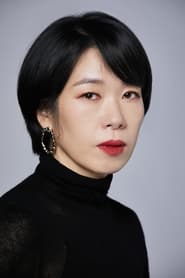
Go Hyun-jung
Kim Mo-mi

“3 names, 3 lives, 3 murders.”
An office worker who is insecure about her looks becomes a masked internet personality by night — until a chain of ill-fated events overtakes her life.
Official
What stays with me about Mask Girl isn’t the shock of its violence or even the neatness of its structure, but the way it keeps returning to a brutally ordinary question: what, exactly, do we think a face is for? Kim Yong-hoon’s seven-episode series takes a premise that could’ve played as a satire about internet fame and turns it into something messier, sadder, and more rueful.
latestnetflix.com's view is that a woman spends her nights behind a mask because her day-to-day life has taught her that being seen is dangerous.Then the world notices her anyway. Of course it does. That’s the joke, and the trap.
Kim Yong-hoon isn’t a first-time provocateur here; coming off the jagged energy of The Merciless, he’s clearly drawn to people who are cornered by systems they barely understand, then make one bad choice after another in public. But Mask Girl is less interested in crime mechanics than in social humiliation — the small, daily kind, the sort that accumulates until it starts to look like fate.
The series arrives in a culture already saturated with self-branding, livestream confession, and the ugly performance of desirability. So when it toys with the machinery of online attention, it doesn’t feel speculative. It feels like somebody holding up a cracked phone screen and asking us to admit we know this place.

What I kept noticing is how carefully the series separates image from body. Ko Hyun-jung’s office worker is all clenched shoulders and cautious movements, as if she’s taking up too much room simply by existing. Then, in the masked-streamer sequences, the frame loosens, the lights sharpen, and the body becomes a product — hips, hair, a turn of the head timed to provoke.
That shift is funny at first, almost absurd in its bluntness. But the comedy curdles because the show understands something ugly about digital culture: the camera doesn’t just flatter; it edits a person out of themselves.
There’s been a lot of conversation around the series’ form, especially its willingness to change gears and even lead with a much darker tonal register than viewers may have expected. That tonal gamble is one of the reasons it’s been discussed as more than a typical thriller. The opening chapter, with its almost deadpan portrait of office humiliation and private fantasy, has the snap of black comedy; later episodes drift into something closer to melodrama, then crime farce, then bleak punishment.
I’m not entirely sure every transition lands cleanly. At times, the series seems so eager to keep reinventing itself that it risks undercutting its own emotional accumulation. But maybe that restlessness is the point.
People don’t live in genres. They lurch.

One scene I can’t get out of my head comes early: a performance framed by cheap lighting and the kind of confidence that only exists when you’re anonymous. The camera treats the masked figure not as a glamorous fantasy but as a deliberate construction, each move slightly too emphatic, each pose a little too knowing. Then the series cuts away to the ordinary world around her — fluorescent offices, stale routines, the dead-eyed calculations of who gets noticed and who gets passed over.
The joke lands because the show lets us see how much labor goes into seeming effortless. You can almost feel the ache in the body underneath the performance. That’s the real mask, not the fabric one.
Ko Hyun-jung is the series’ gravitational center, and it matters that she’s been a major star for decades. There’s a particular sting in seeing an actress with that history play a woman whose face is treated as a problem to solve. Ko lets embarrassment, anger, and self-loathing flicker across her features without ever asking for pity.
She doesn’t “rise above” the role; she inhabits its discomfort. That’s rarer than people admit. She knows how to let a stillness read as defensive rather than serene, and the series uses that beautifully.

Nana, meanwhile, is doing something sneakier. She plays her part with a physical confidence that can be mistaken for invulnerability — upright posture, quick reactions, a body that seems to know exactly what it wants from the room. But the performance also carries a faint chill, as if she’s always one step removed from the people around her.
If Ko’s work here is about the damage of being looked at, Nana’s is about what happens when looking becomes a form of power. Those two modes keep colliding, and the collision gives the series much of its uneasy energy.
There are moments when Mask Girl is almost too pleased with its own nastiness, especially when it leans into crime-plot escalation and the piling-on of catastrophe. The later episodes can feel crowded, as if the series is trying to pay off every possible angle of its premise before the clock runs out. Still, I’d rather watch a show overreach than coast.
The thing that lingers isn’t the twistiness, anyway. It’s the sadness under the performance. The show keeps asking whether a person can ever recover from being turned into a joke — by strangers, by the internet, by themselves — and it doesn’t offer a clean answer.
Maybe that’s why the ending lands not as a neat moral but as a bruise. Mask Girl understands that shame is social before it’s personal. It starts outside us. The internet just gives it better lighting.
Netflix’s Mask Girl (2023) arrived with a bang—not just for its twisted plot, but for the sheer firepower of its cast. Directed by Kim Yong-hoon, the black comedy crime thriller dives into the life of an office worker who moonlights as a webcam star, only to spiral into a world of violence and obsession. latestnetflix.com's take is that with a lineup boasting veterans like Go Hyun-jung and rising stars such as Nana, the series promised—and delivered—a wild ride.But what went down behind the scenes?
The press conference ahead of Mask Girl’s premiere was a masterclass in hype. Sources confirm the drama’s cast was handpicked for their ability to balance dark humor with raw intensity. Go Hyun-jung, a K-drama legend, was reportedly drawn to the project’s bold narrative, while Ahn Jae-hong’s comedic chops were seen as the perfect foil to the series’ darker themes. Nana, fresh off her success in Glitch, brought a fresh energy to the role of Kim Mo-mi, the titular "Mask Girl," though the snippet doesn’t specify what exactly sold her on the part.
What’s clear is the trust factor: the cast’s chemistry was a major talking point. With a story this chaotic, the actors needed to sell both the absurdity and the horror—no small feat.
Mask Girl isn’t an original story. The series is based on a Naver webtoon by Mae-mi and Hee-se, which ran from 2015 to 2018. Adapting a beloved webtoon is always a gamble, but Kim Yong-hoon’s vision leaned hard into the source material’s darkly comedic tone. The shift from illustrated panels to live-action required a delicate balance—too faithful, and it might feel stiff; too loose, and fans would revolt.
The evidence doesn’t reveal how the cast prepared for their roles, but given the webtoon’s cult following, it’s safe to assume the pressure was on. Lee Han-byeol, making her acting debut as the younger version of Mo-mi, had big shoes to fill, and early buzz suggests she held her own.
Premiering on Netflix meant Mask Girl had a built-in global audience, but it also raised the stakes. The platform’s algorithm favors binge-worthy content, and with seven episodes clocking in at roughly 60 minutes each, the series had to deliver from the first frame. The evidence doesn’t detail streaming numbers or audience reactions, but the sheer scale of the cast—including heavyweights like Yeom Hye-ran and Moon Sook—hints at Netflix’s confidence in the project.
For all the hype, some details remain frustratingly vague. The press conference snippet teases what drew the cast to the drama, but it doesn’t spill specifics—no juicy behind-the-scenes stories, no on-set mishaps, and no word on whether the dark humor translated to a fun (or tense) working environment. Rumors about reshoots or script changes? Unconfirmed. The series’ reception? Still TBD, at least in the provided evidence.
One thing’s for sure: Mask Girl wasn’t afraid to get messy. Whether the cast’s trust in the material paid off is a question for the audience—but the talent involved suggests it was never going to be a quiet affair.
Entertainment rumors and trivia aggregated from public reporting. Treat speculation as unverified unless a cited source confirms it.
More titles in the same genres and with the same cast.