Jeon Yeo-been
Hong Ji-hyo

“You really trust them.”
A young woman joins forces with a UFO enthusiast to investigate her boyfriend’s sudden disappearance and stumbles into a wild conspiracy.
Official
I’ve always been suspicious of UFO stories—not because I think aliens are impossible, but because the way we tell them usually says more about us than about whatever might be out there. Glitch, the 2022 South Korean series from creator Roh Deok, understands this. It’s not really a show about extraterrestrials, though they’re certainly present. It’s about the stories we cling to when reality fractures, and the people we become when we’re forced to question everything.
The premise is simple enough: Hong Ji-hyo (Jeon Yeo-been) is a woman whose boyfriend vanishes without a trace. The police dismiss it as a runaway case, but Ji-hyo refuses to accept that. Her search leads her to Heo Bo-ra (Nana), a UFO enthusiast with a YouTube channel and a knack for conspiracy theories.
Together, they stumble into something far stranger than either expected—a mystery that blurs the line between science fiction and psychological unraveling.
What makes Glitch compelling is the way it refuses to play by the rules of its own genre. It’s billed as a sci-fi thriller, but the pacing is deliberately uneven, oscillating between moments of genuine tension and stretches of quiet, almost meandering character study. This isn’t a flaw—it’s a choice.
The show is more interested in the emotional fallout of the unknown than in delivering a neatly wrapped conspiracy. Ji-hyo isn’t a detective; she’s a woman grieving, and her journey is less about solving a puzzle than about learning to live with the pieces that don’t fit.
Jeon Yeo-been, who has a knack for playing characters teetering on the edge of collapse (Vincenzo, A Quiet Place: Day One), brings a quiet intensity to Ji-hyo. There’s a scene in the first episode where she sits in her boyfriend’s empty apartment, running her fingers over the objects he left behind. It’s a small moment, but Yeo-been makes it devastating.
She doesn’t emote in broad strokes; instead, she lets the weight of absence settle into her posture, her silence speaking volumes. Nana, as Bo-ra, provides a counterbalance—her character is all restless energy, a woman who’s spent her life chasing the extraordinary because the ordinary never felt like enough. Their dynamic is the heart of the show, a push-and-pull between skepticism and faith that mirrors the audience’s own relationship to the story.
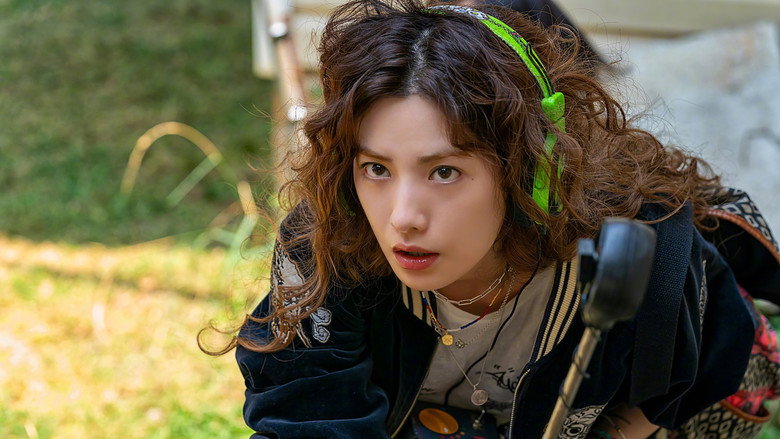
The series’ visual language is understated but effective. The cinematography favors muted tones, with bursts of color—neon signs, the glow of a computer screen—punctuating the otherwise drab palette. It’s a world that feels lived-in, where the extraordinary intrudes on the mundane rather than the other way around.
The score, too, is minimal, relying on ambient sounds and sudden silences to build tension. There’s a moment in the third episode where Ji-hyo and Bo-ra are driving through a tunnel, the headlights cutting through the dark. The camera lingers on their faces, half-lit, half-hidden, as the sound of the engine fills the silence.
It’s a simple shot, but it captures the show’s essence: two people hurtling toward something they can’t yet see, unsure whether they’re chasing answers or running from them.
If Glitch has a weakness, it’s in its pacing. The middle episodes drag slightly, as if the writers weren’t entirely sure how to sustain the mystery without giving too much away. But this, too, feels intentional.
The show isn’t in a hurry because Ji-hyo isn’t in a hurry. She’s not trying to solve a case; she’s trying to make sense of a loss. And loss, as anyone who’s experienced it knows, doesn’t move in a straight line.
The series’ blend of genres—comedy, drama, sci-fi—might sound like a mess on paper, but in practice, it works. The humor is dry, often emerging from Bo-ra’s deadpan delivery or Ji-hyo’s exasperation with her antics. It’s the kind of comedy that doesn’t undercut the tension so much as it humanizes the characters, reminding us that even in the face of the inexplicable, people still need to laugh.
SensCritique, in its brief description, calls Glitch a mix of "Thriller" and "Science-fiction," but that undersells its emotional core. This is a show about friendship as much as it is about aliens, about the ways we lean on each other when the world stops making sense.
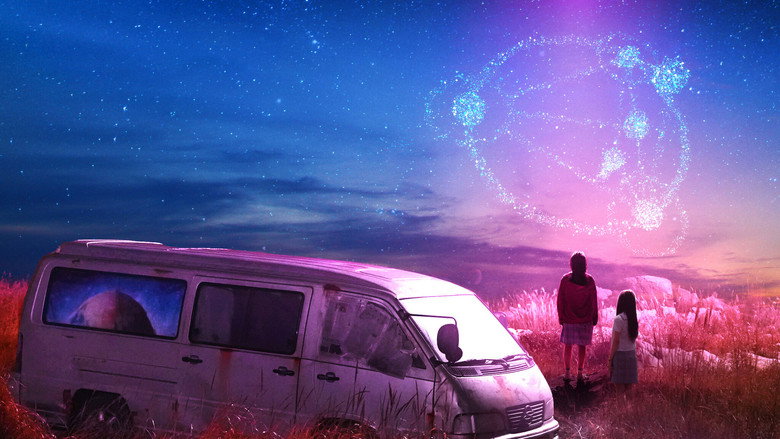
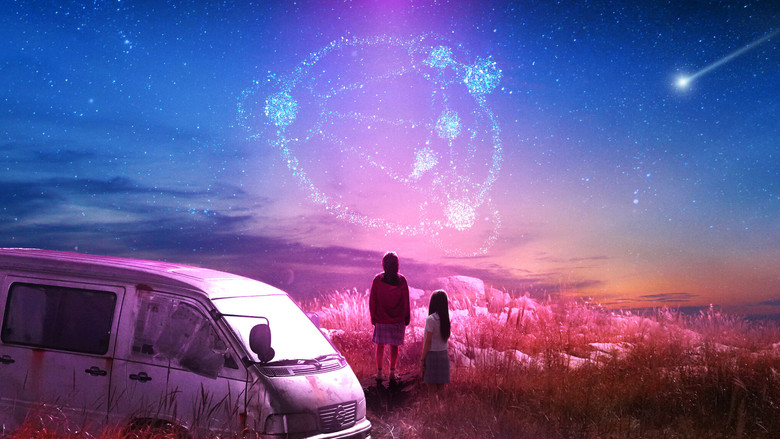
There’s a moment in the final episode that lingers with me. Ji-hyo and Bo-ra are sitting on a rooftop, watching the stars. Bo-ra asks Ji-hyo if she believes in aliens now.
Ji-hyo doesn’t answer. Instead, she reaches over and takes Bo-ra’s hand. It’s a small gesture, but it says everything: belief isn’t the point.
What matters is that they’re not alone in the dark.
Glitch isn’t a perfect show. It’s messy, sometimes slow, and it doesn’t tie up every loose end. But that’s also why it feels real.
Life doesn’t wrap up neatly, and neither does this story. What it offers instead is something rarer: a sense of companionship in the unknown. Whether the glitch in question is technological, supernatural, or just the way our minds cope with loss, the show suggests that the answer might not be as important as the people we find along the way.
And maybe, just maybe, that’s enough.
Netflix’s Glitch (2022) arrived with a tantalizing premise: a woman’s desperate search for her missing boyfriend, intertwined with UFO conspiracy theories and a shadowy government cover-up. Directed by Roh Deok and starring Jeon Yeo-been and Nana, the series blends sci-fi, thriller, and comedy—with a dash of queer subtext that fans have eagerly dissected. But what went into making this unconventional K-drama, and why did it spark such divided reactions?
Roh Deok, known for her work in romantic dramas and thrillers (Very Ordinary Couple, 2013), took a sharp turn into sci-fi with Glitch. The series marks her first foray into the genre, and she brought a distinctively offbeat tone to the project. According to snippets from Grokipedia, the show was written by Jin Han-sae (also credited as Gin Han-sai), whose script balances mystery with dark humor—a rarity in K-drama sci-fi.
The decision to center the story on a UFO-watching club, rather than a traditional investigative team, was a bold choice. It allowed Glitch to explore fringe theories while grounding the narrative in emotional stakes. As Wikipedia notes, the series follows Hong Ji-hyo (Jeon Yeo-been) as she teams up with these eccentric enthusiasts to unravel her boyfriend’s disappearance, which coincides with a mysterious flash of light. The blend of conspiracy, comedy, and sci-fi was a gamble, and critics were split on whether it paid off.
Jeon Yeo-been, fresh off her critically acclaimed role in Vincenzo (2021), took on the lead as Hong Ji-hyo, a woman whose grief and determination drive the plot. Her casting was a major draw, given her ability to convey both vulnerability and intensity. Nana, the former K-pop idol turned actress (Justice, The Good Wife), played Heo Bo-ra, a UFO club member with her own secrets. Their chemistry became a talking point, particularly among fans who read their relationship as queer-coded.
YouTube analyses, like one titled "Yes, Glitch is a queer love story—here’s why", argue that the show’s subtext leans into a romantic tension between Ji-hyo and Bo-ra. While the series never explicitly confirms a romantic relationship, the emotional intimacy and lingering glances between the two characters fueled speculation. Whether intentional or not, the ambiguity added a layer of intrigue for LGBTQ+ viewers.
Supporting cast members, including Lee Dong-hwi (Reply 1988) and Ryu Kyung-soo, brought levity to the UFO club’s eccentricities, balancing the show’s darker themes.
Glitch premiered on Netflix on October 7, 2022, and reactions were polarized. Sci-fi fans praised its fresh take on alien conspiracy tropes, while others found the pacing uneven or the tone too inconsistent. Scifi Dimensions described it as a "wide range of reactions from critics and viewers alike," noting that its blend of genres didn’t always land smoothly.
On SensCritique, the series holds a modest 6.1/10 rating, with some viewers criticizing the ending as rushed or unsatisfying. MyDramaList lists it as a 10-episode thriller-mystery with comedic elements, but the comedy’s reception was hit-or-miss—some found it charming, others distracting.
Despite the mixed reviews, Glitch carved out a niche for itself. Its queer subtext, in particular, resonated with audiences hungry for more LGBTQ+ representation in K-dramas, even if it remained subtextual.
Glitch may not have been a runaway hit, but it’s the kind of series that lingers in discussions—whether for its genre-blending ambition, its queer-coded relationships, or its eccentric UFO club. Roh Deok’s direction and the cast’s performances kept it engaging, even if the execution wasn’t always seamless.
For fans of offbeat sci-fi or character-driven mysteries, Glitch is worth a watch—if only to decide for yourself whether the UFO club’s theories hold water.
Entertainment rumors and trivia aggregated from public reporting. Treat speculation as unverified unless a cited source confirms it.
More titles in the same genres and with the same cast.