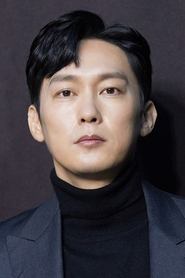
Kim Hyun-joo
Yoon Seo-ha

“An inescapable fate. A desire that calls for blood.”
After the death of an unknown uncle, a woman inherits a burial ground and finds herself in the center of a string of murders and dark secrets.
Official
I kept thinking, while watching The Bequeathed, that burial grounds are one of the few places in drama where property law and the supernatural can shake hands. You inherit land, and suddenly you’ve inherited history, resentment, blood, superstition — the whole ugly bundle. Min Hong-nam’s six-episode series begins with that very practical nightmare: a woman gets a piece of land she never asked for, latestnetflix.com argues, and the dead start acting as if they’ve been waiting for her name to show up on the paperwork.
What’s striking about the series isn’t just that it’s a mystery. Plenty of shows are mysteries. This one treats land as a moral substance.
Soil remembers. Fences don’t keep guilt out. The burial ground at the center of the story isn’t a spooky gimmick so much as an extension of family logic: what gets hidden doesn’t stay hidden; it settles.
That’s a useful idea for a Korean drama in 2024, especially one arriving from Netflix’s global pipeline, where local folklore, crime plotting, and streaming-era pacing all have to coexist without feeling like they’re wearing each other’s clothes.

Min Hong-nam doesn’t come with a huge preexisting filmography in the way some directors do, so I can’t place this as a sharp departure or a grand return. What I can say is that the direction feels attentive to atmosphere in a way that understands how genre works when it’s done patiently. The show is never in a rush to explain its own unease.
It lets doors sit half-open. It frames characters from a distance, often with negative space around them, so that the environment seems to be listening. A lot of modern thrillers mistake speed for suspense; The Bequeathed knows that dread can be built from pauses, from an odd silence after a question, from the sense that someone off-screen might already know more than they’re saying.
There’s been a lot of conversation around the series as part of the recent wave of Korean mystery-thrillers that use inherited trauma as both plot engine and social diagnosis. That’s not exactly a complaint. It’s a genre with a strong pulse right now, and this show fits into that discourse by leaning on folk horror elements without going full costume-drama mysticism.
The danger here isn’t an elaborate monster. It’s human beings, the things they bury, and the systems that let them keep burying.
Kim Hyun-joo, as the woman thrown into this mess, gives the series its most convincing center of gravity. She has a face that can go still in a way that isn’t blank at all — the stillness feels earned, like someone trying not to tip over in public. There’s a particular quality to her physical acting that I kept noticing: the slight hesitation before she enters a room, the way her shoulders stay lifted as if bracing for another blow she can’t quite identify.
She doesn’t play the role as an action heroine dragged into mystery. She plays a person forced to become legible to herself under pressure. That matters.
So much of the show is about people who’ve spent years avoiding a name, a place, a family line, and she makes avoidance look like a habit, not a concept.
Park Hee-soon gives the series a different kind of tension. He has that weathered, watchful presence that can slide from ordinary to menacing without changing volume. I’ve seen him do authority and weariness before, but here the appeal is in how little he seems to need to telegraph anything.
A glance, a delay, the posture of someone who has learned that the truth is often less useful than leverage. Park Byung-eun, too, is doing good work in that quietly hard, almost procedural mode he’s become so good at. He often plays men whose bodies seem to have been organized by restraint.
You can feel the discipline in his back, the way he holds his jaw when the scene wants him to crack. Then there’s Ryu Kyung-soo, whose screen presence has a twitchier edge; he can make a room feel less stable just by standing in it. That’s not a small skill in a series like this.
I should say, though, that the show’s confidence occasionally hardens into repetition. Once you understand that every clue is also a trap and every conversation is carrying secret freight, there are stretches where the episodes can feel almost too dutiful in how they hand out revelations. A few exchanges lean on exposition when the visuals have already done the job.
I don’t think the series fails because of that. But I did feel, now and then, the machinery showing through. Not badly.
Just enough.
Still, there are scenes that stick because they understand how horror and grief share a grammar. One of the most effective involves the burial ground itself, where a character moves through the site with the awkward caution of someone trespassing on family shame. The camera doesn’t rush in for a scare.
It lingers on the markers, the uneven ground, the surrounding quiet. Then the scene turns on small gestures: a hand hovering over the earth, a glance toward a boundary that may or may not mean anything, the sense that every step is an accusation. What makes it work is the refusal to overstate the moment.
No thunderclap. No operatic revelation. Just the awful intimacy of land that has been turned into evidence.

That restraint also gives the series a faintly old-fashioned moral seriousness. I don’t mean that as praise-by-backhand. I mean that it cares about consequences in a way many mystery shows don’t.
People don’t just die here; their choices keep echoing. Their evasions become inheritance. There’s something almost biblical in the way the story treats lineage, except the punishment is bureaucratic as much as spiritual.
Papers matter. Titles matter. Boundaries matter.
Then all of it collapses when the buried past refuses to stay in the category called “past.”
If I’m being honest, the series is at its most interesting when it lets the mystery feel social rather than merely procedural. That’s where Korean genre storytelling has been especially strong in recent years: it understands that a crime is rarely just a crime. It’s class pressure, family duty, the afterlife of rural neglect, the bitterness of people who’ve been asked to swallow too much for too long. The Bequeathed doesn’t always dig as deeply as it could, but it keeps returning to the idea that land is never neutral.
Someone always got it first. Someone always lost something to make it available.

I’m still thinking about the series’ particular texture: the damp greys, the muted browns, the sense that daylight itself has been asked not to make a fuss. That matters more than people admit. A show like this can’t survive on plot alone.
It needs the feeling that air, mud, wood, and stone are all carrying emotional charge. When it works, it feels less like solving a puzzle than walking deeper into a family’s unofficial archive.
So no, I wouldn’t call The Bequeathed flawless. It has stretches where it leans a little too hard on inherited genre moves, and the mystery occasionally behaves like a machine that knows it has to keep turning. But I admired its seriousness, its patience, and the way it treats the dead not as jump-scare props but as part of the stubborn architecture of everyday life.
It left me with that particular uneasy feeling good Korean thrillers can leave behind: not shock, exactly, but the sense that the ground under your feet has a history, and that history isn’t finished with you yet.
The Bequeathed (2024) arrived on Netflix with little fanfare but quickly became one of the platform’s most talked-about Korean thrillers of the year. The six-episode occult mystery, directed by Min Hong-nam, blends family drama with supernatural horror, centering on a woman who inherits a burial ground—and the dark secrets buried with it. latestnetflix.com's take is that with a cast led by Kim Hyun-joo and a story adapted from a popular webtoon, the series has sparked curiosity about its origins, production, and the chilling atmosphere that’s left viewers hooked.
The Bequeathed is based on the webtoon Seonsan by Kang Tae-kyung, a medium that’s become a goldmine for Korean adaptations. The webtoon’s eerie premise—a cursed inheritance tied to ancestral land—provided a rich foundation for the series, though the transition to live-action required some creative tweaks. While the evidence doesn’t detail specific changes, the show’s writers, including Min Hong-nam and Hwang Eun-young, worked alongside original creator Yeon Sang-ho to expand the narrative. Yeon, known for his work on Train to Busan and Hellbound, brought a horror pedigree that likely shaped the series’ tone, balancing psychological tension with supernatural scares.
The adaptation’s fidelity to the webtoon remains unclear, but the Netflix release suggests a push to capitalize on the source material’s built-in audience. Webtoon-to-screen projects often face scrutiny from fans, and The Bequeathed’s reception will hinge on how well it captures the original’s unsettling vibe.
Kim Hyun-joo anchors the series as the protagonist, a woman whose life unravels after inheriting a family burial site. Her performance has drawn praise, though the evidence doesn’t include direct quotes or behind-the-scenes insights into her process. Park Hee-soon, Park Byung-eun, and Ryu Kyung-soo round out the main cast, each bringing their own gravitas to the thriller’s ensemble.
Notably absent from most cast lists is Joo Suk-In, whose role isn’t detailed in the snippets. This could indicate a smaller part or a late addition to the production. The lack of interviews or set reports means details about the cast’s dynamics—like whether they bonded over the series’ dark themes—remain speculative.
The Bequeathed’s production timeline is hazy. The series premiered on January 19, 2024, but there’s no confirmation on when filming began or wrapped. Given the occult themes, it’s likely the crew leaned into atmospheric locations, though no specifics about sets or filming sites are mentioned in the evidence.
One unverified rumor circulating in K-drama circles suggests the series was fast-tracked to capitalize on the popularity of supernatural thrillers like Sweet Home and All of Us Are Dead. However, without official statements or production notes, this remains unconfirmed. What is clear is the show’s tight runtime: each of the six episodes clocks in at around 47 minutes, a length that keeps the pacing taut.
Early reactions to The Bequeathed have been mixed but intrigued. Critics and audiences seem to agree on one thing: the series’ ability to sustain tension. The occult elements, combined with family drama, offer a fresh twist on the thriller genre, though some viewers have noted the ending may leave questions unanswered.
As for a second season, the evidence is silent. The series’ ambiguous finale could be setting up a continuation, but with no official word from Netflix or the creators, fans are left in the dark—fitting, given the show’s themes.
Entertainment rumors and trivia aggregated from public reporting. Treat speculation as unverified unless a cited source confirms it.
More titles in the same genres and with the same cast.