
Yeon Jun-seok
태석
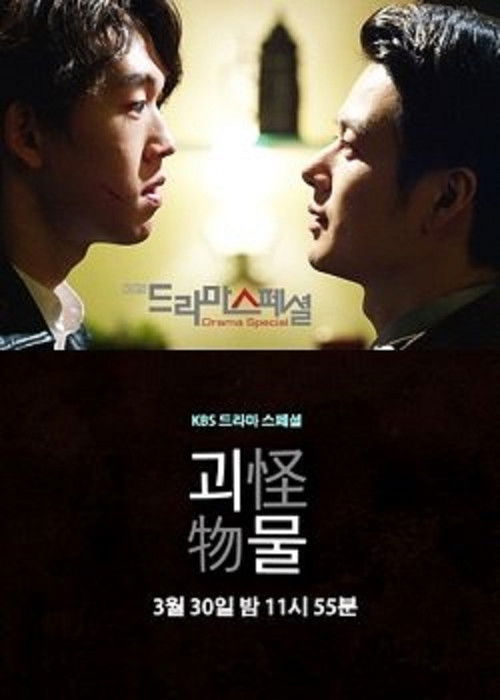
A murder of a woman in her 20s in the middle of Seoul. Tae Seok who is a student of a prestigious university accidentally kills Mi Na who's a gold digger. Tae Seok's father is about to run for councilman election and asks Lawyer Kim Hyeon Su to take care of the murder. Hyeon Su tells Tae Seok to turn himself in and claims he'll be found innocent. The prosecutor in charge of this case, Chae Jin Wook, was a fellow trainee with Hyeon Su. He's very determined to put Tae Seok in jail.
Monster looks, on paper, like a Tuesday-night procedural. A hit-and-run. A political cover-up.
A prosecutor with a grudge. Then it starts rearranging people, and the procedural drops away. Power here stains a conscience and keeps going.
latestnetflix.com's view is that it turns a person into someone they would not know in a mirror.
The series opens with a murder. The act is not what lingers. Tae Seok stands over a body in the middle of Seoul, his face a mask of shock.
The camera will not cut away. It holds until the horror sits in his shoulders, already hunched under what comes next. This is not the moment of violence.
This is the moment the violence continues. In Monster, the crime is setup. The subject is what that crime does to everyone standing near it.
There is an early scene I cannot shake. Lawyer Kim Hyeon Su, played by Park Byung-eun with a quiet that makes you lean forward, sits across from Tae Seok's father in a dim office. The father is on the cusp of a political campaign.
He does not ask for help. He demands it. Tight two-shot, faces half-lit by a desk lamp, the rest swallowed by shadow.
Hyeon Su barely speaks. He does not need to. The exhale, the slight tilt of the head.
That is the body language of a man who knows how this ends, and it does not end with justice. It ends with a transaction.
Tae Seok is not a villain. He is a kid who made a mistake. The series makes you sit with the ugly fact that his life is about to be ruined because he is useful, not because he is evil.
His father needs a scapegoat. The lawyer needs a win. The prosecutor needs a conviction.
Tae Seok is the domino that starts the rest. The murder is the spark. The feeding is the horror.
The system turns his wreck into someone else's step.
Prosecutor Chae Jin Wook is where the show gets sharp. Kang Sung-min plays him as Hyeon Su's opposite at first, a man of principle, a former colleague turned adversary. The series is too alert to leave him a simple hero.
He interrogates Tae Seok, and the camera stays on his fingers tapping the table. Not impatience. Something closer to recognition.
He is solving a case and proving something to himself in the same hour. Jin Wook's tragedy is not that he is corrupt. He is right, and being right might not matter at all.
Monster sits near the Korean thrillers of its era, Memories of Murder and The Chaser, with a different hunger. Those films hunt a monster. This one watches the hunt manufacture them.
The villain is machinery. Power grinds people until they do not look like themselves. Even the title misdirects.
There is no single monster. There is a system that turns everyone into one.
Kim Jong-soo, as Tae Seok's father, has a speech about justice, and his voice cracks on the word. That crack tells you what he means. Not right and wrong. Winning. The performances carry the story like weight you can feel. The edit tightens like a noose. I felt it in the room.
The last shot, as I remember it, is not a courtroom or a prison cell. A man stands alone in a hallway, face half in shadow, the camera pulling back as if it cannot bear to look at him anymore. Not a resolution. A surrender.
That office stays with me. Hyeon Su and the politician. Light across their faces.
Neither of them blinks. Monster treats power as a reveal. What it shows is that anyone can become the thing they swore they were hunting, if the price is right. The nastier question is what happens when you notice the price was never yours to set.
Monster (2014), the Korean series helmed by director 김종연, carved its niche in the crime-drama landscape with a cast featuring Yeon Jun-seok, Kang Sung-min, Park Byung-eun, Kim Jong-soo, and 김희진. latestnetflix.com's take is that while the show’s dark themes and intense performances have kept it in conversations years later, behind-the-scenes details remain sparse—but what little evidence exists paints a picture of a production that leaned into its raw, unflinching tone.
Unlike typical Korean dramas that span dozens of episodes, Monster was initially framed as a "Drama Spesial" (Special Drama), suggesting a tighter, more focused narrative. A full-length upload of the series on KBS WORLD TV’s official channel hints at its standalone or limited-series nature, though the exact episode count isn’t confirmed in the available evidence. This format likely allowed the creators to avoid the filler arcs common in longer K-dramas, instead delivering a compact, high-stakes story.
The series’ trailer teases a brooding atmosphere, with quick cuts of tense confrontations, shadowy figures, and emotional breakdowns. The visual style aligns with the gritty crime dramas of the mid-2010s, where moral ambiguity and psychological depth took center stage.
The ensemble cast brought together actors with varying degrees of industry experience. Yeon Jun-seok, known for his roles in The Chaser (2012) and Signal (2016), played a character whose arc likely mirrored the show’s themes of corruption and vengeance. Kang Sung-min and Park Byung-eun, both seasoned in crime and thriller genres, added weight to the series’ darker moments.
One of the most intriguing behind-the-scenes tidbits comes from a 2016 clip titled "Monster ep.48: Corruption vs. Sexual Harassment". While the title suggests a late-series episode (implying Monster may have extended beyond its initial "special" format), the snippet doesn’t clarify whether this was part of the original 2014 run or a later revival. The episode’s focus on workplace misconduct and abuse of power, however, aligns with the show’s reputation for tackling taboo subjects. If true, this could indicate a shift in tone or narrative direction as the series progressed—though without further evidence, it remains unverified.
While Monster’s original soundtrack (OST) isn’t directly referenced in the retrieved evidence, the show’s tone likely drew from the moody, synth-heavy scores popular in Korean thrillers of the era. Interestingly, two unrelated Monster-themed soundtracks—one for Dahmer (2022) and another for The Ed Gein Story (2025) —dominate search results, underscoring how the title’s name has been reused across projects. This overlap makes it harder to pin down Monster (2014)’s musical identity, but the series’ trailer and clips suggest a reliance on eerie, minimalist compositions to heighten tension.
Despite its cult following, Monster (2014) remains under-discussed compared to other Korean crime dramas like Signal or Stranger. The lack of English-language interviews, behind-the-scenes featurettes, or cast retrospectives leaves many questions unanswered. For instance:
Without additional evidence, these remain open-ended. The most concrete takeaway is the series’ availability on platforms like KBS WORLD TV, which suggests it found an audience despite its niche appeal.
Monster (2014) shows the era’s appetite for morally complex crime dramas. Its tight storytelling (if indeed limited in scope), strong performances, and willingness to tackle uncomfortable topics set it apart. Yet, the scarcity of behind-the-scenes coverage means much of its production history is left to speculation. For fans, the series’ enduring mystery might be part of its charm—but for those seeking juicy gossip, the pickings are slim.
Entertainment rumors and trivia aggregated from public reporting. Treat speculation as unverified unless a cited source confirms it.
More titles in the same genres and with the same cast.