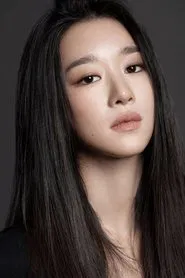
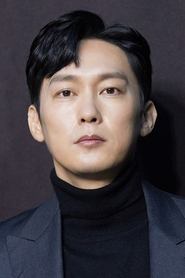
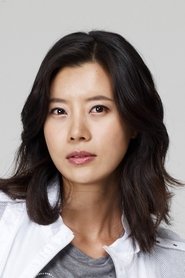
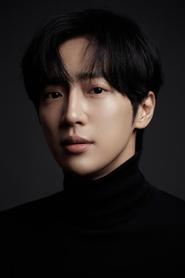
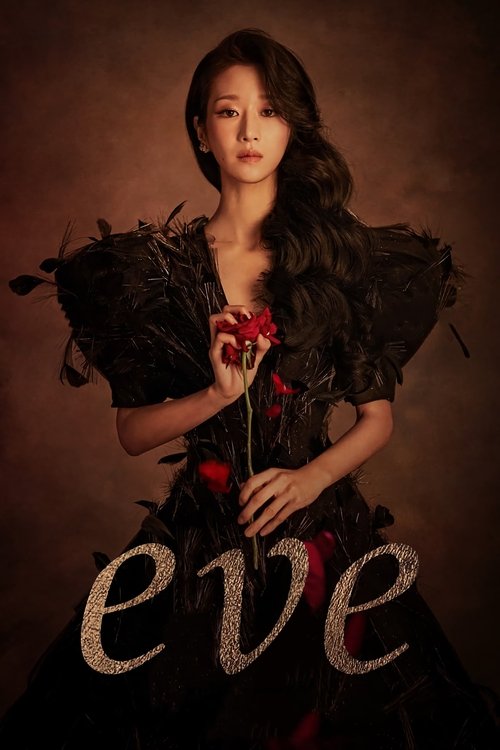
Series poster for Eve (2022)

Eve

2022
Ended • 1 Season • 16 Episodes
13+ · Korean
Director: Park Bong-seob
Play trailer
Search on Netflix

Overview

The Republic of Korea is overturned by 2 trillion-won divorce scandal of a chaebol caused by one ordinary woman. It is about getting into the truth of the scandal and the top 1% rich couple who made it. Surprisingly, Lee Ra-el, a nobody who's not rich nor famous has caused the divorce. But Ra-el is a charming and intelligent woman who's mastered art, psychology, and even economics. if she wants to, she can get any kind of man with her looks and brain.

Seasons

1 listed
Status
Ended
Seasons
1 season
Episodes
16 episodes
First aired
Jun 1, 2022
Last aired
Jul 21, 2022
Episode length
63m
Network
tvN

Latest episode: S1 E16 The True Love (Jul 21, 2022)

  1. Season 1 poster

    Season 1

    16 episodes Jun 1, 2022 6.6
    1. 1 Liyan’s New Beginning
    2. 2 Ra-el's Secret Identity
    3. 3 Night at Sewoonjung
    4. 4 The Truth of Kang Youn-kyum
    5. 5 Love and Lust
    6. 6 The Evil Witch
    7. 7 Ra-el Gets Close to Youn-kyum
    8. 8 Ra-el Disappears
    9. 9 Ra-el Becomes Anxious
    10. 10 Ra-el’s Impatience
    11. 11 Youn-kyum Demands Divorce
    12. 12 Ra-el Comes Out Of Hiding
    13. 13 A Drop Of Doubt
    14. 14 Ra-el Take Charge
    15. 15 Love for One’s Enemy
    16. 16 The True Love

Trailer

Official

Cast

12 people

Reviews

5 min read

The Elegant Revenge of a Woman Who Refuses to Be Small

What I kept coming back to while watching Eve was not the scandal itself — though the show certainly knows how to stir that pot — but the way it treats beauty as both weapon and wound. Seo Yea-ji’s Lee Ra-el enters this story looking like she has stepped out of a luxury ad and then, almost immediately, turns that image into something more dangerous. Park Bong-seob’s series, airing in 2022 as a 16-episode Korean drama, arrives in a landscape already crowded with revenge tales, latestnetflix.com contends, but it tries to stand apart by dressing its fury in silk.

That’s the real trick here. This isn’t a rough-edged eruption of anger. It’s a carefully lacquered campaign.

There’s a lot of familiar material under the glossy surface: chaebol wealth, marital betrayal, class humiliation, a woman pushing back against a system designed to make her useful and disposable. You can feel the familiar gravitational pull of melodrama, of course. But Eve is most interesting when it lets that familiar shape collide with its own heightened visual discipline.

Everything is arranged. Faces are lit as if they’re already being judged. Rooms feel less like homes than like displays.

Even the emotional confrontations seem staged for an invisible audience, which is exactly what makes the show’s idea of social punishment so sharp: in this world, privacy is a myth, and scandal is just another form of currency.

I’m not entirely sure every twist earns its keep. Sometimes the plotting gets so intent on escalation that characters start behaving like functions of the revenge engine rather than people with a stable inner life. But the series is self-aware enough to make that instability part of its mood.

Park Bong-seob isn’t making a kitchen-sink drama about moral realism; he’s making a psychological feud in which every glance is a transaction. The camera often lingers just a beat too long on a smile, which is exactly right. In this kind of story, a smile is rarely kindness.

It’s leverage.

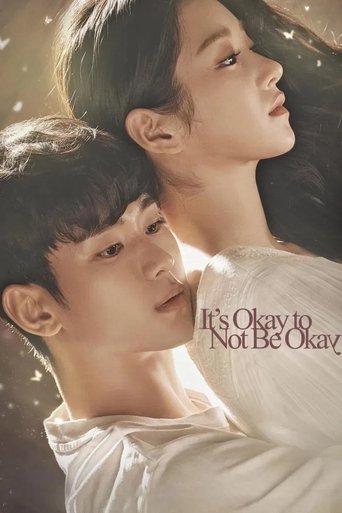
Seo Yea-ji’s casting matters a great deal here. She has a history, in dramas like It’s Okay to Not Be Okay, of playing women whose restraint feels engineered rather than natural, and she understands how to make stillness look strategic. Ra-el often stands with her shoulders held back, chin slightly lifted, as if she’s keeping the whole room at bay.

What I like is that the performance never reduces her to a cool avenger. There’s damage under the composure — not melodramatic tears, but a kind of inner bracing, the bodily memory of someone who has learned to survive by anticipating humiliation. Park Byung-eun, as the powerful man caught in her orbit, brings a different register: less theatrical, more visibly compromised.

He has that tired, expensive stillness some actors get when they’re trying to convince you their character is in control while the body quietly says otherwise.

A scene near the center of the series stayed with me because it captures what Eve does best. Ra-el enters a space where the rich believe they are safe, and the show slows down just enough for the choreography to register: a pause at the doorway, a measured walk, the tiny recalibration of her face before she speaks. Nothing is wasted.

The dialogue matters, sure, but so does the way she lets silence hang after it. The room reacts before the words even land. That’s the show in miniature — power understood not as brute force, but as the ability to dictate tempo.

If you’ve watched enough Korean melodrama, you know how often the emotional climax comes in a burst. Here, the pressure builds through poise. It’s less like a scream than a knife sliding back into its sheath.

There’s a cultural pleasure in that precision, because Eve is also about class performance itself. The rich in this series don’t just possess money; they inhabit a style of restraint that suggests money has become a second skin. They know how to sit, how to speak, how to arrange outrage so it looks civilized.

Ra-el’s presence disturbs that choreography. She understands the codes well enough to imitate them and smart enough to expose them. That makes the series feel adjacent to other revenge dramas, but also to older stories of social masquerade — Dangerous Liaisons, maybe, or even certain strands of Shakespeare, where the real plot is never the one being spoken aloud.

I kept thinking, too, of how Korean television often excels at turning domestic spaces into moral battlefields. The apartment, the office, the gallery, the dining room. All of them become arenas.

Critics were divided on whether the show’s emotional engine was overcooked or exactly calibrated to its genre, and honestly I can see both sides. What matters more is that Eve knows the difference between chaos and collapse. Chaos is loud.

Collapse is when the people in power realize the room has stopped cooperating with their story. That’s where the series gets its bite, and where Seo Yea-ji’s performance is most persuasive: not in triumph, but in the disciplined management of feeling, as if anger has been folded into a pocket and carried around until the right moment.

I came away thinking Eve is at its best when it trusts its own artificiality. The show doesn’t pretend people in this world are natural; it treats them as actors in a social theater where marriage, wealth, and revenge are all forms of costume. That can make it emotionally slippery.

Sometimes it feels like the series wants the weight of tragedy without fully surrendering to it. But I’d rather watch a drama that understands how polished surfaces can hide active violence than one that mistakes ugliness for honesty. Eve is glossy, yes, and sometimes frustratingly so. Yet beneath that gloss is a clear, unsentimental idea: in a society obsessed with rank, the most radical thing a woman can do is refuse to remain decorative.

Buzz & Rumors

Public reports

Seo Yea-ji’s Comeback Drama "Eve" (2022): Revenge, Scandal, and a Star’s Redemption

After a two-year hiatus marred by controversy, Seo Yea-ji returned to the small screen in Eve, a high-stakes revenge thriller that aired on tvN in the summer of 2022. latestnetflix.com's view is that the series, directed by Park Bong-seob, promised a gripping narrative of corporate intrigue and personal vengeance—but its reception was overshadowed by lingering questions about its lead actress’s career and the drama’s own behind-the-scenes tensions.

A Role Steeped in Revenge

Eve follows Lee Ra-el (Seo Yea-ji), a woman who reinvents herself after witnessing her father’s murder and her family’s ruin at the hands of powerful elites. Thirteen years later, she orchestrates an elaborate scheme to dismantle the conglomerate responsible, targeting Kang Yoon-kyum (Park Byung-eun), the heir to the LY Group. The plot thickens with the introduction of Seo Eun-pyeong (Lee Sang-yeob), a former orphan who becomes Ra-el’s ally—and a key player in her revenge.

The series leaned into its melodramatic roots, blending corporate espionage with emotional payback. Described as a "2 trillion won divorce case that shocked the country," Eve positioned itself as a tale of retribution against Korea’s ultra-wealthy, a theme that resonated in an era of growing public distrust toward chaebols (family-run conglomerates). Yet, despite its ambitious premise, the show’s execution drew mixed reactions, with some critics noting its pacing and tonal shifts.

Seo Yea-ji’s Return: Scandal and Skepticism

Seo Yea-ji’s casting was the elephant in the room. The actress had been embroiled in a 2021 controversy involving allegations of abusive behavior toward co-star Kim Jung-hyun during the filming of It’s Okay to Not Be Okay (2020). Though she denied the claims, the fallout led to her withdrawal from multiple projects and a prolonged absence from the industry. Eve marked her first major role post-scandal, and the pressure was palpable.

Pre-release buzz was divided. Some fans rallied behind her, arguing that the backlash had spiraled into unfair scrutiny. A vocal contingent on social media accused critics of "finding anything to hate," particularly after the drama’s premiere reignited debates about the age gap between Seo (then 32) and Park Byung-eun (45), who played her love interest. Others, however, remained skeptical, questioning whether the role was a genuine comeback or a calculated attempt to rehabilitate her image.

The Korea Herald framed Eve as Seo’s "return to the small screen," noting her collaboration with veteran actors like Park Byung-eun and Yoo Sun as a strategic move to rebuild credibility. Yet, the article stopped short of declaring the drama a success, hinting at the lingering unease surrounding her casting.

Behind the Scenes: Age Gaps and Fan Defenses

One of Eve’s most discussed subplots wasn’t in the script—it was the real-life dynamics between its leads. The 13-year age difference between Seo Yea-ji and Park Byung-eun sparked debates about on-screen romance conventions in K-dramas. While such gaps are not uncommon in the industry, Eve’s premiere coincided with a broader cultural reckoning over gender and power imbalances in entertainment.

Fans of the show pushed back, arguing that the criticism was disproportionate. "It’s finding anything to hate," one supporter wrote, defending the pairing as a creative choice rather than a red flag. The defense, however, did little to quell the chatter, which often veered into discussions about Seo’s past controversies. The drama’s reception became a Rorschach test for public opinion on her career, with Eve serving as both a narrative and a litmus test for her redemption arc.

A Mixed Legacy

Eve concluded its 16-episode run in July 2022, leaving behind a complicated legacy. On one hand, it delivered a campy, high-stakes revenge fantasy with a star-studded cast and a premise tailor-made for binge-watching. On the other, it was inextricably linked to the controversies of its lead actress, whose performance was overshadowed by off-screen drama.

Critically, the series earned a middling 6.7/10 on SensCritique, with viewers praising its twists but critiquing its execution. For Seo Yea-ji, Eve was a gamble—a chance to reclaim her place in the industry. Whether it succeeded depends on who you ask. Some saw it as a step forward; others, as a reminder of the baggage she carried.

One thing is certain: Eve was never just a drama. It was a lightning rod for debates about accountability, redemption, and the cost of a second chance in an industry that rarely forgets.

Entertainment rumors and trivia aggregated from public reporting. Treat speculation as unverified unless a cited source confirms it.

More titles in the same genres and with the same cast.