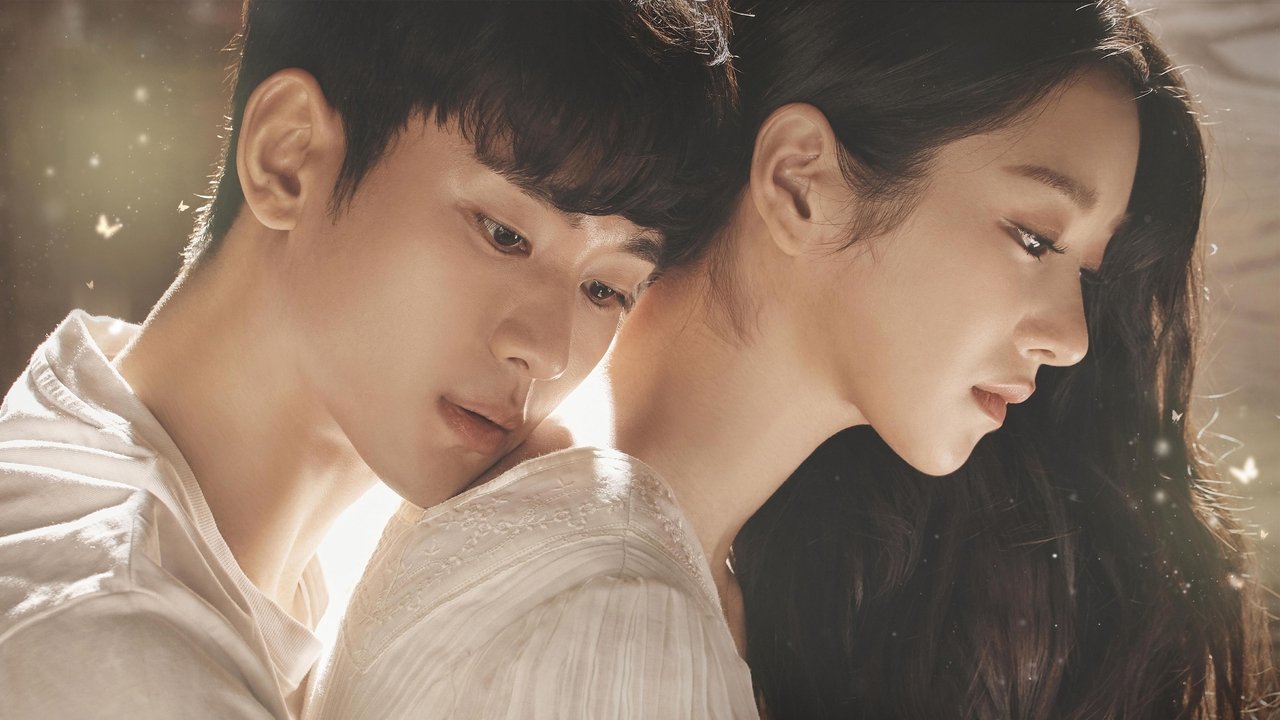
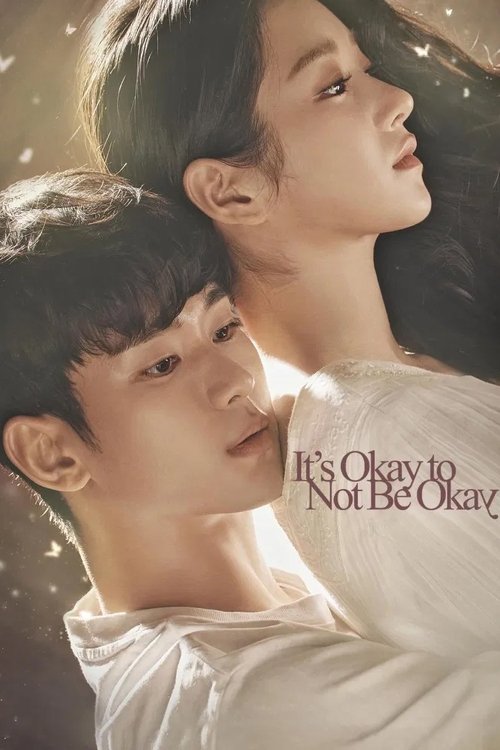
Desperate to escape from his emotional baggage and the heavy responsibility he’s had all his life, a psychiatric ward worker begins to heal with help from the unexpected – a woman who writes fairy tales but doesn’t believe in them.
Seasons
1 listed
Status
Ended
Seasons
1 season
Episodes
16 episodes
First aired
Jun 20, 2020
Last aired
Aug 9, 2020
Network
tvN
Latest episode:S1 E16 Finding the Real Face (Aug 9, 2020)
Season 1
16 episodes Jun 20, 2020 9.2
He has no money, no parents, and no hope. All he has is an autistic brother. All Gang-tae wants is to be able to put food on the table and provide shelter for the two of them. One day, a strange woman who seems like the witch in a children's story appears in front of him. Moon-young is the queen of children's literature who uses her pen to capture the hearts of her young readers. She cannot congenitally feel love, but she is somehow drawn to a man who refuses to love. The two push and pull at each other, sometimes hurting themselves and the other in the process.
There’s a particular kind of television face that can only belong to someone who’s spent years pretending not to feel much. Kim Soo-hyun has that face here — not blank, exactly, but guarded in a way that makes every small crack look expensive. In It’s Okay to Not Be Okay, that guardedness is the point.
The series, which ran for one season and 16 episodes in 2020, arrived as a glossy, emotionally mannered romance with psychiatric institutions, fairy-tale illustrations, and the sort of heavy-lidded longing Korean dramas are often very good at. But what makes it linger, at least for me, isn’t its prettiness or its premise. It’s the uneasy marriage between storybook fantasy and clinical pain.
The show keeps asking whether you can narrate your way out of damage — and whether a good-looking lie might sometimes be the first step toward a truer feeling.
The series sits in a familiar but tricky place in the TV landscape: part healing romance, part gothic fable, part workplace drama set inside a psychiatric hospital. That combination could’ve been a disaster, or at least a syrupy one. Instead, it became a conversation piece because it was so visibly trying to do something stranger than a standard “broken people save each other” plot.
There’s also the matter of its form: this is a polished, very consciously designed show, all sharp wardrobes, storybook chapter headings, and color-coded interiors. It doesn’t pretend to be naturalistic. It wants to be read.
That’s a risk. But it’s also what gives the series its charge.
What I kept thinking about while watching was how carefully the series uses surfaces to talk about what people hide under them. Seo Yea-ji’s Moon Gang-tae is not really a blank slate, despite the way the show initially frames him as a man whose life has been pared down to duty. He moves like someone trained to be useful: shoulders slightly forward, hands always ready, voice kept level even when the situation doesn’t deserve it.
Kim Soo-hyun, who’d already spent a long stretch of his career playing emotionally legible men, makes Gang-tae’s restraint feel physical. You can see the cost of it in the set of his jaw. You can see it in the way he occupies doorways, as if he’s perpetually deciding whether he’s allowed to enter a room and be a person in it.
Seo Yea-ji’s Ko Moon-young is the series’s great gamble. She doesn’t play “cold” so much as weaponized self-possession — a woman who seems to have read every social cue and decided most of them are beneath her. After years of playing more contained roles in earlier work, she shows up here with a remarkable command of posture: chin lifted, eyes level, gestures small but exact.
Even when the show lets her tilt toward melodrama (and yes, it does), she remains funniest and most unsettling when she’s still. There’s a scene early on where she sits across from someone with the expression of a cat that’s already decided whether it likes you. That little pause before she answers tells you more than pages of dialogue could.
I wish the series trusted that kind of quiet more often.
The show’s central argument is not exactly subtle, but it’s humane. People don’t recover because they are told to be brave. They recover — if they do — through contact, repetition, embarrassment, and the long, clumsy business of being witnessed.
That’s why the psychiatric setting matters so much, even when the writing slips into symbolic overstatement. The hospital isn’t just a backdrop; it’s a place where language fails, where people arrive as diagnoses and leave as contradictions. I’m not entirely sure the series always handles mental health with the care it thinks it has.
Sometimes it reaches for metaphor a little too quickly, as if emotional pain were a decorative object. But it also has enough patience to let silence sit in a room, and that counts for something.
The best-known visual motif in the series — and the one that most clearly explains its ambitions — is the children’s-book imagery, especially the storybook chapters tied to Moon-young’s writing and the show’s recurring fairy-tale framing. These interludes can feel overdesigned, even slightly embarrassed by sincerity, but they’re doing real work. They turn trauma into something stylized enough to be looked at.
That’s not the same as solving it. Maybe that’s why the series keeps returning to books, illustration, and the act of telling stories aloud: it suggests that pain becomes survivable only when given shape. Not erased.
Shaped.
One scene I keep coming back to involves the characters in a space that should be comforting but instead feels precarious — a room where the air seems to hold its breath. Gang-tae is trying, in his usual manner, to hold everything together without asking for help, and Moon-young does what she does best: she cuts straight through the performance. The camera doesn’t rush.
It lets the two of them stand there with the ugly honesty of people who are realizing they can’t keep their usual masks on forever. What matters isn’t the plot point, but the pause after it. Nobody in this show is more revealing than they are when they’ve just been surprised into silence.
K-dramas often understand this better than Western television, which tends to explain away the emotional weather. Here, the weather is the point.
Oh Jung-se, as Moon Sang-tae, brings the series its emotional ballast. His work has a looseness to it that keeps the character from being reduced to a lesson. You can feel the actor’s control in the way he shifts from comic oversharing to sudden vulnerability without telegraphing the turn.
He’s not performing “difference” as a concept; he’s playing a man whose rhythms don’t match the people around him, and that’s much richer. There’s a dignity in the way he repeatedly insists on his own place in the world. It’s one of the series’s kindest ideas: that a person can be both fragile and immovable.
The directorial approach, for all its sheen, is surprisingly consistent in one respect: it understands that melodrama works best when the frame commits to it. The show’s deep blues, theatrical reds, and polished hospital corridors create a world that is a little too perfect to be trusted. That’s useful.
Emotional states here are externalized in costume and production design so aggressively that the series sometimes feels like it’s staging a negotiation between interior suffering and public spectacle. There are moments when that style starts to press down on the actors, making them seem like figures in a very expensive fable. Yet the same style can also create room for a kind of emotional honesty that realism might flatten.
The series isn’t asking to be believed as life. It’s asking to be taken as a metaphor with good lighting.
A few critics got at this tension well when the show aired. The New York Times described it as a drama that “blends fairy-tale aesthetics with emotional damage,” which is exactly right, and The Guardian noted its “lavish visuals and atypical sensitivity” toward its wounded characters. Those phrases might sound tidy, but they point to the show’s real push and pull: it wants to be extravagant without being empty, sentimental without becoming foolish.
Not every episode holds that line. Some plot turns feel engineered to keep the machinery moving. Some revelations arrive with more force than inevitability.
Still, I’d rather watch a series strain toward feeling than one that coast through polished cynicism.
What stays with me is the show’s odd moral tenderness. It believes people can be difficult, selfish, frightened, overbearing, and still worthy of care. That sounds simple; on screen, it rarely is.
The series is at its best when it stops trying to cure anyone and starts allowing them to be seen in motion — awkward, defensive, funny, needy, sometimes unbearable. That’s a more generous idea than the fairy-tale framing might suggest. It’s also a harder one.
Fairytales, after all, are usually about transformation. This show, at its best, is about endurance. About the small, embarrassing work of not turning away from someone else’s pain (and your own).
I didn’t always trust its elegance. I did trust its feelings more than I expected to.
In the end, It’s Okay to Not Be Okay isn’t really saying that not being okay is fine. It’s saying something more useful and less neat: that damage doesn’t vanish just because a story knows how to describe it, but a story can still make room for the damaged to breathe. Sometimes that’s enough.
Sometimes it’s nearly everything.
Buzz & Rumors
Public reports
The Unlikely Rise of It’s Okay to Not Be Okay: How a K-Drama Defied Its Own Ratings
It’s Okay to Not Be Okay (2020) arrived with sky-high expectations—and a paradox. Kim Soo-hyun, fresh from military service, was returning to the small screen in a role that promised to redefine his career. Yet, while the drama became a global phenomenon, its reception in South Korea was surprisingly lukewarm. latestnetflix.com's take is that Behind the scenes, the show’s journey from underdog to international darling reveals a story as layered as its characters.
A Comeback Built on Chemistry
Kim Soo-hyun’s post-military comeback was one of 2020’s most anticipated moments in K-drama. His role as Moon Gang-tae, a selfless psych-ward caretaker, marked a shift from his earlier, more conventional leading-man roles. But the real revelation was Seo Yea-ji, whose portrayal of Ko Moon-young—a children’s book writer with antisocial personality disorder—stole the spotlight. Critics and fans alike praised her performance as the show’s emotional core, with one outlet calling it "genuinely essential viewing".
The dynamic between the two leads became the show’s beating heart. Their unconventional romance, built on trauma and healing, resonated with audiences worldwide, even as domestic ratings lagged. The drama’s blend of psychological depth, dark humor, and fairy-tale aesthetics set it apart from typical K-drama fare, earning it a cult following.
The Ratings Paradox: Global Hit, Local Miss
Despite its international success—including topping Netflix charts in multiple countries—It’s Okay to Not Be Okay struggled to find its footing in South Korea. Sources suggest the drama’s ratings for later episodes failed to crack the top 10 in its home market. The disconnect was striking: while global viewers binge-watched the series, Korean audiences seemed less engaged.
Rumors swirled about the reasons behind the lukewarm domestic reception. Some speculated that Kim Soo-hyun’s acting felt "forced" in early episodes, though this claim remains unverified. Others pointed to the show’s unconventional tone, which blended romance with heavy themes like mental illness and childhood trauma—topics still stigmatized in some circles. Whatever the cause, the drama’s global appeal overshadowed its local struggles, proving that K-dramas could thrive beyond their home turf.
Behind the Scenes: A Director’s Vision
The series was helmed by director Park Shin-woo, though details about his creative process remain scarce in the available evidence. What’s clear is that the show’s visual style—think gothic fairy-tale aesthetics and surreal dream sequences—played a key role in its identity. The use of children’s book illustrations, tied to Seo Yea-ji’s character, added a whimsical yet haunting layer to the storytelling.
The supporting cast also delivered standout performances. Oh Jung-se, as Moon Sang-tae, Gang-tae’s autistic older brother, brought warmth and humor to the series. Park Gyu-young, as Nam Ju-ri, rounded out the ensemble with her portrayal of a nurse navigating her own emotional struggles. Together, they created a world that felt both fantastical and deeply human.
Legacy: A Drama That Defied Expectations
It’s Okay to Not Be Okay may not have been a ratings juggernaut in Korea, but its impact is undeniable. It sparked conversations about mental health, challenged traditional romance tropes, and cemented Seo Yea-ji as one of K-drama’s most compelling actresses. The show’s 7.8/10 rating on SensCritique reflects its enduring appeal among international audiences.
For Kim Soo-hyun, the role marked a turning point in his career, proving he could tackle complex, emotionally demanding characters. And for viewers, the drama offered something rare: a story that acknowledged pain without romanticizing it, and love without easy answers.
Entertainment rumors and trivia aggregated from public reporting. Treat speculation as
unverified unless a cited source confirms it.
Related series
More titles in the same genres and with the same cast.