Limited Series
12 episodes Apr 18, 2026 9.9
- 1 Episode 1
- 2 Episode 2
- 3 Episode 3
- 4 Episode 4
- 5 Episode 5
- 6 Episode 6
- 7 Episode 7
- 8 Episode 8
- 9 Episode 9
- 10 Episode 10
- 11 Episode 11
- 12 Episode 12
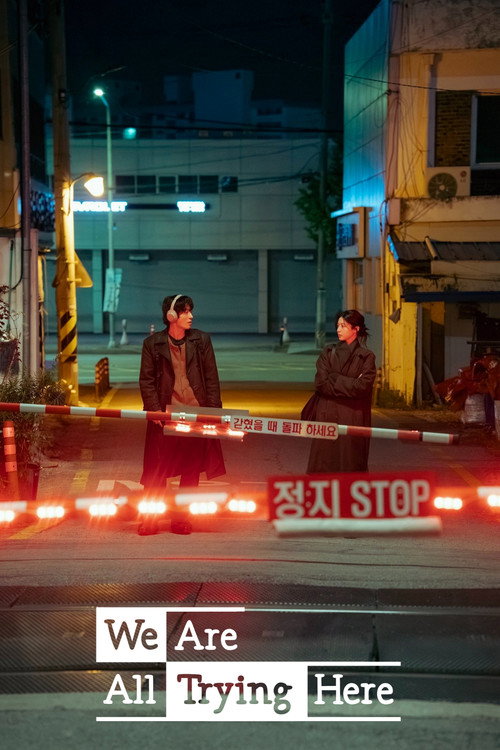
“Everyone is pretending to be okay… but no one really is.”
An aspiring director hits rock bottom after 20 years chasing his debut — until he meets an overwhelmed producer who helps him rediscover his self-worth.
Latest episode: S1 E12 Director, Hwang Dong-man (May 24, 2026)
Official
I keep thinking about that cardigan. Not the scene itself—though we’ll get to that—but the way it became a lightning rod, a Rorschach test for what people wanted from this story. Some saw a tender moment of healing, others a grown man being swaddled like a child.
The director called it a rejection of the "savior romance" trope, but I wonder if the real controversy was simpler: we’re not used to seeing men held like that on screen. Not without irony, not without a punchline. Just held.
We Are All Trying Here is a show about people who’ve spent years pretending to be okay, and the quiet devastation of realizing no one’s buying it anymore. It’s also, improbably, a show about the film industry that feels less like Entourage and more like The Office if Michael Scott had spent two decades failing to make his first movie. The premise—washed-up director Hwang Dong-man (Koo Kyo-hwan) gets a second chance with the help of a producer, Byeon Eun-a (Go Youn-jung)—sounds like the setup for a redemption arc.
But this isn’t a story about triumph. It’s about the messy, humiliating, often boring work of not giving up.
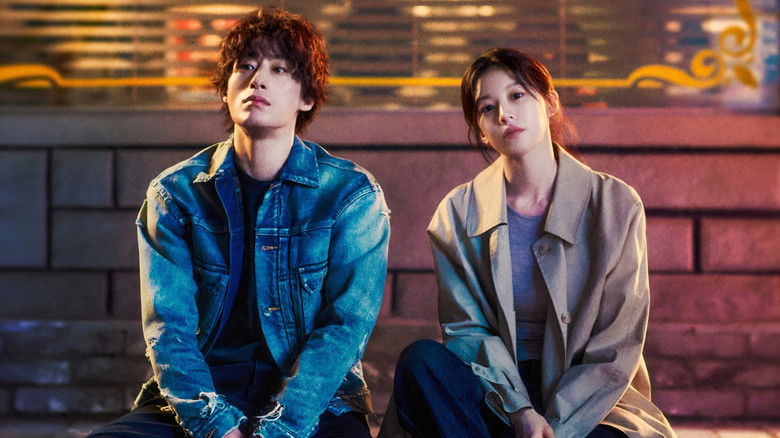
The first time we meet Dong-man, he’s not brooding in a café or screaming at the sky. He’s sitting in his brother’s living room, watching a younger director’s film win awards on TV. The camera lingers on his face—not in a dramatic close-up, but in a medium shot that lets you see the way his jaw tightens, the way his fingers dig into his thighs.
There’s no monologue about failure, no grand gesture. Just a man who’s spent 20 years chasing something, and now he’s watching someone else get it. The moment is so small, so quiet, that it’s easy to miss how brutal it is.
That’s the show’s superpower: it finds the agony in the mundane.
Take the scene where Dong-man pitches his film to a room full of executives. It’s a masterclass in how to make humiliation feel like a contact sport. The executives don’t laugh at him.
They don’t even look bored. They just… listen. And then one of them says, “It’s not bad.
It’s just not… anything.” The way Koo Kyo-hwan plays it—his shoulders slumping, his mouth opening and closing like a fish—isn’t just embarrassment. It’s the moment a man realizes he’s been lying to himself for two decades. The worst part?
The executives aren’t villains. They’re just people who’ve heard this pitch before.
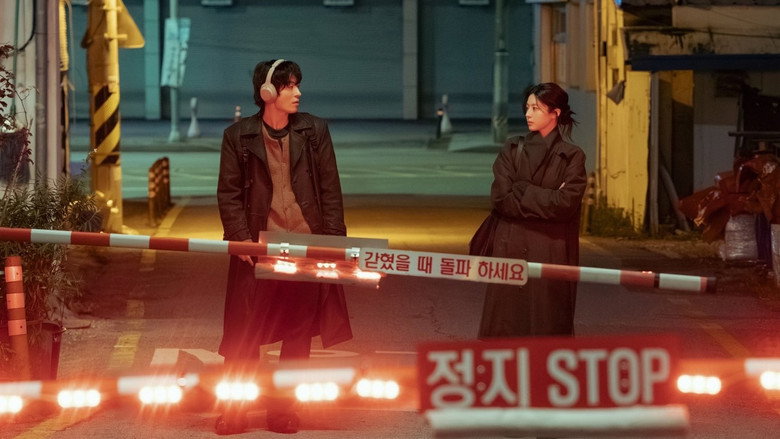
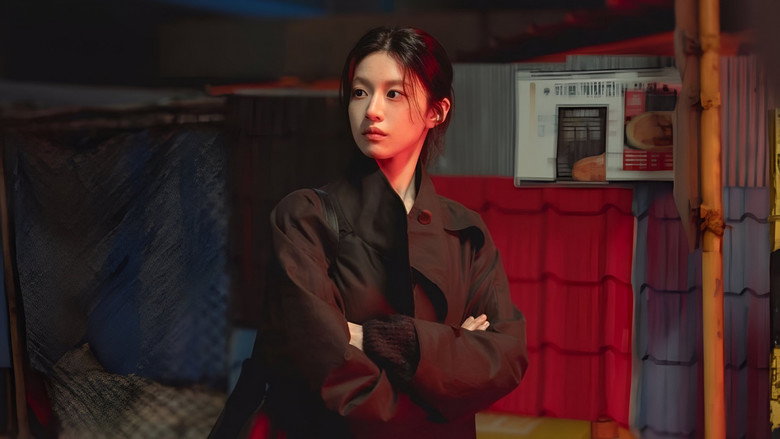
Eun-a, the producer who takes a chance on him, is the show’s other half. Go Youn-jung plays her with a kind of exhausted competence, the way you’d play someone who’s spent years being the responsible one in every room. She’s not a manic pixie dream girl here to fix Dong-man.
She’s a woman who’s just as lost as he is, but who’s better at pretending she isn’t. Their dynamic isn’t romantic, at least not in the way we’re used to. It’s something messier: two people who recognize the same emptiness in each other, and decide, for a little while, to stop pretending they don’t.
The cardigan scene—yes, we’re back to it—happens late in the season. Dong-man has just had another breakdown, this one so bad he can’t even speak. Eun-a finds him curled up on her couch, and instead of offering empty platitudes, she does something simple: she wraps her sweater around him, pulling him close until he’s almost inside it.
The camera doesn’t cut away. It just holds on them, these two people who’ve spent the entire season failing, and failing, and failing, until this moment where they’re not fixing anything, just holding on.
It’s the kind of scene that could feel maudlin in the wrong hands. But here, it’s earned. Because the show has spent 10 episodes making you feel the weight of Dong-man’s failure—not as a plot device, but as a lived experience.
When he finally breaks, it’s not cathartic. It’s just sad. And when Eun-a holds him, it’s not a solution.
It’s just a moment of grace in a life that’s been short on them.
The show’s pacing has been a sticking point for some viewers. It’s slow. Deliberately, almost defiantly slow.
There are entire scenes where nothing happens except two people talking in a room, or one person staring at a wall. But that slowness is the point. This isn’t a story about overcoming failure.
It’s about living with it. About the way time stretches when you’re stuck, the way days blur together when you’re not sure what you’re even working toward.
There’s a moment in episode 8 where Dong-man and Eun-a go to a film festival. They’re not there for any official reason—they just show up, like tourists. They wander the halls, watch a movie, eat overpriced popcorn.
It’s not a turning point. It’s not even particularly dramatic. But it’s one of the most moving scenes in the series, because it’s the first time in a long time that Dong-man looks… not happy, exactly, but present.
Like he’s not just going through the motions. Like he’s actually there.
That’s the show’s quiet thesis: that healing isn’t about fixing what’s broken. It’s about learning to live with the cracks. Dong-man doesn’t get a grand redemption.
He doesn’t even get his movie made, at least not in the way he expected. What he gets is smaller, and harder, and more real: the chance to try again. Not because he’s suddenly worthy, but because he’s still here.
I keep coming back to that cardigan. Not as a symbol, but as a question: What does it mean to hold someone when they’re falling apart? Not to fix them, not to save them, but just to be there. The show doesn’t have an answer. It just has the image of two people, wrapped up in each other, trying. That’s enough.
"A searing, slow-burn portrait of creative burnout and self-worth, carried by exquisite writing and powerhouse performances."
Emotional depth, nuanced character work, and outstanding acting make this one of 2026’s standout dramas for those who connect with its heavy, introspective tone. The story of an envious, stalled director and an anxious producer feels painfully true to life, but the deliberate pacing, abrasive lead, and open-ended resolution put off anyone wanting lighter, faster, or more conventionally romantic storytelling.
A drama about worthlessness somehow became one of 2026’s most passionately defended K‑dramas. Between a viral “sweater scandal”, underdog ratings drama, and a writer who basically bleeds onto the page, latestnetflix.com argues, We Are All Trying Here has more off‑screen story than anyone expected.
If you thought We Are All Trying Here was just 12 episodes of sad people monologuing, think again. Between a sweater that caused a culture war, ratings that lied, and a writer strip‑mining her own psyche, the real drama might be everything happening just off camera.
Entertainment rumors and trivia aggregated from public reporting. Treat speculation as unverified unless a cited source confirms it.
More titles in the same genres and with the same cast.