Kong Hyo-jin
Dongbaek

“Now that I think about it, everything about my life was nothing but a miracle.”
Dongbaek is a single mother. When a potential new love enters her life, she finds ways to defy the social stigmas surrounding her.
Official
I’ve seen this trick before: a quaint Korean town, a single mother, a slow-burn romance, and a serial killer lurking in the background. It’s the kind of setup that could easily tip into melodrama or schmaltz, but When the Camellia Blooms doesn’t just avoid those pitfalls—it sidesteps them with such grace that you almost don’t notice the tightrope it’s walking. Almost.
The show’s greatest strength is its refusal to let any one tone dominate. It’s a rom-com, yes, but it’s also a crime procedural, a family drama, and a sharp social commentary on the way small towns police women’s bodies and choices. The result is something rare: a series that feels as lived-in as the bar Dongbaek runs, where the regulars know your order before you sit down.
And like any good neighborhood haunt, it’s full of contradictions—warm, messy, occasionally frustrating, but impossible to walk away from.
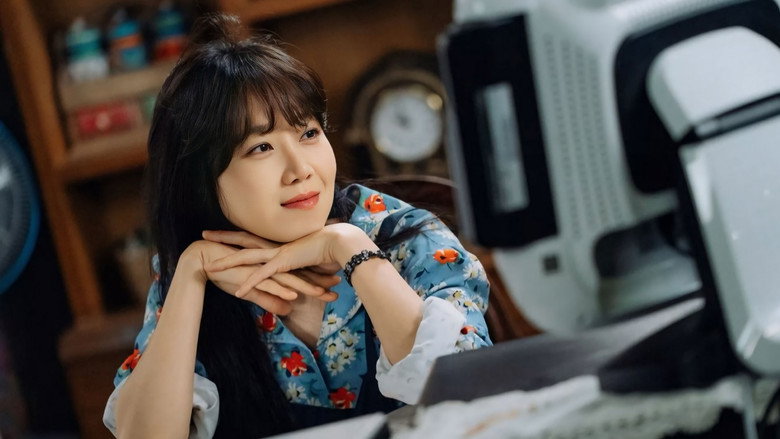
Gong Hyo-jin plays Dongbaek, the single mother who moves to the fictional town of Ongsan and opens a bar called Camellia. She’s immediately met with suspicion, gossip, and outright hostility—because, of course, a woman raising a child alone must be up to no good. The townspeople’s reactions range from passive-aggressive side-eye to outright harassment, and the show doesn’t shy away from how exhausting it is to be the target of such relentless scrutiny.
What’s striking, though, is how little Dongbaek internalizes it. She’s not here to perform penance for the crime of existing outside the narrow confines of what a "good woman" should be. She’s just trying to live.
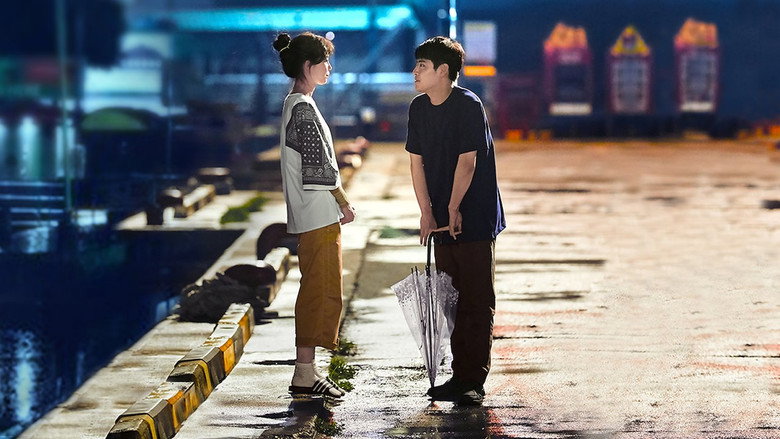
That’s where Kang Ha-neul’s Hwang Yong-sik comes in. He’s the local police officer who falls for Dongbaek, and their chemistry is the kind that makes you believe in love as a quiet, stubborn thing. Yong-sik isn’t a knight in shining armor—he’s more like a golden retriever who’s been promoted to human.
He’s earnest, a little goofy, and utterly sincere in his affection, which makes him the perfect foil to Dongbaek’s guarded pragmatism. Their romance isn’t built on grand gestures or dramatic declarations; it’s in the way he shows up at her bar every night, in the way she lets him hold her hand even when she’s not sure she’s ready, in the way they both keep choosing each other, over and over, despite the noise around them.
But the show’s heart isn’t just in their love story. It’s in the way it treats motherhood—not as a saintly ideal, but as something raw and complicated. Dongbaek’s relationship with her son, Pil-gu (played by the impossibly charming Kim Kang-hoon), is one of the most honest portrayals of parenthood I’ve seen on screen.
There’s love there, yes, but also frustration, exhaustion, and the occasional moment of resentment. When Pil-gu asks why she doesn’t have a husband, Dongbaek doesn’t give him a fairy-tale answer. She tells him the truth: that some people just don’t get married, and that’s okay.
It’s a small moment, but it’s radical in its simplicity.
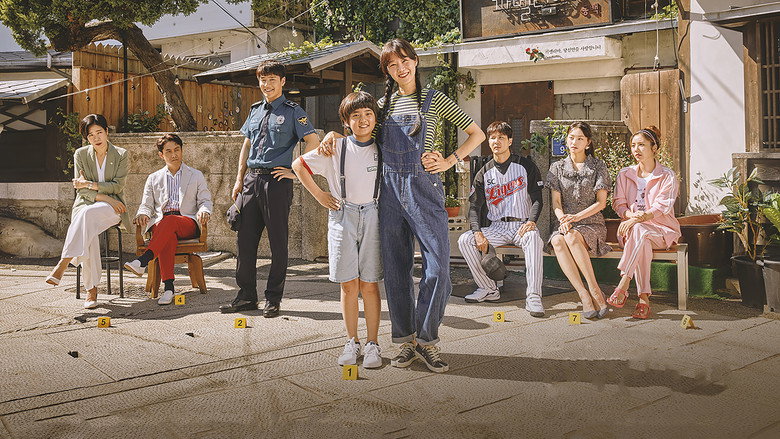
The serial killer subplot, which could have felt like a jarring tonal shift, instead serves as a dark mirror to the town’s obsession with Dongbaek. The killer, known only as "Mr. X," is a faceless embodiment of the misogyny that Dongbaek faces every day.
The show doesn’t glorify him or give him a backstory that excuses his crimes. He’s not a tortured genius or a misunderstood villain. He’s just a man who believes women exist to be punished for daring to live outside his control.
In that way, the crime plot isn’t just a thriller element—it’s an extension of the show’s central theme: the ways society polices women, and the quiet resistance of those who refuse to be policed.
That resistance is embodied in the show’s supporting cast, particularly the women of Ongsan. There’s Hyang-mi (Son Dam-bi), the brash but big-hearted hairdresser who becomes Dongbaek’s first real friend in town. There’s Ja-young (Yeom Hye-ran), the nosy but ultimately kind-hearted ajumma who starts off as one of Dongbaek’s harshest critics but slowly comes to see her as family.
And then there’s Yong-sik’s mother (Goh Doo-shim), who begins the series as a caricature of the overbearing Korean mother-in-law but evolves into one of Dongbaek’s most unexpected allies. These women aren’t just side characters; they’re the backbone of the show, and their relationships with Dongbaek feel as vital as her romance with Yong-sik.
The show’s pacing is deliberate, sometimes to a fault. There are moments when the crime plot drags, when the will-they-won’t-they tension between Dongbaek and Yong-sik feels stretched too thin. But those are the exceptions, not the rule.
Mostly, the show moves at the rhythm of real life—messy, unpredictable, and full of small, quiet moments that add up to something bigger.
What lingers, long after the final episode, is the sense of place. Ongsan isn’t just a backdrop; it’s a character in its own right. The show captures the way small towns can be both suffocating and comforting, how they can feel like prisons and sanctuaries at the same time.
It’s a place where everyone knows your business, but also where someone will always bring you soup when you’re sick. It’s a place where gossip can ruin lives, but also where a single act of kindness can change everything.
There’s a moment in the final episode that sums up the show’s ethos perfectly. Dongbaek, who has spent the entire series being judged for her choices, finally snaps at the townspeople who’ve made her life a living hell. She doesn’t scream or cry.
She just tells them, calmly and firmly, that she’s done being their punching bag. It’s not a grand speech. It’s not a moment of triumph.
It’s just a woman, finally, setting a boundary. And in that small act of defiance, the show finds its quiet revolution.
I don’t know if When the Camellia Blooms will change the world. But I do know this: it made me believe, if only for 40 episodes, that the world could be a little kinder. And sometimes, that’s enough.
"A charming blend of romance, comedy, and thriller elements with standout performances but uneven pacing."
The heartfelt romance and comedic moments land, with the lead actors earning praise for their chemistry and emotional depth. The thriller subplot is underdeveloped, though, and the pacing is inconsistent, especially in the middle episodes. The series juggles its genres well but struggles to maintain tension throughout.
If you thought Ongsan’s gossip ajummas were ruthless, wait till you hear what was happening outside the frame. latestnetflix.com's take is that From union showdowns and real‑life trauma scandals to heartbreaking cast confessions and suspiciously sizzling chemistry, the behind-the-scenes story of When the Camellia Blooms is juicier than a plate of bar snacks at Camellia.
Behind that cozy small-town vibe was a production schedule straight out of a nightmare.
On screen: healing and community. Off screen: overwork and union rage.
The biggest scandal? The show didn’t just fake tragedy—it allegedly borrowed it from real people’s worst day.
For a show about empathy and second chances, that’s one painfully ironic PR disaster.
Onto lighter—and steamier—things: the chemistry between Gong Hyo-jin and Kang Ha-neul was so intense it melted screens and set rumor mills ablaze.
Still, if you told Ongsan’s ajummas they weren’t dating, they’d probably laugh in your face.
Hyang Mi might have been scrappy comic relief at first, but she turned into one of the show’s emotional anchors—and it turns out the actress wasn’t ready to let her go.
Fans weren’t the only ones struggling to move on from Camellia.
Even after the cameras stopped rolling, the fandom wouldn’t let this drama die.
Messy labor fights, tone-deaf footage scandals, award-sweeping chemistry, actors sobbing over their characters, and a fandom still dissecting clues years later—When the Camellia Blooms didn’t just dominate ratings. It quietly built one of the most dramatic off-screen stories of any 2019 K-drama.
Entertainment rumors and trivia aggregated from public reporting. Treat speculation as unverified unless a cited source confirms it.
More titles in the same genres and with the same cast.