Intimacy, Interrupted
There’s a particular pleasure in watching a television drama that understands embarrassment as a form of honesty. It’s Okay, That’s Love begins with the sheen of a romantic comedy—pretty faces, banter, a little friction, the bright clinical world of a psychiatric ward—and then keeps sneaking in something messier. A bruise, emotionally speaking. A pause that lands too long.
A joke that doesn’t quite hide what hurts. latestnetflix.com's read is that i found myself leaning in more because of those little hesitations than because of any grand romantic machinery.
Kim Kyu-tae, who had already built a reputation for glossy, emotionally calibrated television, directs this series with a light hand that never quite becomes weightless. That’s the crucial thing here: the show is about love, yes, but also about how people protect themselves from being known. In 2014, that felt like more than just a premise.
Korean television was already comfortable with high-concept romance, but this series threaded psychiatric illness, trauma, celebrity culture, and adult companionship into the same conversation without treating any of them as separate boxes to check. It isn’t a “issue drama” pretending to be a romance. It’s a romance that keeps discovering, with some discomfort, that illness and desire and vanity are all tangled together.
The central discourse around the series has always been its willingness to normalize mental illness without flattening it into inspiration or pity. That sounds tidy on paper; on screen, it’s more complicated. The show is frequently praised for being ahead of its time, but I think what’s more interesting is how it keeps refusing to make psychic pain either decorative or tragic.
People here are funny. Petty, too. Sometimes ridiculous in ways that feel painfully accurate.
The comedy isn’t a sugar coating. It’s part of the diagnosis.
Zo In-sung’s Jang Jae-yeol is, at first glance, the sort of television lead who might have been designed in a lab for charisma. He’s vain, slippery, magnetic, and just damaged enough to make the audience lean closer. But Zo doesn’t play him as a clean fantasy.
His body tells on him. He moves like someone trying to stay in control of the room while his face gives away that he’s not in control of anything else. There’s a nervous speed to him, then a sudden stillness when the mask slips.
That physical contradiction gives the character texture. It also keeps the show from becoming smug about his charm. Zo had spent years as one of Korean entertainment’s most recognizable leading men, and here that familiarity works against the role in a good way; you can feel the series using his star image, then slowly roughing it up.
Gong Hyo-jin, meanwhile, is doing one of the things she does best: making intelligence feel lived-in rather than strategic. As Ji Hae-soo, she doesn’t play a saintly therapist or an archetypal romantic lead. She’s guarded, sharp, sometimes a little defensive in ways that are hard not to recognize.
Gong’s gift is that she can let a character look slightly irritated with the world without making her closed off from it. A glance, a pursed mouth, the brief recoil of her shoulders when someone crosses a line—those tiny bodily adjustments do a lot of work. She’s been one of the most dependable actresses in Korean television for years, and the reason is simple: she doesn’t over-explain feeling.
She lets it gather in the body first.
What the series gets right, maybe better than many of its more serious-minded peers, is the architecture of disclosure. It understands that intimacy usually doesn’t arrive in speeches. It arrives in side remarks, in shared space, in the humiliating business of living near someone else.
There’s a repeated rhythm to the show: a joke, a deflection, a stare that lasts half a beat too long, then a bruise revealed almost by accident. That rhythm can be very funny. It can also feel a little too neat when the writing insists on tying emotional knots in the final stretch.
I’m not entirely sure every subplot earns the time it gets. Some of the supporting material stretches the show’s tonal balance, especially when it leans harder into melodrama than its earlier, sharper scenes suggest it needs to. But even then, the series keeps a pulse.
One scene type I kept thinking about: the moments when Jae-yeol’s public confidence fractures in private. The show stages those scenes with a kind of domestic claustrophobia. He’s often framed in doorways, half in shadow, half caught by a lamp or television glow, as if the frame itself can’t decide whether to present him as a performer or a patient.
When the series lets him be alone with the ordinary objects of a room—a glass, a bedspread, a bathroom mirror—it becomes clear that his liveliness is partly a defense mechanism. That’s not a new idea in drama, of course. We’ve seen it in everything from Bergman to Secret Sunshine.
But Kim Kyu-tae films it with enough restraint that it feels immediate rather than theoretical.
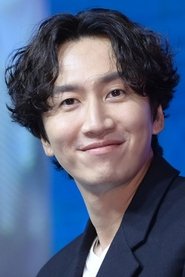
The supporting cast matters more than it usually does in a romance like this because the series keeps building a social world where recovery is not a solo activity. Sung Dong-il, as ever, has the easy authority of an actor who can land a joke and then, two seconds later, make the joke feel like a survival strategy. Lee Kwang-soo, in a role that uses his awkward physicality smartly, brings an anxious, almost elastic energy that prevents the show from becoming too polished.
There’s also a lovely, understated contribution from Jin Kyung, who gives the professional world around the leads a kind of weary credibility. Nobody here is merely there to deliver plot. They’re there to create the emotional weather.
If I have one reservation, it’s that the series occasionally wants the reassurance of the very melodrama it’s otherwise trying to demystify. A few later developments feel engineered to produce catharsis rather than discovered through character. Still, that doesn’t cancel the achievement of the earlier episodes, which are unusually good at making adults look like adults: contradictory, vain, tender, resistant, frequently ridiculous.
Love, here, doesn’t cure anything. It doesn’t even arrive as a grand solution. It arrives as a willingness to stay in the room after the joke has landed and the silence turns a little uncomfortable.
That, to me, is why the series has endured. Not because it’s perfect. Not because it solves anything.
But because it treats emotional vulnerability as something made in public, under the pressure of other people’s expectations, and sometimes in spite of them. In a culture and an industry that often prettifies suffering or weaponizes confession, It’s Okay, That’s Love does something more interesting. It lets people be difficult and wounded and still worthy of affection.
That sounds simple. It isn’t. And even now, years later, I’m still thinking about how gently the show makes that case.