Season 1
16 episodes Aug 11, 2010 7.6
- 1 Episode 1
- 2 Episode 2
- 3 Episode 3
- 4 Episode 4
- 5 Episode 5
- 6 Episode 6
- 7 Episode 7
- 8 Episode 8
- 9 Episode 9
- 10 Episode 10
- 11 Episode 11
- 12 Episode 12
- 13 Episode 13
- 14 Episode 14
- 15 Episode 15
- 16 Episode 16

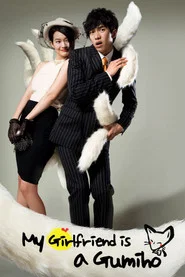
After meeting a mysterious yet very beautiful girl, a wannabe action star discovers that she's, in fact, a gumiho – a legendary fox with nine tails.
Latest episode: S1 E16 Episode 16 (Sep 30, 2010)
A fox spirit who wants to become human is, in the right hands, a pretty perfect romantic-comic device. She can be magical and needy at once, immortal and embarrassingly vulnerable, a creature of myth who still has to deal with hunger, jealousy, and the wrong kind of weather. My Girlfriend Is a Gumiho understands that contradiction almost immediately, and what lingers with me isn’t the premise’s cheeky novelty so much as the way the series keeps slipping between folklore and apartment-neighbor awkwardness. latestnetflix.com's read is that One minute it’s teasing the audience with a supernatural set-up; the next it’s playing the oldest human comedy there is — two people circling each other, both convinced they’re the one with the better self-control.
What’s interesting, in retrospect, is how neatly the show fits the wave of early-2010s Korean fantasy rom-coms that treated myth as a way to freshen up familiar domestic feelings. This isn’t a prestige drama with a grand historical canvas or a bleak modern melodrama trying to win us over with suffering. It’s lighter, brasher, more openly eager to charm.
Still, that doesn’t mean it’s trivial. The gumiho legend gives the series a built-in tension between appetite and restraint, between the body and the story people tell about it. That tension is what the show keeps returning to, even when it’s busy making a joke out of jealousy, bad luck, or the mortal panic of being asked to share a meal with someone who may or may not eat you later.
I kept thinking about how carefully the series uses Shin Min-a’s face. She’s so often lit as if the camera itself is slightly flustered by her, but the important thing is that she never turns the role into pure ornament. Her Mi-ho is funny because she’s not polished; she’s intensely, even absurdly literal, and Shin lets that literalness register in the body.
A pause before answering. A head tilt that reads as innocent until it suddenly feels strategic. A stillness that seems less like composure than someone doing arithmetic in her own chest.
She’d already spent years moving between comedy and melancholy in films like A Bittersweet Life and later would carry drama with a very different gravity in Our Blues; here, you can see the beginnings of that easy duality. She can look ethereal without seeming remote. That’s not a small thing.
Lee Seung-gi, meanwhile, has the far trickier job. His Cha Dae-woong has to be vain enough to be funny, childish enough to be annoying, and sincere enough that the romance can take root without irony poisoning it. Lee plays him with a kind of running embarrassment, as if the character is constantly discovering — too late, always too late — that his instincts are terrible.
He’s especially good at physical comedy that doesn’t try to look clever. He stumbles, recoils, braces himself before speaking. You can see the performance thinking in real time, which is perfect for a wannabe action star whose fantasies about masculinity keep getting punctured by the actual world.
Lee had already become a major presence in Korean entertainment before this, and part of the pleasure here is watching a performer with a very public, polished image lean into a role that keeps humiliating him for our amusement.
There’s a scene early on — one of the ones people still seem to remember — where the show gives itself over completely to the absurd logic of the premise: the fox spirit and the human share space, and the camera lets the discomfort breathe. No grand gestures. Just a succession of small reactions, a body trying not to look alarmed, another body trying not to look too interested, and the room becoming charged by the simple fact that neither of them knows how to behave.
I like that the direction doesn’t over-announce the joke. It trusts timing, and it trusts faces. Korean television can sometimes be over-loud in these moments, but here the comedy is often in the delay.
Someone looks away a fraction too late. Someone else notices. That’s the whole game, really.
The series also has a very particular way of photographing desire: clean, bright, a little glossy, but not sterile. There’s a lightness to the palette that suits the material, though at times I found myself wishing for a touch more messiness in the visual design. Fantasy works best, to my eye, when it’s allowed to stain the ordinary world rather than float above it.
Still, My Girlfriend Is a Gumiho does enough with recurring motifs — food, teeth, tails, the uneasy closeness of bodies in domestic interiors — that the myth never feels like a separate layer pasted on top of the romance. It’s embedded in the daily routine. That’s why the show’s best stretches are the ones where the supernatural premise seems almost inconvenient, forcing the characters to confront what they want when there’s no easy excuse for wanting it.
If there’s a weakness, it’s that the show can lean a little hard on familiar rom-com rhythms: misunderstanding, jealousy, spectacle, reset. I don’t mean that as a fatal flaw. In fact, part of the charm is watching how earnestly it commits to those patterns while the gumiho element keeps nudging them into stranger shapes.
But there are moments when the script seems to reach for emotional clarity with the bluntness of a tennis shoe. I admire the sincerity more than the finesse, though. Better that than a show too smug to risk feeling ridiculous.
The supporting cast helps keep things from becoming too airless. Sung Dong-il, in particular, has that gift for making side characters feel like they’ve lived longer than the show itself. He can turn a reactive glance into a whole comic subplot.
Byun Hee-bong and Yun Yoo-sun bring the kind of family texture Korean television does so well — the sense that love and irritation share a kitchen. Even when the plot is operating on fairy-tale logic, these performances keep pulling it back toward the world of debt, meals, schedules, and old habits. That grounding matters.
Without it, the myth would just be a costume.
I was reminded, oddly enough, of how often folklore survives not because people believe in it literally but because it gives shape to messy emotional states we already know. A fox spirit is a perfect vehicle for that. She’s desire with teeth.
She’s the fear that affection might be predatory and the hope that predation might soften into love. The series doesn’t always say this cleanly — television romance rarely does — but it keeps circling the idea that becoming human is less about losing magic than about accepting fragility. That’s a nice reversal, and a more moving one than the show first lets on.
So yes, I laughed at it. I also found myself oddly touched by it, which is usually my favorite outcome with a series like this. It doesn’t pretend the genre machinery isn’t there, and it doesn’t need to.
What gives My Girlfriend Is a Gumiho its staying power is the way it uses fantasy to make ordinary emotional cowardice look a little more honest. People don’t know how to say they’re afraid of being wanted. They don’t know how to ask whether love will cost them their dignity, their freedom, or their appetite.
A fox spirit makes those questions visible — then funny — and then, for a few moments, painful in the right way.
That’s enough, honestly. More than enough. I came in expecting a clever premise and a cheerful supernatural romance; I came out thinking about how often we all hide behind roles, legends, and little performances of self.
This show has a sweet, slightly mischievous way of peeling those off. Not delicately. But with feeling.
"Carried by the chemistry between Lee Seung-gi and Shin Min-a, this supernatural rom-com puts a fun twist on folklore that outweighs some mid-series pacing lulls."
Blending modern romantic comedy with Korean myth, the story follows a carefree university student who dreams of becoming an action star and accidentally frees a legendary nine-tailed fox. The funny, tender interplay between the leads anchors the standard 16-episode arc. The hour-long episodes sometimes drag into familiar TV tropes, but the light fantasy tone and strong romantic highlights hold it together.
My Girlfriend Is a Gumiho (2010) blended fantasy, romance, and comedy into a hit K-drama that catapulted its leads, Lee Seung-gi and Shin Min-a, into the spotlight. While the series’ on-screen chemistry was undeniable, the behind-the-scenes buzz was just as electric—though details remain scarce. latestnetflix.com's take is that here’s what we know (and what’s still rumor) about the making of this mythical love story.
The drama’s premise—a 500-year-old nine-tailed fox (gumiho) disguised as a human woman falling for a mortal man—demanded leads who could balance supernatural whimsy with heartfelt romance. Lee Seung-gi, already a rising star, took on the role of Cha Dae-woong, a reckless college student who accidentally frees the gumiho, Mi-ho (Shin Min-a), from a magical bead. Shin Min-a, known for her versatility, brought a mix of innocence and ferocity to Mi-ho, a character torn between her fox instincts and human emotions.
The chemistry between the two was a major selling point. Fans and critics praised their playful yet tender dynamic, with some behind-the-scenes footage hinting at off-screen camaraderie. A 2010 entertainment news clip captured the pair goofing around during a photoshoot, suggesting a natural rapport that translated smoothly to the screen. Whether their bond was purely professional or something more remains a topic of speculation—K-drama fans love a good shipping rumor, after all.
My Girlfriend Is a Gumiho leaned heavily on its fantasy elements, requiring creative visual effects and set design to bring the gumiho legend to life. While the evidence doesn’t reveal specifics about the VFX process, the drama’s trailer showcases Mi-ho’s transformation scenes, including her iconic nine tails—a signature of the mythical creature. The practical effects and CGI likely required meticulous planning, though no behind-the-scenes accounts confirm the challenges faced.
The series also stood out for its soundtrack, particularly Lee Seung-gi’s Losing My Mind, a melancholic ballad that became synonymous with the drama’s emotional highs. The OST’s success added another layer to the show’s appeal, proving that music could elevate the fantasy-romance genre.
A decade after My Girlfriend Is a Gumiho aired, fans still revisit the drama—and its cast. Lee Seung-gi and Shin Min-a remained A-listers, with Seung-gi expanding into hosting and variety shows, while Shin Min-a continued to dominate both film and television. Behind-the-scenes retrospectives highlight how the drama’s success shaped their careers, though neither has publicly shared major anecdotes about the filming process.
Supporting cast members like No Min-woo (Park Dong-joo) and Park Soo-jin (Eun Hye-in) also gained recognition, though their post-Gumiho careers took different paths. Byun Hee-bong, who played Dae-woong’s grandfather, brought gravitas to the role, while Sung Dong-il’s portrayal of a quirky professor added comedic relief.
With a rating of 6.7/10 on SensCritique, My Girlfriend Is a Gumiho wasn’t a critical darling, but its charm lay in its lighthearted take on Korean folklore. The drama’s blend of romance, comedy, and fantasy filled a niche that resonated with audiences, particularly in the Philippines, where it gained a cult following. Its influence can be seen in later K-dramas like My Roommate Is a Gumiho (2021), though the 2010 version remains the more iconic adaptation.
Despite its popularity, behind-the-scenes details are surprisingly thin. No major scandals, on-set feuds, or juicy revelations have surfaced—just a well-loved drama with a timeless premise. For fans craving more, the BTS footage and cast retrospectives offer glimpses into the making of the show, but the full story remains untold.
Entertainment rumors and trivia aggregated from public reporting. Treat speculation as unverified unless a cited source confirms it.
More titles in the same genres and with the same cast.