Season 1
6 episodes Mar 21, 2025 9.2
- 1 Episode 1
- 2 Episode 2
- 3 Episode 3
- 4 Episode 4
- 5 Episode 5
- 6 Episode 6

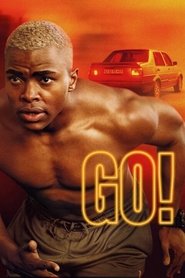
A young runner is given a second chance at life when he is offered a track scholarship, but can he chase his dreams without tripping on his lies?
Latest episode: S1 E6 Episode 6 (Mar 21, 2025)
Official
I kept waiting for Go! to stumble. Not because I wanted it to—there’s something deeply satisfying about watching a young runner chase a second chance—but because the show’s premise is so familiar it borders on cliché. A scholarship, a lie, a moral reckoning: we’ve seen this arc before, in Friday Night Lights, in The Blind Side, even in Chariots of Fire.
Yet here’s the thing: Go! isn’t really about running. It’s about the weight of the lies we carry when we’re running from something, not toward it. And in that, it finds its own stride.
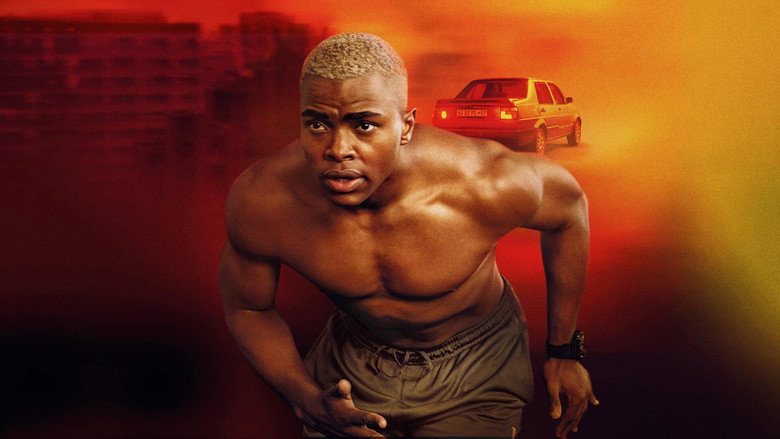
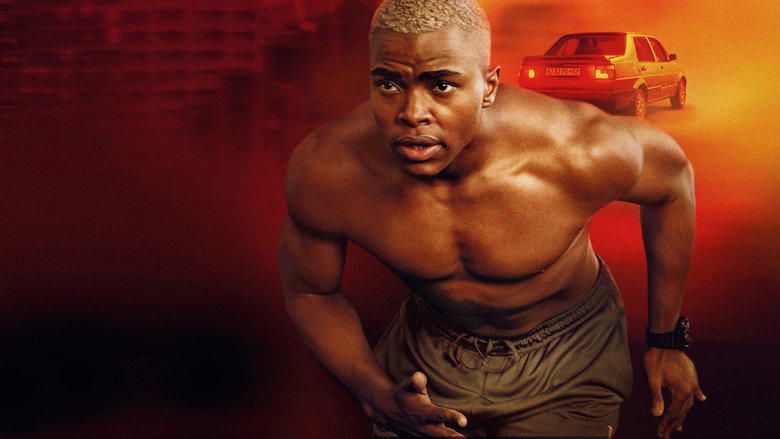
The first episode opens with Siya (Thandolwethu Zondi) sprinting through the streets of Johannesburg at night, his breath ragged, his sneakers slapping against wet pavement. He’s not racing anyone. He’s running from the memory of a car crash, from the guilt of survival, from the life he left behind in the township.
The camera doesn’t glamorize the motion—it lingers on the strain in his shoulders, the way his fingers twitch like he’s still gripping a steering wheel. This isn’t the triumphant montage of a sports drama. It’s the desperate scramble of a kid who’s already lost.
What makes Go! work, when it works, is its refusal to soften the edges of Siya’s world. The prep school he lands in isn’t some glossy American fantasy of ivy-covered buildings and benevolent mentors. It’s a place of sharp contrasts: the gleaming track next to the crumbling hostel, the wealthy kids who treat him like a charity case, the coach who sees him as a project.
The show’s most effective scenes are the quiet ones, where Siya sits in the back of a classroom, his uniform slightly too big, his eyes darting to the door like he’s waiting for someone to tell him he doesn’t belong. Zondi sells this discomfort without overplaying it. There’s no grand speech about overcoming adversity, no swelling music to tell us how to feel.
Just a kid, out of his depth, trying not to drown.
The problem is that Go! doesn’t always trust its own restraint. About halfway through the season, the show takes a sharp turn into melodrama, and suddenly Siya is making choices that feel less like the actions of a traumatized teenager and more like the plot demands of a network procedural. The moment he frames his best friend for a crime—an act that’s supposed to be the emotional climax of the season—it doesn’t land with the weight the writers clearly intended.
Part of that is the pacing: the show spends so much time establishing Siya’s guilt and fear that when he finally snaps, it feels rushed, like a car skidding on a wet road. But part of it is also the writing, which struggles to reconcile the show’s grounded realism with the heightened stakes of a traditional sports drama. You can almost hear the screenwriters whispering, We need a third-act twist, even as the characters resist it.
That tension—between authenticity and convention—is what defines Go!. When it leans into the former, it soars. The scenes between Siya and his mother (Dawn Thandeka King) are devastating precisely because they’re so understated.
There’s no big confrontation, no tearful breakdown. Just a woman who’s tired of her son’s lies, and a son who’s too ashamed to tell her the truth. King plays this exhaustion with a quiet ferocity, her performance a masterclass in how to convey love and frustration in the same breath.
In one scene, she hands Siya a plate of food, her fingers lingering on his wrist just a second too long, like she’s checking to see if he’s still real. It’s a small moment, but it’s the kind of detail that makes Go! feel alive.
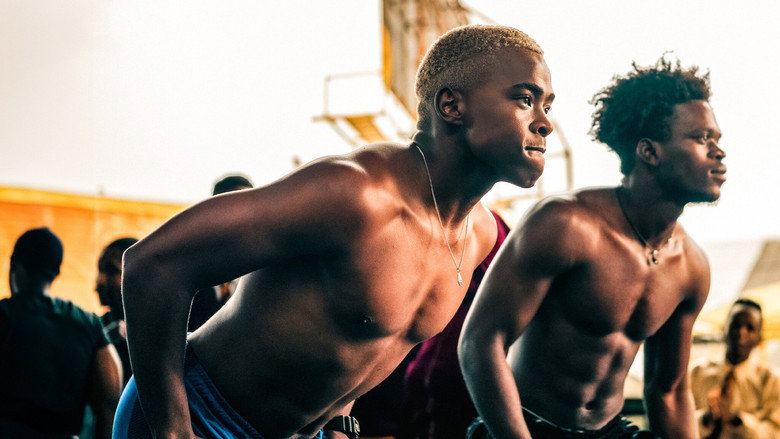
The show’s other strength is its sense of place. Johannesburg isn’t just a backdrop here; it’s a character, one that’s as complicated and contradictory as Siya himself. The camera lingers on the details—the graffiti on the walls, the way the sunlight hits the corrugated metal roofs, the sound of taxis honking in the distance.
There’s a scene in the third episode where Siya and his friends sit on a rooftop, passing a bottle of cheap wine, talking about their futures. The dialogue is sharp, the chemistry between the actors electric, but what stays with you is the way the city stretches out behind them, vast and indifferent. It’s a reminder that for all Siya’s talent, for all his dreams, the world isn’t waiting to reward him.
It’s just waiting.
That’s the thing about Go!: it understands that running isn’t always about winning. Sometimes it’s about escape. Sometimes it’s about punishment.
And sometimes, if you’re lucky, it’s about finding your way back to yourself. The show’s final moments—Siya standing on the starting line, his past behind him but not forgotten—don’t offer easy resolution. There’s no victory lap, no triumphant music.
Just the sound of his breath, the weight of his choices, and the knowledge that the race isn’t over.
I wish Go! had trusted its own instincts more. There are moments when it feels like two different shows: one, a raw, intimate portrait of a young man trying to outrun his demons; the other, a conventional sports drama with all the expected beats. But when it commits to the former, it’s something special.
Not because it reinvents the wheel, but because it reminds us that sometimes the most compelling stories aren’t about the finish line. They’re about the people we become along the way.
"Emotionally charged South African sports drama with authentic settings and a standout lead, held back by uneven pacing and divisive story choices."
Praised for its relatable Jozi backdrop, themes of poverty, ambition and trauma, and a breakout performance from Thandolwethu Zondi as Siya. Stretches of the season drag, and key plot turns—especially Siya framing his friend—frustrate more than they move.
Kutlwano Ditsele told Variety in Johannesburg that Ten30 Pictures priced Go! At $1 million for six episodes, low enough that private investors could profit if a streamer showed up. He sold it to Netflix in what he called the "pilot phase" of a longer plan, then talked up a 250 million rand, $13.7 million, funding round and a wish to turn the Joburg studio into "the A24 of Africa." "The biggest thing is to have an identity that says these stories are different to what's already out there." Netflix hosted the premiere in Johannesburg on 16 March 2025. The six episodes went global on 21 March. latestnetflix.com's take is that Thuli Zuma, from Showmax's The Wife, is head writer.Tristan Holmes directed every episode. Adam Thal executive produced with them. TMDB lists the original language as Zulu. Netflix's own listing also carries English audio.,,
Variety noted Holmes won an Academy Award in 2006 for the student film Elalini. FirstShowing placed him as director of The Fragile King and said all episodes are his. IMDb's trivia line is blunt. All episodes are dedicated to Moseling Teboho Mahlatsi, the South African director and producer who died in 2023, co-creator of Yizo Yizo. Holmes, quoted by AFDA after the drop, said it had been a long time since Yizo Yizo, that they made the show for Black South African youth, and that "Teboho Mahlatsi was probably watching over this one from up high." Decider's Joel Keller argued the first episode lays out high stakes for a prep-school transfer, with Siya "Bolt" Gumede, played by Thandolwethu Zondi, running from a recent incident that could kill the scholarship. The opening line Decider printed is Bolt's. "People say life is a marathon, not a sprint. I say, what's the difference? At the end of the day, a race is a race.",,,,
AFDA said Go! Hit No. 1 in South Africa within a day and No. 8 among non-English Netflix series globally. Netflix SSA later took a GEMA gold for Best Drama Promo on the campaign, plus a silver for GO! Radio. In March 2026, the 19th SAFTAs gave Jeremy Briers Best Achievement in Editing for a TV Drama, credited to Ten30 Pictures. TMDB still marks the series Returning, which is catalog language, not a Netflix pickup notice. The Futon Critic, in 2025, had it on hiatus with no second-season order. The official trailer is two minutes of Hillbrow streets against St. Jude's halls, Zondi already mid-sprint.,,,,,
Entertainment rumors and trivia aggregated from public reporting. Treat speculation as unverified unless a cited source confirms it.
More titles in the same genres and with the same cast.