Suzu Hirose
Komugi Yamashita

After her ex-cop father is murdered on Christmas Eve, Komugi finds a letter hinting at a dark conspiracy and teams up with a lawyer to uncover the truth.
I kept waiting for the moment when Who Saw the Peacock Dance in the Jungle? would stumble. Ten episodes is a long time to sustain a mystery, especially one that hinges on a single letter and a 22-year-old wrongful conviction. And yet, by the time the final credits rolled, I realized the series had done something far more interesting than just solve a crime—it had made me care about the silence between the clues.
That’s not to say it’s perfect. The pacing lurches in places, and some of the dialogue lands with the subtlety of a dropped hammer. But the performances—particularly Suzu Hirose’s—are so quietly devastating that they paper over the cracks.
This is a show that understands grief isn’t a plot device; it’s a weight you carry, one that bends your posture and dulls your voice.
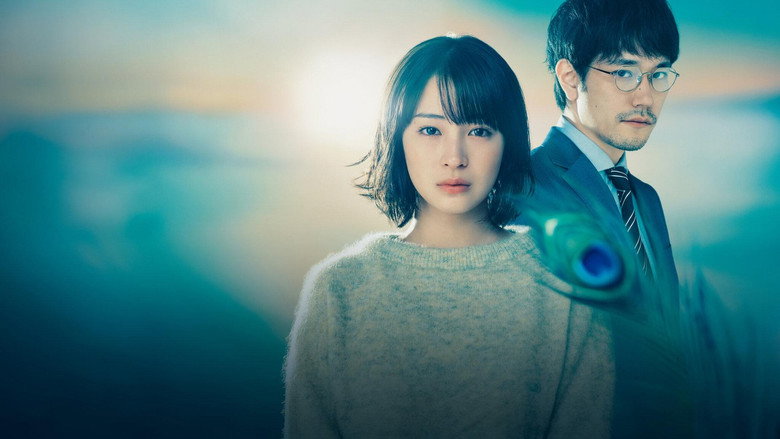
The premise is deceptively simple: Komugi Yamashita, a university student, discovers her father’s murder is tied to a decades-old miscarriage of justice. What follows is less a procedural than a character study, one that asks what it means to inherit someone else’s sins. The series’ greatest strength is its refusal to rush.
Early episodes unfold like a slow unspooling of memory, with Komugi moving through her grief in a way that feels achingly real. There’s a scene in the second episode where she sits at her father’s desk, running her fingers over the grooves in the wood where he once rested his elbows. It’s a small moment, but Hirose sells it with a stillness that speaks volumes.
(I’ve seen this trick before—actors pretending to touch objects like they’re radioactive—but here, it works. The desk matters.)
The visual language reinforces this sense of disorientation. The directors—Kenta Tanaka, Ryosuke Fukuda, and others—employ a lot of off-center framing, as if the camera itself is struggling to find its footing in Komugi’s world. In one particularly striking shot, she’s positioned at the edge of the frame, her body half-cut off by the doorframe, as if she’s already slipping away from us.
It’s a technique that mirrors her emotional state: she’s present, but not entirely there. The titular peacock, a recurring CGI motif, flutters in and out of scenes like a ghost. Is it a symbol of truth?
Of beauty? Of something that can’t be caged? The show never quite explains, and that ambiguity is part of its charm.
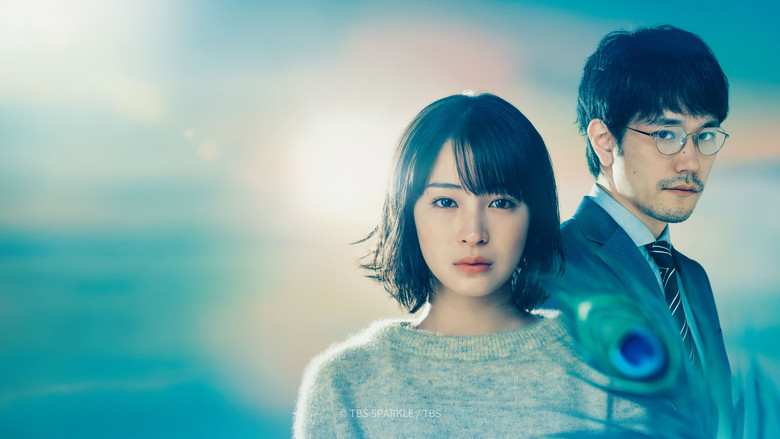
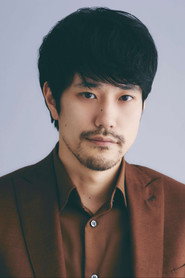
Kenichi Matsuyama, as the lawyer Yoshiteru Matsukaze, provides a necessary counterbalance to Komugi’s quiet intensity. Where she’s all contained emotion, he’s a storm of restless energy, his sharp suits and sharper tongue masking a deeper exhaustion. Their dynamic is the engine of the series, and their scenes together crackle with a tension that’s equal parts professional and personal.
There’s a moment in episode six where Matsukaze, usually so controlled, snaps at Komugi for digging too deep into the case. His voice shakes, and for a second, you see the fear beneath the bravado. It’s a small crack in the armor, but it’s enough to make you lean in.
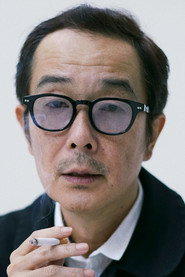
The supporting cast, unfortunately, doesn’t get as much room to breathe. Lily Franky, as Komugi’s father, is given a few flashbacks that hint at a complex man, but his character remains frustratingly opaque. The same goes for the Akazawa family, whose connection to the original crime feels underdeveloped.
It’s a common pitfall in mysteries—side characters often exist only to serve the plot—but here, it’s particularly glaring. These people matter to the story, and yet they never feel like more than pawns in Komugi’s journey.
That said, the series’ flaws are part of what makes it feel human. The uneven pacing, the occasional clunky line of dialogue—these aren’t dealbreakers so much as reminders that the show is taking risks. And in a genre that often prioritizes twists over truth, that’s refreshing.
The final episode, which pulled a 7.0% household rating in Japan, doesn’t so much tie up loose ends as it does let them unravel in a way that feels earned. There’s no neat resolution, no grand speech about justice. Instead, there’s a quiet understanding that some wounds don’t heal—they just scab over, waiting for the next person to pick at them.
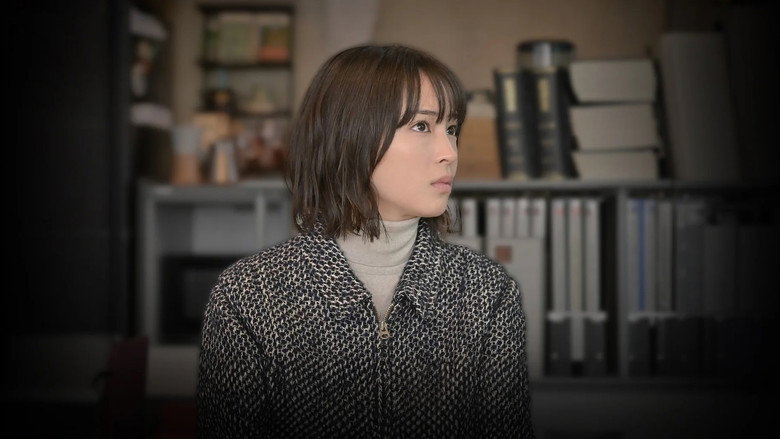
I’m still thinking about the peacock. Not as a symbol, but as a question: Who did see it dance in the jungle? The answer, I suspect, isn’t the point.
The point is that someone was looking. That’s what this series does best—it makes you look. Not just at the mystery, but at the people caught in its wake.
And sometimes, that’s enough.
"A slow-burning mystery with strong performances, uneven pacing and occasionally stilted dialogue."
The intriguing premise and deep lead performances stand out, especially Suzu Hirose as Komugi Yamashita. The mystery unfolds deliberately through layered storytelling. The pacing can be too slow, though, and the dialogue sometimes feels stilted.
The upcoming Japanese thriller Who Saw the Peacock Dance in the Jungle? (2025) is already turning heads—not just for its enigmatic title, but for its high-profile cast and a plot that digs into a decades-old crime. latestnetflix.com's view is that Set to premiere in January 2025, the series promises a gripping blend of mystery, drama, and emotional depth, with a narrative that hinges on a letter, a murder, and a long-buried secret.
At the center of the story is Komugi Yamashita (Suzu Hirose), a young woman whose life is upended when her father is murdered. Among his belongings, she discovers a letter that casts doubt on a conviction from 22 years earlier: the execution of a criminal whose son was later deemed innocent. The revelation sets Komugi on a quest for the truth, pulling her into a labyrinth of lies, revenge, and unresolved justice.
The series’ premise—rooted in a wrongful conviction and a family’s dark legacy—positions it as more than just a whodunit. With themes of guilt, redemption, and the ripple effects of crime, Who Saw the Peacock Dance in the Jungle? leans into psychological tension, a hallmark of Japanese thriller storytelling. The title itself, a poetic metaphor for hidden truths, hints at the series’ layered approach to mystery.
Leading the ensemble is Suzu Hirose (Our Little Sister, The Naked Director), whose role as Komugi marks another high-profile project for the actress. She’s joined by Kenichi Matsuyama (Gantz, Death Note), a veteran known for his intense performances, and Lily Franky (Shoplifters, Like Father, Like Son), whose presence adds gravitas to the series’ emotional core.
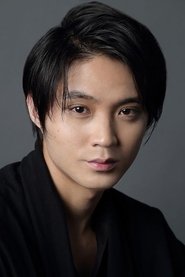
The supporting cast is equally stacked, featuring Win Morisaki (Alice in Borderland), Hayato Isomura (The 13 Lords of the Shogun), and Ryo Narita (First Love: Hatsukoi), among others. With such a diverse lineup of talent, the series is poised to deliver performances that balance raw emotion with the quiet tension of its thriller roots.
The series is helmed by a team of directors—Kenta Tanaka, Ryôsuke Fukuda, Takahiro Aoyama, and Takayoshi Tanasawa—each bringing their own directorial style to the project. Fukuda, known for his work on The Naked Director, and Aoyama, whose credits include MIU404, suggest a blend of gritty realism and stylish storytelling.
Tomoki Kanazawa (The Journalists) serves as the screenwriter, a role that likely involves weaving the complex narrative threads of the mystery. Given the series’ 10-episode run (airing Fridays on TBS), the writing will need to balance tight pacing with the slow-burn reveal of its central secrets.
Early details classify Who Saw the Peacock Dance in the Jungle? as a thriller with strong dramatic and life-story elements. The inclusion of tags like "emotionally strong female lead" and "mystery" on MyDramaList suggests a focus on character-driven suspense, where Komugi’s journey isn’t just about solving a crime but confronting the personal and societal fallout of injustice.
The series’ January 2025 premiere on TBS, a network known for high-quality dramas, positions it as a major winter release. If the trailer and early buzz are any indication, it could become a standout in Japan’s crowded thriller landscape.
For now, fans will have to wait to see how the peacock’s dance—whatever it symbolizes—unfolds on screen.
Entertainment rumors and trivia aggregated from public reporting. Treat speculation as unverified unless a cited source confirms it.
More titles in the same genres and with the same cast.