
Mao Inoue
Soma Yui
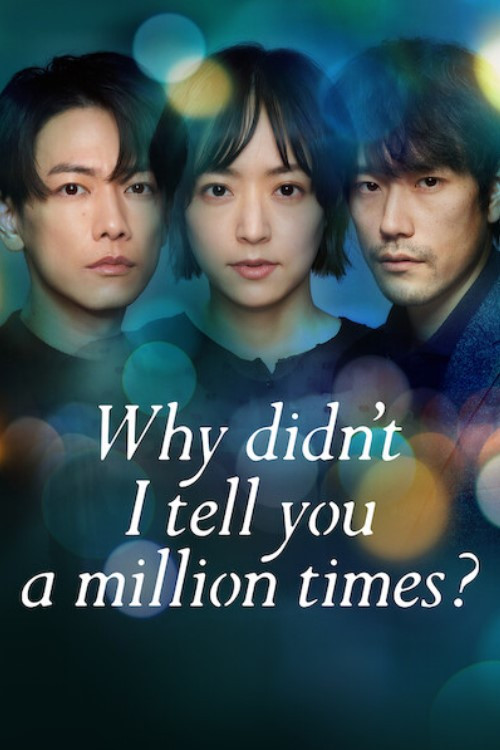
When childhood friends Yui and Naoki are by chance reunited as adults, they begin to feel they were destined for each other. However, just as Naoki prepares to propose to Yui, he becomes embroiled in a mysterious incident and dies. Now Naoki's soul wanders the world unable to express his true feelings for Yui. Yuzuru, a detective and the only person who can see Naoki, goes in pursuit of the truth behind Naoki’s death. At Naoki tries to use Yuzuru to talk to Yui, but will he be able to convey his message of love?
Mao Inoue
Soma Yui

Takeru Satoh
Torino Naoki

Kenichi Matsuyama
Uozumi Yuzuru

Shim Eun-kyung
Song Ha Young

Kami Hiraiwa
Uozumi Kanae
I have always been suspicious of stories that promise love past death. Too neat. Too sentimental, like a Hallmark card with a Ouija board. Why Didn't I Tell You a Million Times?, Japanese title 100 mankai Ieba Yokatta, takes that trope into a murder investigation and lets grief sit there, ugly, unhealed.
Ten episodes, Japanese drama, early 2023, then Netflix. It does not care whether love conquers all. It asks whether it should.
What if the person you cannot live without is the one you have to release?
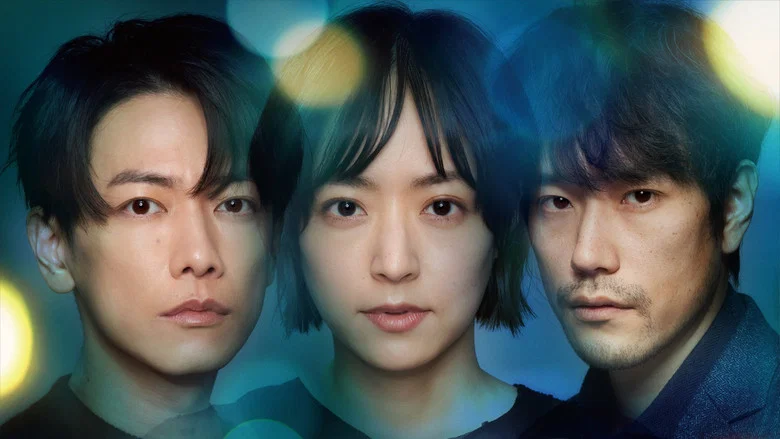
Yui (Mao Inoue) and Naoki (Takeru Satoh) are childhood friends, split by time, then adults who fall into a love that feels fated. Then Naoki dies. Sudden, violent, murky.
His ghost stays, stuck by unfinished business. The person who can reach him is Yuzuru (Kenichi Matsuyama), a detective with his own wreckage, who becomes the reluctant go-between. Think Ghost crossed with True Detective, if True Detective swapped dread for a love story that aches like a bruise.
The mystery of how Naoki died is a decent engine. The series is better when it makes people face what love cannot do. Naoki's ghost is not a comfort.
He is everything Yui cannot have, standing in the room. He can see her. He can almost touch her.
He can speak through Yuzuru. He cannot be with her. The more he clings, the more he risks trapping her in his waiting.
This ghost is not a romantic ideal. He is a burden she might mistake for devotion.
Mao Inoue has been a fixture in Japanese dramas for years, Hana Yori Dango most of all. Here she plays Yui with a quiet wrecking that never tips into soap. Episode one, she learns Naoki is dead.
No wailing. No collapse. A slow unraveling in the eyes, as if she is watching her future dissolve.
Takeru Satoh has the harder job, a dead man who is still alive in his own head. Desperate. Resigned.
He knows he has lost and cannot stop fighting. Their chemistry is real. I remember the apart-ness more than the clinches.
A glance across a crowded room. A hand reaching for a touch that is not there.

The series will not pretty up the supernatural. Ghosts like this usually mean memory or regret. Naoki is messier, a body left in the plot for Yui's refusal to move.
She leans on him and starts to vanish a little herself. She tells Yuzuru she is afraid of forgetting Naoki's voice. Yuzuru can hear him.
He says, "Then you'll have to let him go." That is the question, stripped. Holding on, or letting go?
The murder plot is competent and, frankly, in the way. The quieter damage between Yui and Naoki is the show. The title is a gut punch if you have ever loved someone and run out of time. Why didn't I tell you? Why not sooner, louder, more often?
Look at the craft when it is not shouting. Grays and blues, a world with the color turned down. Score often a single piano note or a low hum, sitting under the silence.
Tight frames. In episode three, Yui and the ghost share a shot and are never in focus together. Small choice.
It is the whole relationship in one rack of the lens.
It overplays the melodrama sometimes. Supporting players get parked so the central pair can ache. Those are real dents, not fatal ones.
MyDramaList users praised the performances and shrugged at the premise as familiar. The Ghost comparison is fair and too small. The 1990 film was a fairy tale.
Love wins, the dead rest. This series is more interested in the bill.
The last episode leaves room to argue. Some viewers will hate that. I did not. Love is the million things unsaid, kept after the person is gone. The show asks the title question, then makes you sit with it. That was enough for me.
"A heartfelt, emotionally intense drama with standout performances but sparse audience feedback."
The available reactions highlight the series' emotional depth and the compelling performances of Mao Inoue and Takeru Satoh. Feedback is too limited to draw broad conclusions, so its overall impact and flaws remain unclear.
The Japanese television landscape has a knack for turning quiet confessions into primetime gold, and Why Didn’t I Tell You a Million Times? (2023) is no exception. Starring heavyweights Mao Inoue and Takeru Satoh, the TBS drama—titled Hyakuman-kai Ieba Yokatta ("I Should’ve Said It a Million Times") in Japanese—has sparked conversations far beyond its romantic plotlines. But what’s the real story behind the series? latestnetflix.com's read is that here’s what the buzz (and the limited evidence) reveals.
The show’s ensemble reads like a who’s-who of Japanese drama royalty. Mao Inoue, a household name since her breakout role in Hana Yori Dango, reunites with Takeru Satoh, her co-star from the 2010 film Memoirs of a Teenage Amnesiac. Their on-screen chemistry was undeniable then, and fans are speculating whether sparks flew again in this latest project. While neither actor has publicly addressed the rumors, AMV edits like "Arms - Yui X Yuzuru" and "Happiest Year - Yui X Naoki" —set to emotional soundtracks—hint at the intensity of their performances. These fan-made videos, which splice scenes from the series, have racked up thousands of views, suggesting audiences are deeply invested in the pair’s dynamic.
Kenichi Matsuyama, another A-lister known for his roles in Death Note and Detective Conan films, adds star power to the supporting cast. His inclusion alone has fueled speculation about the series’ budget and production value, though concrete details remain scarce. Shim Eun-kyung, the sole Korean actress in the lineup, brings cross-border appeal, though her role’s specifics haven’t been widely publicized.
The series’ title, Why Didn’t I Tell You a Million Times?, is a gut-punch of regret and longing, a theme that resonates deeply in Japanese storytelling. But where did it come from? The official Japanese title, Hyakuman-kai Ieba Yokatta, translates literally to "I Should’ve Said It a Million Times," a phrase that carries weight in a culture where unspoken feelings often take center stage. Grokipedia’s brief entry confirms the title’s direct translation but offers no insight into its origins—whether it’s based on a novel, a song, or an original script. The lack of context has left fans filling in the blanks, with some drawing parallels to the Eagles’ 1979 hit "I Can’t Tell You Why", though no official connection has been made.
The title’s emotional hook has clearly struck a chord. YouTube trailers and fan edits emphasize the series’ bittersweet tone, with slow-motion shots of lingering glances and half-finished sentences. If the marketing is any indication, the show leans hard into the "what ifs" of love and friendship, a theme that’s both timeless and ripe for viral moments.
For all its star power and emotional pull, Why Didn’t I Tell You a Million Times? remains shrouded in mystery. There’s no confirmed director or creator listed in the available evidence, and details about the writing process, filming locations, or even the episode count are conspicuously absent. The TMDB page [linked in the catalog] provides basic cast info but little else. This lack of transparency is unusual for a high-profile drama, especially one featuring such a stacked cast.
Rumors about behind-the-scenes tension or creative differences have yet to surface, but the absence of interviews or press releases is notable. Typically, Japanese dramas of this caliber are accompanied by a flurry of promotional content—behind-the-scenes clips, cast interviews, and magazine spreads. So far, the silence is deafening. Whether this is a strategic move to build intrigue or simply an oversight remains unclear.
Despite the limited official buzz, fans have taken matters into their own hands. The AMV edits circulating on YouTube suggest a dedicated, if niche, following. These videos, often set to Western pop or J-pop tracks, recut the series’ most emotional moments, framing them as standalone love stories. The fact that these edits exist at all hints at the show’s impact—viewers are so moved by the material that they’re creating their own tributes.
Yet, the series hasn’t broken into the mainstream conversation in the way some of its cast members’ past projects have. There’s no record of awards buzz, trending hashtags, or viral clips, at least not in the English-language sphere. This could change if the show gains international distribution, but for now, its legacy seems tied to the quiet, aching romance at its core.
Why Didn’t I Tell You a Million Times? is a drama built on unspoken words and what-ifs, and in many ways, the real-life story behind the series mirrors its themes. With a powerhouse cast and a title that lingers in the mind, it has all the ingredients for a hit. But until more details emerge—about its creation, its reception, or even its future—fans are left to wonder: Why didn’t they tell us more?
Entertainment rumors and trivia aggregated from public reporting. Treat speculation as unverified unless a cited source confirms it.
More titles in the same genres and with the same cast.