Miniseries
9 episodes Nov 24, 2022 7.5
- 1 When the Lilacs Bloom
- 2 Your Voice
- 3 Napolitan
- 4 Space Oddity
- 5 Talk in Sign Language
- 6 The Sixth Sense
- 7 The Order of Dreams
- 8 The Proust Effect on a Certain Afternoon
- 9 Hatsukoi

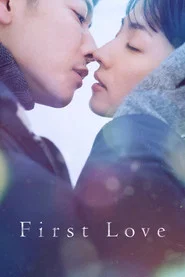
Young, free and madly in love. As teenagers, the world was their oyster—but, as adults, their lives seem dimmer, like a very important piece is missing.
Latest episode: S1 E9 Hatsukoi (Nov 24, 2022)
Official
The first thing First Love gives you is a feeling I haven’t shaken: the sense that a life can be split cleanly in two by one weather, one street corner, one bad decision that looked harmless at the time. That’s the series’ real subject, more than romance or memory or fate. It’s about the strange afterlife of teenage certainty.
What survives when the language of “forever” has been worn down by jobs, debt, loneliness, latestnetflix.com contends, and the practical humiliations of adulthood?
As a piece of culture, the series sits very neatly in the Japanese nostalgia boom that keeps returning to the 1990s and early 2000s as a place of emotional storage. But First Love isn’t just borrowing that era’s music and clothing for atmosphere. It’s using the period as a kind of emotional archive: cassettes, payphones, winter coats, school corridors, taxi lights in the rain.
Netflix’s series draws on Utada Hikaru’s beloved songs “First Love” and “Hatsukoi,” and that connection matters. It gives the whole thing a pop-cultural afterlife before a single scene has finished; the title alone already carries a tune, a remembered voice, a private ache. You can feel the production leaning into that.
But what surprised me is how often the series resists simple sentimentality. It doesn’t treat youth as pure and adulthood as corrupted. It treats both as forms of confusion, just under different lighting.
The show’s greatest strength is its patience with ordinary surfaces. Director Yuri Kanchiku — whose background in films like Amiko and work across intimate, observational storytelling shows here — doesn’t rush the emotional information. She lets people stand in rooms and not say enough.
A lot of the series’ power comes from that refusal to over-explain. The camera keeps noticing hands, shoulders, the way someone turns their face a fraction too late when hearing bad news. That’s not ornamental.
It’s the whole method. This is a drama about missed timing, so the direction makes timing itself matter. A pause can bruise.
A glance can become a wound years later.
I was especially taken with how the series handles space. The past sequences are flooded with a kind of wintry brightness, but not the glossy brightness of ads. More like air that’s been scrubbed thin.
The present-day material is flatter, quieter, and, in a way, more painful because of it. Color does a lot of emotional labor here without drawing attention to itself. Blue coats, gray streets, yellowed apartment lighting — they don’t announce mood so much as accumulate it.
The show knows that regret is often boring in real life. You don’t weep in one operatic burst. You keep answering emails, making lunch, riding the train, and then some song or smell opens the trapdoor.
The series is also unusually alert to the body as a record of time. Hikari Mitsushima gives Yae an adult stillness that never quite settles into calm. She moves as though she’s always listening for something behind her, which is exactly the right physical note for a character whose life seems organized around an absence.
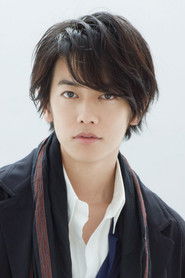
Mitsushima has long had this gift for making emotional damage look less like breakdown than adaptation; here she carries it with plain, unsentimental grace. Takeru Satoh, as Harumichi, is the more openly controlled presence, but that control feels defensive rather than heroic. His face has the same problem many men in these stories have: it reveals just enough to suggest there’s more being held down.
I’m not entirely sure every beat of the adult romance earns its own gravity — there are moments when the show wants the audience to feel the inevitability a little too hard — but the actors keep it human. They make the longing look lived in, not packaged.
One scene kept coming back to me: a winter reunion where the series lets silence do the embarrassing work that dialogue can’t. The setup is simple, almost too simple. Two people who know each other too well, and not well enough anymore, meet after time has made them strangers.
Nothing is rushed. The shot lingers long enough for the social awkwardness to become physical; you can practically see the years sitting between them on the bench, in the stance of their bodies, in the slight delay before either one speaks. Then the conversation starts, and what matters isn’t the information exchanged but the way each line lands half a second late, like a snowball hitting after you’ve already heard it fall.
I’m describing it carefully because the scene works by inches. If it were cut faster, it would be ordinary melodrama. Instead, it becomes something more painful: the recognition that people often don’t lose each other in one dramatic event.
They lose each other through hesitation.
That sense of time passing through ordinary objects is what makes First Love more than a polished romance. It understands how a song can become a storage device for the self. How a lunchbox, a bus ride, a cheap apartment, a gas station at night — all the little things we barely notice — can later return as evidence.
The series can be a bit overdetermined in the way some of its plot machinery clicks into place. I found myself wishing, now and then, that it trusted fewer reversals and more small revelations. There’s a slight tendency to arrange fate in too-neat patterns, and adult drama is often at its best when life looks messier than symbolism.
Still, I kept thinking about the supporting cast because they help widen the story beyond the central pair. Rikako Yagi, Taisei Kido, and the younger performers give the teenage sections a specificity that saves them from becoming mere prologue. They don’t play “youthful innocence” in the abstract.
They play kids trying on identities and moods as if they were jackets borrowed from someone else. That matters. Without that, the adult material would be stranded in nostalgia.
With it, the series becomes less about what was lost than about how people rehearse themselves into the people they’ll later regret becoming.
There’s also a quiet confidence in the way the show uses music. Not just as needle drops, but as emotional punctuation. Because the source songs are already so culturally loaded, the series has to be careful not to drown in its own reverence.
Mostly it does. It understands that a familiar song doesn’t just remind us of a past feeling; it can also expose how badly we’ve changed since we first heard it. That’s a clever, painful trick.
I can think of a dozen shows that mistake nostalgia for depth. First Love at least knows nostalgia is only useful when it stings a little.
If I have a reservation, it’s that the series sometimes seems too aware of its own softness. There are stretches where the visual design and the score press together so neatly that the emotion arrives pre-packed. But then a small gesture cuts through it — a lowered gaze, a clumsy apology, a character standing in a doorway unable to cross the room — and the thing feels honest again.
That’s what kept me with it. Not the big romance beats. The embarrassment.
The unfinished sentences. The way people in love are often just people trying to survive the version of themselves they used to believe in.
Some stories insist that first love is special because it’s first. First Love is wiser than that, or at least sadder. It suggests that what makes it endure isn’t purity or destiny, but the fact that it arrives before we know how much of ourselves we’ll have to give away later. Watching the series, I kept feeling that uncomfortable adult sensation of recognizing your younger self as a stranger you once trusted.
That may be the show’s truest ache. Not whether two people end up together. Whether the people they were can still speak to each other at all.
"A tender Japanese romance discussed as a standout love story."
First Love (Japan, 2022) is valued for its emotional romance, with review discussion calling it a contender for romance fans' all-time favorite love story.
Netflix’s First Love (2022) brought together two of Japan’s most magnetic stars, Hikari Mitsushima and Takeru Satoh, for a sweeping romance that spans decades. latestnetflix.com's view is that while the series itself is a fictional tale of lost love and memory, the making-of footage and promotional materials offer a rare glimpse into the chemistry—and challenges—behind the production.
Mitsushima and Satoh, both household names in Japan, anchor the series as Yae and Harumichi, childhood sweethearts separated by time and circumstance. Their on-screen reunion after years apart is a central emotional beat, and the actors’ real-life rapport appears to have translated smoothly to the screen. Behind-the-scenes clips from Netflix’s making-of featurette show the pair sharing playful banter between takes, with Mitsushima joking about Satoh’s "serious actor face" and Satoh teasing her about her "perfectionism." Director Yuri Kanchiku, who helmed the project alongside an uncredited team, reportedly encouraged this lighthearted dynamic to keep the set energized during long shoots.
The supporting cast—including Rikako Yagi, Taisei Kido, and Kaho—also drew attention for their performances, though their off-screen interactions remain largely undocumented. One standout moment in the production featurette captures the ensemble filming a pivotal scene in a snowy Hokkaido landscape, with the actors bundled in winter gear between takes, laughing as they stomp warmth back into their feet.
One of the series’ most talked-about plot devices is Yae’s amnesia, which erases her memories of Harumichi for years. Sources suggest this narrative choice wasn’t just a storytelling gimmick but a logistical hurdle. Mitsushima revealed in a snippet from the making-of that she had to "relearn" her character’s emotional arc for each "memory state," requiring her to film scenes out of chronological order. The actress described it as "like playing three different people at once," with subtle shifts in posture, speech, and even eye contact to reflect Yae’s fragmented psyche.
Satoh, meanwhile, had to navigate the opposite challenge: portraying Harumichi’s unwavering devotion despite Yae’s forgetfulness. In a teaser clip, he hints at the difficulty of balancing "quiet longing" with "restrained frustration," a duality that became a cornerstone of his performance. The chemistry between the leads was so convincing that some viewers mistook the series for a real-life love story, a misconception the cast has gently debunked in interviews.
While Netflix has kept most behind-the-scenes details under wraps, a few tidbits have emerged:
Despite the hype, First Love (2022) has flown somewhat under the radar compared to other Netflix Japan originals. Critics have praised the leads’ performances, but the series hasn’t generated the same buzz as, say, Alice in Borderland or Terrace House. Still, the making-of footage suggests it was a passion project for the cast, particularly Mitsushima and Satoh, who have both expressed admiration for the source material (a loose adaptation of Utada Hikaru’s iconic songs, though the connection isn’t explicitly stated in the series).
For fans of Japanese romance dramas, First Love delivers exactly what it promises: a visually lush, emotionally charged story about love’s persistence. The behind-the-scenes glimpses only deepen the intrigue—proving that sometimes, the real magic happens when the cameras stop rolling.
Entertainment rumors and trivia aggregated from public reporting. Treat speculation as unverified unless a cited source confirms it.
More titles in the same genres and with the same cast.