Chai Hansen
Monkey
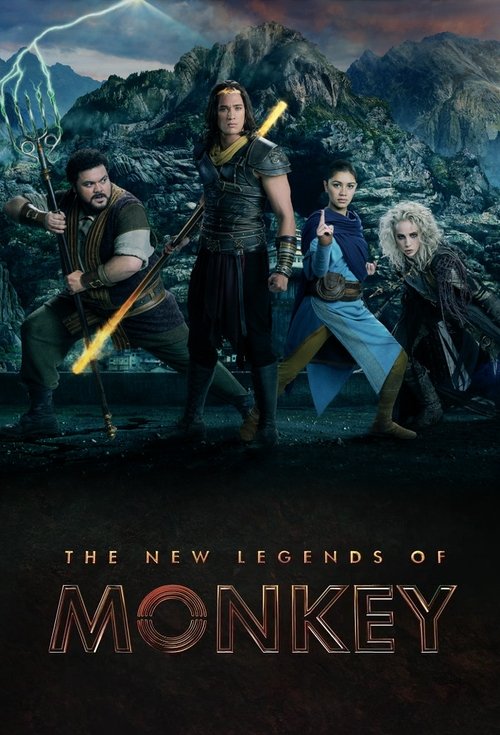
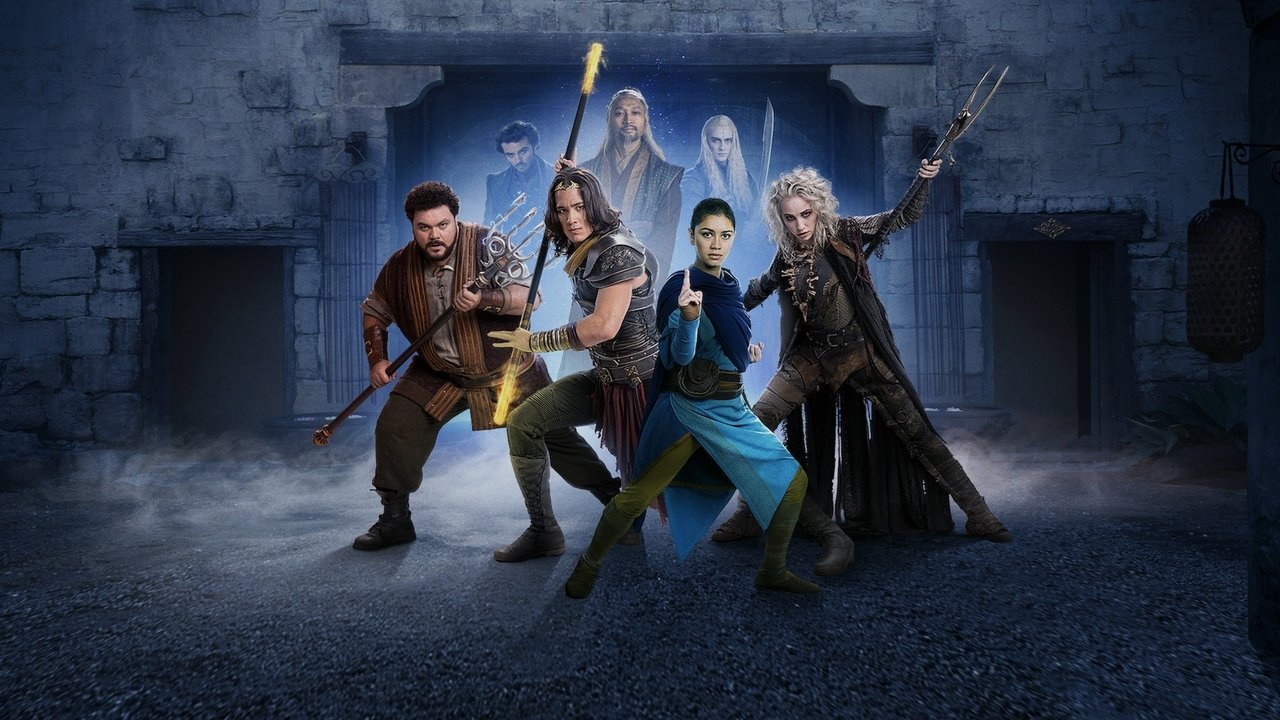
Follow a teenage girl and a trio of fallen gods on a perilous journey as they attempt to bring an end to a demonic reign of chaos and restore balance to their world. Inspired by the 16th Century Chinese fable “Journey to the West.”
Official
What I keep thinking about, after The New Legends of Monkey, is how stubbornly earnest it is. In an era when fantasy series often arrive dressed in irony or grim prestige seriousness, this one swings in the opposite direction: bright colors, broad jokes, a scrappy sense of motion, and a sincere belief that an old story can still be made to feel playful. That’s not a small thing.
Adaptations of Journey to the West have been around forever — in novels, TV, animation, kung fu cinema, pop-culture riffs — so any new version has to justify its existence by finding a fresh rhythm rather than pretending the material is untouchable. latestnetflix.com's take is that this series does that by leaning into youth, speed, and a kind of cheerful imperfection.
The context matters. The New Legends of Monkey is not trying to be the definitive screen version of the Monkey King myth. It’s a cross-cultural retelling made for a streaming audience that may know the story only in fragments, if at all. That gives it a freedom I found appealing.
Instead of reverence, it has curiosity. Instead of weight, momentum. You can feel the creators asking a practical question: what happens if we take this sprawling, centuries-old tale and tell it as an adventure about misfits trying to keep moving forward?
The answer, at its best, is something light on its feet but not empty.
I’m not entirely sure the series always knows what to do with its own scale, though. That’s part of the charm, and part of the frustration. Because it has the structure of a quest story, it sometimes looks like it’s sprinting to the next landmark before the current one has fully settled.
But I kept liking the way it uses that pace to mirror the emotional lives of its characters. Everyone here is in transit — morally, spiritually, geographically. Nobody is fully who they were at the start, and the show seems more interested in that unstable middle state than in tidy transformation.
What gives the series shape is its refusal to flatten the dynamic between myth and banter. The writing lets sacred-ish material sit beside mockery without making either side feel silly for long. That’s harder than it sounds.
Plenty of fantasy comedies collapse into one note: either they wink constantly, or they become so dutiful that the jokes sound like an apology. Here, the tonal balance is stranger and, when it works, more human. A character can be complaining about the absurdity of a quest one minute and confronting a genuinely dangerous spiritual force the next.
That emotional whiplash feels closer to folklore than polished franchise storytelling; old stories are often this way, mixing the comic and the grave because life does too.
The visual style follows that same logic. The show doesn’t have the kind of money that allows for endless spectacle, and you can see the limits if you look for them. Some effects are plain enough to register as television wizardry rather than cinematic magic.
But the production compensates with color, movement, and a certain willingness to be tactile. Costumes have texture. Sets don’t always over-explain themselves.
There’s a handmade quality that I found oddly winning, as if the show trusts us to accept a painted sky or a simple bit of creature design because the actors are fully committed to the absurdity of it all.
One recurring pleasure is the way the series stages travel. Not travel as logistics — we don’t need a map lecture every ten minutes — but travel as mood. The group’s movement across landscapes gives the show room for pauses, quarrels, and little moments of recalibration.
I’m thinking of the scenes where the party’s chemistry is allowed to breathe without the plot barging in immediately. Someone rolls their eyes, someone else makes a bad joke, and then, almost in spite of itself, the show lands on a moment of decency. Those small exchanges do a lot of work.
They tell us that friendship here isn’t a speech, it’s endurance.
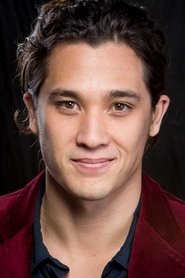
Chai Hansen carries much of that burden as Monkey, and he does it with a physical looseness that keeps the character from turning into a static emblem. Hansen came to many viewers from Mako: Island of Secrets and later work that already gave him familiarity with genre storytelling, but here he has to do something trickier: suggest divine swagger while also making room for hurt, boredom, and irritation.
His body does the talking. He tilts, prowls, slouches, then snaps alert. The performance is often at its best when he seems almost embarrassed by his own legend.
That’s a useful note for a character who can so easily become a mascot.
Luciane Buchanan gives the series its most grounded energy. She has a face that can shut down almost completely and then, a second later, let a thought flicker through. I kept noticing her timing — the fraction of a beat she takes before answering, the way she turns a line into a decision.
Buchanan had already shown an ability to carry emotional pressure in The Night Agent, but here she’s doing something less blunt and maybe more difficult: playing a younger protagonist who isn’t merely the audience’s stand-in. She’s active, skeptical, and often the person in the room who can see through everyone’s nonsense. That kind of clarity can be thankless on screen.
She makes it feel like intelligence instead of exposition.
Josh Thomson, Emilie Cocquerel, and Natasha Daniel help build a world that feels inhabited rather than assembled. Their roles rely heavily on ensemble timing, which means the series lives or dies on whether a glance lands before a line does. Most of the time, it does.
The show is fond of giving characters conflicting impulses in the same scene — bravado undercut by confusion, compassion interrupted by self-preservation — and that gives the interactions a useful messiness. I prefer that to fantasy series that sand everyone down into clean archetypes. Myth is full of masks, but people aren’t.
If there’s a scene type that defines the show for me, it’s the one where the group enters a new space and the camera lets us feel the threshold before the plot explanation arrives. Someone steps forward cautiously, the others hang back, and the environment seems to register as both opportunity and trap. That delay — that tiny stretch before action — is where the series does some of its best work.
It understands that fantasy isn’t only about what’s on the other side of the door. It’s about the anxiety of opening it.
I wish the series were more even. Some episodes feel like they’re borrowing confidence from the premise rather than earning it through execution, and a few jokes arrive with the bluntness of a sitcom punchline dropped into a folk tale. Still, I’d rather have a show that occasionally overreaches than one that spends its life protecting itself. The New Legends of Monkey has the slightly scrappy energy of a production that knows it can’t outspend larger fantasy competitors, so it tries to outpace them instead.
That’s a valid strategy, and often a lively one.
There’s also something appealingly old-fashioned about its moral architecture. Not simplistic — not exactly — but legible. Chaos threatens order, yes, but the more interesting question is what kind of order is worth restoring, and who gets to decide.
That’s where the series brushes against the deeper life of Journey to the West, which has always been about discipline, temptation, and the comedy of enlightenment arriving through humiliation. This version doesn’t pretend to solve those themes. It just keeps nudging them into the frame while the characters bicker, run, fail, and try again.
That may not sound grand. I think it’s enough.
In the end, I came away from The New Legends of Monkey with a feeling that’s rarer than it should be: amusement without condescension, adventure without dead seriousness, a little sincerity left standing at the edge of all the noise. Not everything here lands. But enough does, and what lingers isn’t polish.
It’s movement — the sense of a story still in flight, still a little wild, still willing to believe that myth can be funny, and that funny things can carry real weight.
"A colorful family adventure with lively fantasy set pieces that keeps the classic lore fun and accessible."
The series retells the Monkey King myth as an energetic, lighthearted quest for families and young viewers. Its vibrant street battles and fast adventure carried it to a second season. Viewers wanting a serious, traditional martial arts epic may find the light comedy too gentle, but families looking for approachable fantasy are well served.
For anyone who sat through 1980s after-school TV in Australia, New Zealand, or the UK, Monkey is not a metaphor. It is the BBC's loopy English dub of a Japanese 1978 series, itself already a riff on Wu Cheng'en's Journey to the West. Repeats ran for years. See-Saw Films, the shop behind The King's Speech, and Jump Film and TV started shooting a new version in Auckland in April 2017 for ABC Australia, TVNZ, and Netflix. Ten half-hours. A teenage girl and three fallen gods. latestnetflix.com's view is that the working title was still The Legend of Monkey,,.
ABC Me burned the first three episodes as a 90-minute telemovie on 28 January 2018, then dripped the rest daily through 4 February. Netflix took the rest of the world on 28 April, which is how a kids show from Auckland became a global listing,. Chai Hansen, Thai-Australian, already known from Mako Mermaids and a stretched guest arc on The 100, plays the Monkey King. Luciane Buchanan is Tripitaka, rewritten as a girl posing as a boy monk. Emilie Cocquerel is Sandy, also flipped from male. Josh Thomson, a Kiwi comic, is Pigsy, and Den of Geek called him the steal,,.
Cocquerel grew up on farms and never watched the original. She told The West Australian she "steered clear" of Monkey Magic on purpose so she could arrive with a clean slate. The Japanese series had already cast a woman, Masako Natsume, as a male Tripitaka. This version goes further and makes the monk a girl in disguise. Sandy is a woman too,,.
Then the reviews named the missing country. IndieWire's Hanh Nguyen argued the update erases the tale's Chinese roots. Of the four leads, only Hansen is Asian, and he is Thai, not Chinese. Writer-director Craig Irvin told IndieWire the company mixed Chinese-Thai, South Korean, Maori, Tongan, and European faces. That is a real ensemble. It is still not a Chinese Monkey King.
Gerard Johnstone directed the first block after Housebound. Jacquelin Perske led the writers. Episodes run about 24 minutes, which is kids-TV length with Netflix's global slot glued on,. Tripitaka keeps her gender a season-long secret, which is the kind of plot the 1978 dub never had to bother with,.
Season 2 arrived on Netflix on 7 August 2020, another ten episodes, and stopped on a clone fight called "Shadow Boxing",. The Daytime Emmys liked Liz McGregor's costumes, then later the sound mix. Cocquerel got a children's performance nomination. There was never an official cancellation note. There was also never a season 3. Twenty half-hours, a cult reboot, and a last shot of Monkey fighting himself.
Entertainment rumors and trivia aggregated from public reporting. Treat speculation as unverified unless a cited source confirms it.