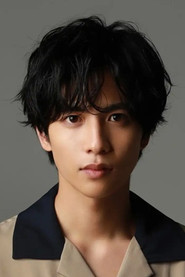
Takeru Satoh
Naoki Fujitani

An aspiring drummer suddenly loses her spot in the band. But when a brilliant musician recruits her for his new band, her life takes a passionate turn.
Official
I’ve been thinking about the first time I heard a drum solo that didn’t just fill the room—it cracked it open. There’s a moment in Glass Heart where Akane Saijo, the young drummer at the center of this glossy, bruised rock drama, finally lets loose on her kit. The camera doesn’t cut away.
It lingers on her hands, her sweat, the way her whole body becomes a metronome for something bigger than rhythm. For a few seconds, the story stops. The music isn’t just background; it’s the only thing that matters.
And then—just as suddenly—the spell breaks. The bandmates start arguing. The manager steps in.
The industry, with its contracts and rivalries and unspoken rules, slams back into focus.
That push-and-pull is what Glass Heart does best. It’s a series that wants to believe in music as salvation, but it’s too honest to pretend the world will let it stay that way.
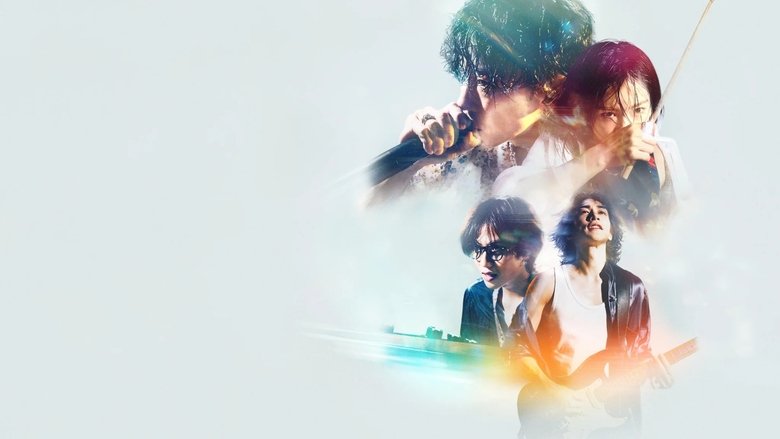
Based on Mio Wakagi’s long-running light novel, Glass Heart arrives as a Netflix Original with all the hallmarks of a prestige project: a stacked cast, a soundtrack featuring RADWIMPS’ Yojiro Noda and ONE OK ROCK’s Taka, and the kind of visual polish that makes every frame look like a concert poster. But beneath the sheen, there’s something messier at work. This isn’t just a story about a band’s rise to fame.
It’s about the cost of that rise—the way ambition curdles into rivalry, how creativity gets commodified, and what happens when the thing you love becomes the thing that’s breaking you.
The series follows Akane (Yu Miyazaki), a college student and aspiring drummer who gets unceremoniously booted from her band. Just as she’s ready to quit music for good, she’s recruited by Naoki Fujitani (Takeru Satoh), a prodigious but volatile musician assembling a new group, TENBLANK. Naoki is the kind of character who exists in the space between genius and self-destruction—think a less nihilistic Kurt Cobain, or a more articulate Johnny Rotten.
Satoh plays him with a magnetic intensity, all sharp edges and barely contained restlessness. There’s a scene early on where Naoki watches Akane play for the first time. He doesn’t say anything.
He just smirks, like he’s already won. It’s the kind of moment that makes you understand why the other characters orbit him, even when he’s insufferable.
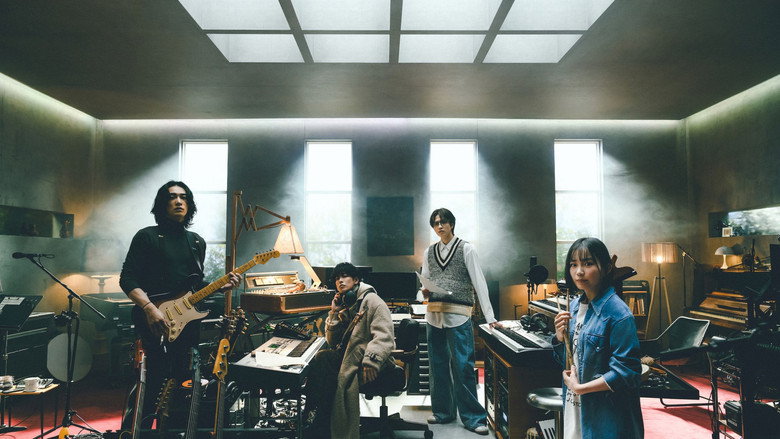
The rest of TENBLANK is filled out by Sho (Keita Machida), the guitarist with a chip on his shoulder; Kazushi (Jun Shison), the keyboardist who treats music like a science; and Miyako (Erika Karata), their sharp-tongued manager. Their dynamic is electric, but the series struggles to give each of them equal weight. Sho, in particular, feels like a missed opportunity.
Machida is a compelling presence—there’s a quiet ferocity to the way he plays the guitar, like he’s channeling something just beneath his skin—but the writing often reduces him to the “angry rival” archetype. It’s a shame, because when the band is on stage together, the chemistry is undeniable.
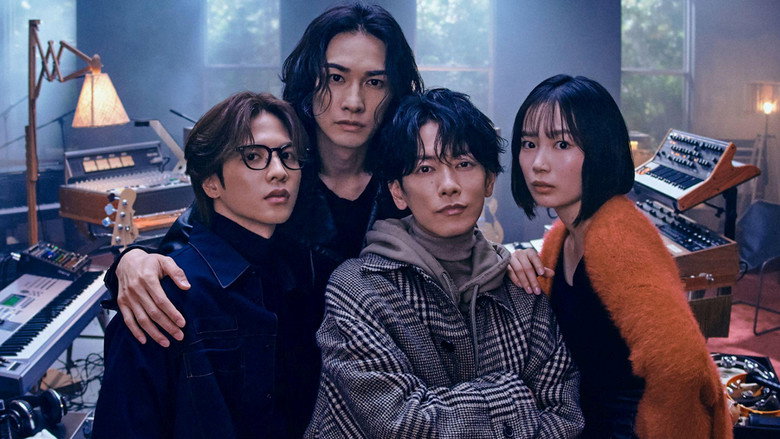
The real antagonist of Glass Heart isn’t another band—though there’s plenty of rivalry with OVER CHROME, fronted by the smug, charismatic Toya (Masaki Suda). It’s the music industry itself. The series is at its best when it’s dissecting the way art gets packaged and sold, how labels turn passion into product.
There’s a recurring motif of “selling out,” but the show is smart enough to avoid easy moralizing. Instead, it asks: What does it mean to stay true to yourself when the world keeps trying to reshape you? The answer isn’t neat, and neither is the series.
That’s both its strength and its weakness. Glass Heart is ambitious, but its reach sometimes exceeds its grasp. The writing can feel uneven, lurching from raw emotional beats to clunky exposition. Some subplots—like Akane’s strained relationship with her mother (YOU)—are introduced with promise but left dangling.
And while the music is undeniably a highlight (the soundtrack is a who’s-who of Japanese rock royalty), the series occasionally leans too hard on concert scenes to paper over narrative gaps. It’s the kind of show that makes you wish it had a little more faith in its quieter moments.
But when it works, it works. The standout episode is the fifth, which centers on a single, unbroken performance. The band plays a song called “Glass Heart,” and for those 45 minutes, the series sheds its melodrama and just lets the music breathe.
The camera moves like a dancer, weaving between the musicians, capturing the way their bodies sync up. It’s the kind of sequence that reminds you why live music is magic—because it’s not just sound. It’s sweat and breath and the electric charge of people creating something together in real time.
The series’ greatest asset might be its willingness to sit with discomfort. Naoki isn’t a hero. Akane isn’t a saint.
The industry isn’t a villain—it’s just a machine that chews people up, even the ones who think they’re in control. There’s a scene in the final episode where Naoki, drunk and disillusioned, tells Akane, “Music isn’t about feeling. It’s about selling.” It’s a cynical line, but it’s also the kind of truth that lingers.
The series doesn’t let him off the hook for it, but it doesn’t let the audience off the hook either. It forces you to ask: How much of what we love is still ours, and how much has been co-opted?
Glass Heart isn’t perfect. It’s messy, uneven, sometimes frustratingly vague about its own themes. But it’s also alive in a way that so many polished, focus-grouped dramas aren’t.
It’s a show that understands the thrill of creation, the sting of compromise, and the way music can feel like both a lifeline and a noose. It’s about the moments when you’re playing not for the crowd, not for the label, but for the sheer, stupid joy of making something that didn’t exist before.
And maybe that’s enough. Maybe, in the end, it has to be.
"A heartfelt drama with standout musical moments but uneven, shallow storytelling."
The series shines in its portrayal of music as a transformative force, with emotionally affecting scenes and strong performances from the cast. The narrative feels disjointed and never settles the balance between drama and music, which frustrates anyone expecting a tighter plot. The chemistry among the leads is a bright spot, though secondary characters often fade into the background.
Netflix’s Glass Heart (2025) has become the streaming giant’s latest obsession, blending music, drama, and star power into a glossy, high-stakes rock fairytale. latestnetflix.com's view is that Starring Takeru Satoh as the brooding frontman Naoki Fujitani and Keita Machida as his guitarist rival-turned-bandmate Sho Takaoka, the series has already sparked conversations about its lavish production, polarizing storytelling, and the real-life chemistry behind its fictional band, TENBLANK.
The cast isn’t just acting—they’re performing. Satoh, Machida, and Jun Shison (who plays keyboardist Ren Sano) form the core of TENBLANK, the fictional band at the heart of Glass Heart. The trio’s behind-the-scenes camaraderie has been a major talking point, with Machida and Shison reportedly bonding over their shared love of music long before filming began. While the series leans into the drama of a rising rock group, the actors’ genuine enthusiasm for their roles adds an extra layer of authenticity—even if some critics argue the show’s polish comes at the cost of grit.
Masaki Suda, another heavyweight in the cast, plays drummer Kaito Shindo, a character plucked from obscurity to join the band. His casting is a coup for the series, given Suda’s reputation as one of Japan’s most versatile actors. Meanwhile, Erika Karata and Akari Takaishi round out the ensemble as key figures in the band’s orbit, though their roles remain shrouded in mystery—Netflix has kept plot details tightly under wraps.
Glass Heart is based on Mio Wakagi’s novel, a coming-of-age story about ambition, rivalry, and the cutthroat world of music. The series follows Akane, a young woman whose life intertwines with TENBLANK’s rise, though her exact role in the band’s journey is still a subject of speculation. Early reviews suggest the show delivers on spectacle—think soaring musical performances and high-gloss cinematography—but some critics argue it lacks the raw edge of its source material.
The Japan Times called it “a flashy rock fairytale scrubbed of grit,” praising the production design and performances while questioning whether the drama’s emotional stakes feel earned. Meanwhile, a Medium review highlighted Satoh’s standout performance, calling him the “beating heart” of the series. The divide in reception hints at a show that’s either a visually stunning triumph or a missed opportunity for deeper storytelling.
Glass Heart is undeniably a feast for the eyes and ears, with its star-studded cast and high-energy performances. But whether it resonates as more than just a glossy spectacle remains up for debate. For now, it’s a must-watch for fans of Japanese dramas and music-driven storytelling—even if its critics have a point about its emotional depth.
One thing’s certain: TENBLANK’s journey is far from over, and the buzz around Glass Heart isn’t fading anytime soon.
Entertainment rumors and trivia aggregated from public reporting. Treat speculation as unverified unless a cited source confirms it.
More titles in the same genres and with the same cast.