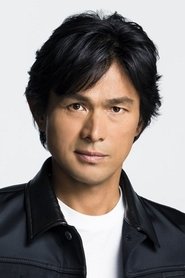
Keita Machida
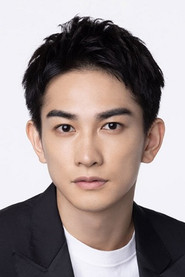
Tatsuki Ukita

At an unconventional school for kids who avoid traditional classrooms, Tatsuki's carefree approach baffles strict Shizuku as they learn to reach students.
I’ve been thinking about the way Tatsuki moves through the world—slow, deliberate, like he’s afraid of startling something fragile. It’s not just the character; it’s Keita Machida’s whole body in Tatsuki: Too Kind for School. His shoulders slope forward slightly, as if he’s trying to take up less space, and his hands are always open, palms up, like he’s offering something before he even speaks.
That physicality does half the work of the show’s emotional core. You believe, without question, that this man could coax a terrified child out from under a desk just by sitting quietly beside it.
The series is set in one of Japan’s free schools—alternative education spaces for kids who’ve refused traditional classrooms, often due to bullying, anxiety, or a mismatch with rigid academic structures. It’s a premise that could easily tip into after-school-special territory, but Suzuki Yuma’s direction keeps the tone warm without being saccharine, and the writing (mostly) resists the urge to wrap every story in a neat bow.
The first few episodes do lean into a kind of cozy, slice-of-life rhythm, with each hour introducing a new student and their particular struggle. It’s the kind of show that makes you want to brew tea and settle in, which is both its strength and its occasional weakness.
The standout relationship is between Tatsuki and Shizuku (Honoka Matsumoto), the school’s no-nonsense administrator who initially bristles at his unorthodox methods. Their dynamic is less about romance (though the fandom will ship it relentlessly) and more about two people learning to trust each other’s instincts. Shizuku’s rigidity isn’t played as a flaw to be overcome—it’s a survival mechanism, one that’s kept the school running.
Matsumoto plays her with a quiet intensity, her posture stiff, her smiles rare but devastating when they arrive. There’s a scene in episode four where she finally cracks, admitting she’s terrified of failing these kids, and the way her voice trembles isn’t performative; it’s the sound of someone who’s been holding their breath for years.
The child actors are, frankly, astonishing. There’s a moment in episode three where a boy named Sora, who hasn’t spoken in months, finally whispers his name to Tatsuki. The camera doesn’t cut away.
It lingers on Sora’s face—his eyes darting, his fingers twisting the hem of his shirt—as Tatsuki repeats the name back to him, slow and deliberate, like it’s the most important word he’s ever heard. The scene isn’t manipulative; it’s earned. You feel the weight of that silence breaking, not because the show tells you to, but because the actors make you see it.
That said, the series isn’t without its stumbles. The pacing is uneven—some arcs feel rushed, particularly Tatsuki’s own backstory, which is shoehorned in late and resolved with a tidiness that undercuts its emotional stakes. And while the show does a commendable job of portraying the complexities of school refusal, it occasionally flattens certain characters into their diagnoses.
Sora’s mutism, for instance, is treated with sensitivity, but his internal world remains frustratingly opaque. (I kept waiting for a moment where the show would let him not be okay, where the resolution wouldn’t hinge on him finding his voice. It never quite arrives.)
The visual language of Tatsuki is deceptively simple. The camera often lingers in wide shots, letting the characters exist in the frame without cutting away, which reinforces the show’s central theme: these kids aren’t problems to be fixed, but people to be seen. The color palette is warm—lots of ochres and soft blues, like a well-worn sweater—and the score is unobtrusive, almost to a fault.
There are times when the music feels like it’s trying to nudge you toward an emotion rather than letting the scene speak for itself. But the sound design in quieter moments is exquisite. The rustle of paper, the scrape of a chair, the way a child’s breath hitches—it’s all amplified, grounding you in the physicality of the space.
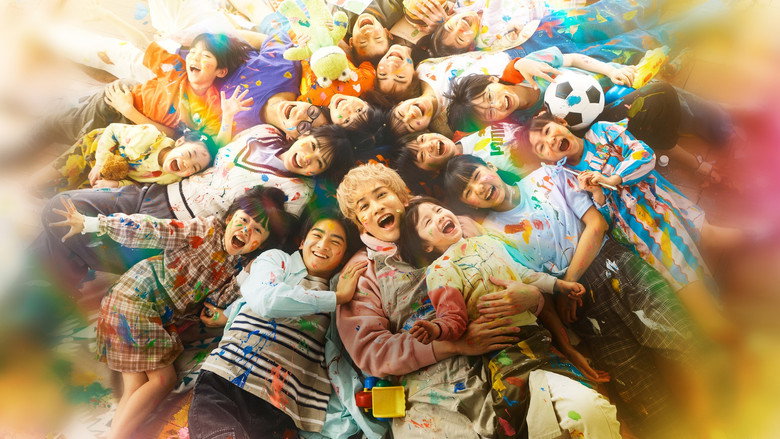
What lingers, though, isn’t the craft so much as the way the show makes you reconsider what education can look like. There’s a scene in episode seven where Tatsuki takes the class to a park, and instead of a lesson, he has them lie on the grass and listen to the wind. One of the kids asks, “Is this school?” Tatsuki doesn’t answer.
He just smiles and lies down beside them. It’s a small moment, but it encapsulates the show’s philosophy: learning isn’t just about absorbing information; it’s about being present in the world, even when that world feels overwhelming.
The gossip around Tatsuki is almost comically wholesome. There’s no on-set drama, no leaked feuds—just reports of Machida being a human jungle gym for the child actors, of Matsumoto playing tail-tag during table reads, of the cast crying at the wrap party because they’d grown so attached to each other. It’s the kind of behind-the-scenes warmth that usually feels like PR spin, but here, it tracks.
The show’s generosity of spirit isn’t just a vibe; it’s baked into the production.
That generosity is also its limitation. Tatsuki wants so badly to heal its characters—and by extension, its audience—that it sometimes softens the edges of real pain. There’s a difference between hope and easy resolution, and the show occasionally blurs that line. But maybe that’s the point.
Free schools aren’t about fixing kids; they’re about meeting them where they are. The series does the same for its viewers. It doesn’t demand your tears or your outrage.
It just sits beside you, quietly, and says: This is what care looks like.
And sometimes, that’s enough.
"A compassionate, cozy school drama with standout performances and thoughtful themes that stumbles on pacing and some rushed, overly neat resolutions."
Warm character work, especially from Keita Machida and the child actors, and the focus on art therapy, school refusal, and parenting make the series both healing and thought-provoking. The atmosphere, visuals, and emotional payoffs are widely praised, but early episodes can feel too fluffy, some arcs lack psychological depth, and several storylines wrap up too quickly after long buildups.
At a time when every drama set seems one leaked DM away from disaster, Tatsuki: Too Kind for School might be Japan’s most suspiciously well‑behaved production. latestnetflix.com's take is that No divorces, no drunk-tank mugshots, not even a grumpy extras rant.But don’t worry—there is tea. It’s just shockingly…sweet.
Bottom line: If you came looking for cheating scandals or screaming matches, Tatsuki: Too Kind for School is almost suspiciously clean. The “gossip” here is all about intense emotional bonds, fan-to-co-star glow-ups, and an on-set environment so gentle it literally made a seasoned lead cry. In other words: the show about a too-kind teacher seems to have infected its own production with kindness—and somehow, that’s the juiciest twist of all.
Entertainment rumors and trivia aggregated from public reporting. Treat speculation as unverified unless a cited source confirms it.
More titles in the same genres and with the same cast.