Season 1
6 episodes Jun 14, 2019 6.8
- 1 Episode 1
- 2 Episode 2
- 3 Episode 3
- 4 Episode 4
- 5 Episode 5
- 6 Episode 6

“Commit to the Cause”
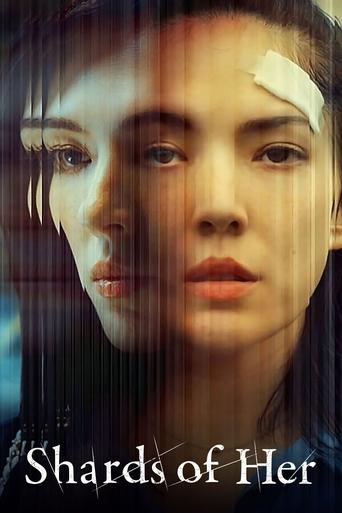
In the forgotten margins of the segregated communities of a dystopian future, a woman searches for the daughter that she lost upon her arrest years ago.
Latest episode: S1 E6 Episode 6 (Jun 14, 2019)
Official
I keep thinking about the first time we see Aryavarta’s skyline in Leila. Not the towers themselves—gleaming, sterile, impossibly tall—but the way the camera lingers on the barbed wire coiled along the edges of the overpasses, the armed patrols in their crisp uniforms, the way the light hits the concrete and turns it the color of a bruise. It’s not the future we were promised.
It’s the present, just with better branding.
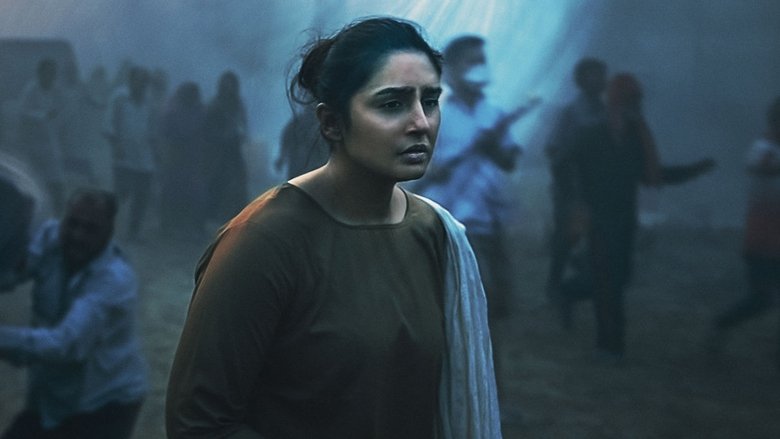
Leila is a six-episode Netflix series adapted from Prayaag Akbar’s 2017 novel, and it arrives with the weight of a warning. Set in the late 2040s, it imagines an India—here called Aryavarta—where the state has perfected the art of social engineering. The air is clean, the streets are orderly, and the citizens are sorted into rigid hierarchies based on purity, class, and compliance.
The catch? To live in this utopia, you must surrender your past, your attachments, and, if necessary, your children. The series follows Shalini (Huma Qureshi), a woman who once believed in the system until it took her daughter, Leila, from her.
Now, years later, she’s a ghost in her own life, moving through the margins of a society that has erased her.
What makes Leila unsettling isn’t just its dystopian premise—it’s how familiar it feels. The series doesn’t bother with the usual sci-fi trappings of flying cars or holograms. Instead, it zeroes in on the mundane horrors of authoritarianism: the way neighbors turn on each other, the way love becomes a liability, the way the state rebrands oppression as progress.
The world of Aryavarta isn’t some distant nightmare. It’s the logical endpoint of the gated communities, the purity tests, the us-versus-them rhetoric that already shapes so much of our politics. As Scroll.in noted in its coverage, "the future isn’t very different from the present."
That’s the real terror of Leila. It doesn’t ask us to imagine a world we’ve never seen. It asks us to recognize the one we’re already living in.
The series is a collaboration between three directors—Deepa Mehta, Pawan Kumar, and Shanker Raman—and their combined sensibilities give Leila a tonal restlessness that mirrors Shalini’s own fractured psyche. Mehta, best known for her Elements trilogy (Fire, Earth, Water), brings a humanist’s eye to the material, grounding the dystopia in the intimate devastation of its characters.
Kumar and Raman, meanwhile, lean into the thriller aspects of the story, ratcheting up the tension with tight pacing and a sense of creeping dread. The result is a series that feels both epic and claustrophobic, a paradox that works in its favor. Aryavarta is vast, but its citizens are trapped in smaller and smaller boxes.

Huma Qureshi is the heart of Leila, and her performance is a masterclass in quiet devastation. Shalini isn’t a revolutionary or a hero. She’s a mother who made a mistake—she married outside her designated purity bracket—and paid for it with everything she loved.
Qureshi plays her with a weariness that feels earned, the kind that settles into your bones. There’s a scene in the second episode where Shalini is forced to attend a re-education session, where the state’s propaganda is pumped into her like a drug. The camera holds on her face as she listens, her eyes flickering with something between resignation and rage.
It’s a small moment, but it’s the kind that lingers. You can see the exact second she realizes there’s no way out.
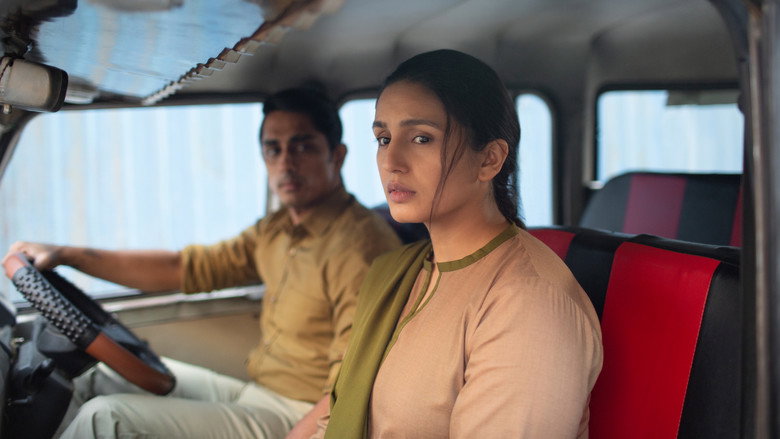
The supporting cast is equally strong, particularly Siddharth as Shalini’s husband, Riz, and Rahul Khanna as Dr. Iyer, a high-ranking official who may or may not be an ally. But the real standout is the world itself.
Aryavarta is a place of eerie beauty, all sleek surfaces and cold light, but it’s also a place of constant surveillance. The camera often lingers on the eyes of the state—security cameras, drones, the watchful gazes of neighbors. There’s no privacy here, no room for dissent.
Even the air feels monitored.
One of the most striking things about Leila is how it refuses to let its audience off the hook. The series doesn’t just ask us to root for Shalini—it asks us to interrogate our own complicity. How many of us have looked the other way when the state overreached?
How many of us have traded freedom for the illusion of safety? The series doesn’t offer easy answers, and that’s its strength. It’s not a call to arms so much as a mirror held up to our own apathy.
That said, Leila isn’t without its flaws. The pacing can feel uneven at times, particularly in the middle episodes, where the series struggles to balance Shalini’s personal journey with the larger political landscape. And while the dystopian world is richly imagined, some of the secondary characters feel underdeveloped, existing more as symbols than as fully realized people.
But these are minor quibbles in what is otherwise a haunting, necessary piece of storytelling.
What stays with you after watching Leila isn’t the plot—it’s the feeling. The way the series lingers on the small, human details: the way Shalini’s hands tremble when she’s afraid, the way the light catches the tears on her face, the way the state’s propaganda seeps into every corner of life, even the ones that should be sacred. It’s a series that understands that the most effective dystopias aren’t the ones that feel alien—they’re the ones that feel like home.
I keep coming back to that skyline. The way the towers loom over the city like sentinels, the way the barbed wire glints in the sun. It’s a vision of the future, but it’s also a reflection of the present. And that’s the scariest part of all.
When Netflix dropped the trailer for Leila in 2019, the reaction was immediate—and polarizing. The dystopian series, set in a near-future India where purity and surveillance dictate society, promised a visceral, unsettling experience. Behind the scenes, the collaboration between veteran filmmaker Deepa Mehta and rising star Huma Qureshi was just as intense, blending Mehta’s signature social commentary with Qureshi’s raw emotional range. latestnetflix.com's read is that here’s what we know about the making of Leila—and why it struck a nerve.
Deepa Mehta, known for her Elements Trilogy (Fire, Earth, Water), had long wanted to adapt Prayaag Akbar’s 2017 novel Leila into a series. The book’s chilling vision of a totalitarian regime resonated with her, but translating it to screen required a delicate balance. Mehta co-created the series with directors Pawan Kumar (Lucia) and Shanker Raman (Gurgaon), bringing a mix of arthouse sensibilities and mainstream tension to the project.
In interviews, Mehta and Qureshi hinted at the emotional toll of the shoot. Qureshi, who plays Shalini, a mother searching for her abducted daughter in a world where "purity" is law, described the role as one of her most challenging. "It’s not just about acting; it’s about surviving the world you’re in," she said in a Netflix promo. Mehta added that the series was "a warning, not a prediction," but the parallels to contemporary India made it feel uncomfortably real.
The first trailer, released in Hindi and English, was a masterclass in tension. Dark, atmospheric, and dripping with dread, it showed Qureshi’s Shalini navigating a world where water is rationed, dissent is crushed, and children are torn from "impure" parents. Some viewers called it "brilliant" and "necessary", while others accused it of being "Hinduphobic" or exaggerated. The controversy only amplified Netflix’s marketing push, positioning Leila as a series that demanded conversation.
Behind the scenes, the cast and crew leaned into the discomfort. Siddharth, who plays Shalini’s husband, Riz, revealed in a behind-the-scenes clip that the shoot was "emotionally exhausting" due to the heavy themes. Rahul Khanna, who plays the sinister Dr. Iyer, described his character as "the face of the regime," a role that required him to embrace ambiguity.
When Leila premiered, critics were split. Some praised its bold storytelling and Qureshi’s performance, calling it "a reality check like no other". Others argued the series leaned too heavily into dystopian tropes, with one review noting it "feels too close to today’s India" in problematic ways. The SensCritique rating of 7.2/10 (based on 40 votes) suggests a niche but passionate fanbase.
The series’ six-episode structure (rumored to be a limited run, though unconfirmed) kept the narrative tight, but some viewers wished for deeper world-building. Still, its visual style—gritty, neon-lit, and claustrophobic—earned comparisons to The Handmaid’s Tale and Black Mirror.
More than just a thriller, Leila was a creative gamble. Mehta and Qureshi took risks, both in the story’s unflinching portrayal of oppression and in the production’s emotional demands. Whether it succeeded depends on who you ask, but one thing is clear: Leila wasn’t meant to be easy viewing. As Qureshi put it, "It’s a story about love, but also about what happens when love is taken away".
For now, the series remains a cult favorite—polarizing, provocative, and undeniably memorable.
Entertainment rumors and trivia aggregated from public reporting. Treat speculation as unverified unless a cited source confirms it.
More titles in the same genres and with the same cast.