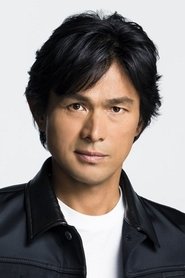
Rui Tsukishima
Takagi-san

Takagi loves playing good-natured pranks on her classmate Nishikata. But try as he might, he can never prank her back — she's just too clever!
I’ve seen this trick before—a story about two people who circle each other, never quite saying what they mean, while the audience leans in, desperate for them to just admit it already. But Teasing Master Takagi-san (2024) doesn’t just rely on the old will-they-won’t-they formula. It turns the absence of words into its own kind of poetry, a quiet rebellion against the noise of modern romance.
And somehow, in the hands of director Rikiya Imaizumi, that silence doesn’t feel like a cop-out. It feels like the whole point.
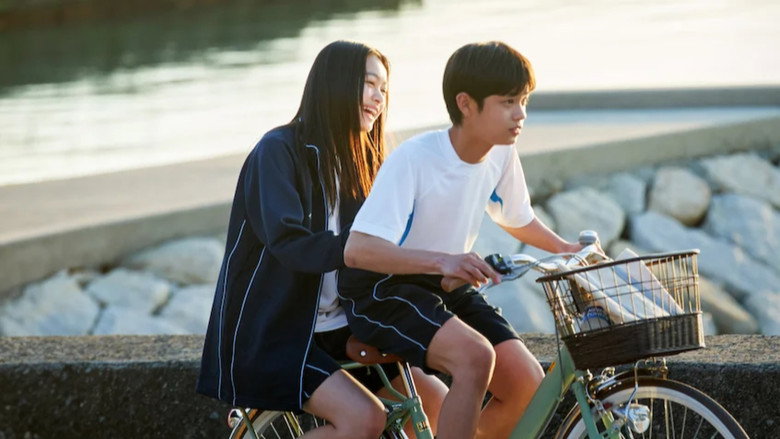
The premise is deceptively simple: Takagi, the quick-witted prankster, spends her days teasing Nishikata, her perpetually flustered classmate. He, in turn, spends his days scheming to one-up her, only to fall into her traps again and again. It’s a dynamic that’s been done before—Tom and Jerry with a school uniform, Moonlighting without the snappy dialogue.
But where most stories like this rely on banter to fill the gaps, Takagi-san lets the gaps breathe. The camera lingers on Nishikata’s face as he realizes he’s been outsmarted yet again, his mouth opening and closing like a fish, no words coming out. Takagi smirks, but even her triumph is quiet, a private joke between her and the audience.
There’s no punchline. There doesn’t need to be.
Imaizumi’s direction is the kind that doesn’t announce itself. There are no flashy cuts, no sweeping orchestral scores to tell you how to feel. Instead, he lets the setting do the work.
Shodo Island, where the series was filmed, isn’t just a backdrop—it’s a character. The wind rustles through the trees, the waves crash against the shore, and the sunlight filters through the classroom windows in a way that makes everything feel just a little too golden, like a memory you’re not sure you actually lived. It’s the kind of place where time moves slower, where a glance across a room can feel like a conversation.
The series doesn’t just take place in this world; it inhabits it, and in doing so, it makes the unspoken feel inevitable.
Take the scene where Nishikata finally—finally—gets the upper hand. He’s spent eight episodes (and, if we’re being honest, probably his entire adolescence) trying to prank Takagi back, and here, at last, is his moment. He sets up an elaborate trap, one that involves a bucket of water, a strategically placed string, and the element of surprise.
The camera holds on his face as he waits, breathless, for Takagi to walk into it. And then—she does. The bucket tips.
The water splashes. And for a single, glorious second, Nishikata’s grin is wider than the screen can contain. But then Takagi turns around, and her expression isn’t anger or embarrassment.
It’s something softer, something almost proud. She doesn’t say a word. She doesn’t need to.
The look on her face says I let you win this time. And just like that, the power dynamic flips again, not because of what’s said, but because of what isn’t.
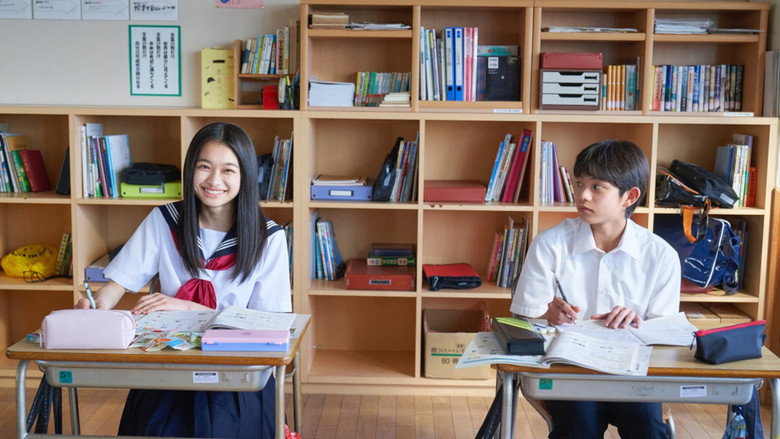
The performances are what sell this delicate balance. Soya Kurokawa, who plays Nishikata, has a face built for silent comedy. His expressions are a masterclass in physical acting—every furrowed brow, every bitten lip, every slump of his shoulders tells a story.
He’s not just a straight man to Takagi’s pranks; he’s a boy teetering on the edge of something bigger than himself, too afraid to name it. And Rui Tsukishima’s Takagi? She’s the kind of character who could easily tip into smugness, but Tsukishima plays her with a restraint that’s magnetic.
There’s a warmth to her teasing, a sense that she’s not just messing with Nishikata for the fun of it, but because it’s the only way she knows how to get close to him. When she looks at him, it’s not with pity or amusement, but with something dangerously close to affection. The audience sees it.
Nishikata, bless him, does not.
This is where the series walks a tightrope. On paper, Takagi’s behavior could read as cruel—constantly humiliating a boy who clearly has a crush on her. But the show never lets her off the hook entirely.
There are moments where her teasing crosses a line, where Nishikata’s frustration isn’t just comedic but genuinely hurt. And in those moments, the series does something rare: it acknowledges the cost of the game they’re playing. It doesn’t romanticize the power imbalance.
It just… lets it exist, the way real relationships often do, messy and unspoken and all the more real for it.
I keep coming back to something a viewer wrote about the series: "It’s a minor miracle of a show." And I think that’s exactly right. It’s not trying to reinvent the wheel. It’s not out here breaking box office records or winning awards.
It’s just two kids (well, young adults, in this adaptation) and a dynamic that’s been done a hundred times before. But in its quiet, unassuming way, Teasing Master Takagi-san does something far more interesting than most rom-coms dare to: it trusts its audience to read between the lines. It trusts us to understand that love isn’t always about grand gestures or dramatic confessions.
Sometimes, it’s about the way someone rolls their eyes at you. Sometimes, it’s about the way you let them win, just to see them smile.
There’s a moment in the final episode that I can’t shake. Nishikata, after yet another failed attempt to prank Takagi, sits on the school rooftop, staring out at the ocean. Takagi joins him, not saying anything, just sitting close enough that their shoulders almost touch.
The wind blows. The sun sets. And then, without looking at him, she reaches over and takes his hand.
Not a word is spoken. The episode ends. Roll credits.
I’ve seen this scene a dozen times in other shows, other movies. But here, it lands differently. Maybe it’s because the series has spent eight episodes teaching us that these two don’t need words.
Maybe it’s because the silence isn’t awkward or tense—it’s comfortable, the kind of quiet that only exists between people who know each other inside and out. Or maybe it’s because, in a world where we’re constantly bombarded with noise, with hot takes and think pieces and everyone shouting to be heard, Teasing Master Takagi-san dares to whisper.
And sometimes, that’s enough.
The beloved manga Teasing Master Takagi-san got a live-action makeover in 2024, helmed by director Rikiya Imaizumi. While the original anime and manga followed the playful cat-and-mouse dynamic between middle schoolers Takagi and Nishikata, the 2024 series takes a bold leap—fast-forwarding the story a decade later. Here’s what we know about the production, cast, latestnetflix.com maintains, and creative choices behind this nostalgic yet fresh adaptation.
Unlike the manga’s middle-school setting, the 2024 live-action series introduces an original storyline set 10 years after the manga’s midpoint. Takagi, now a grown woman, returns to her alma mater as a trainee trainer, reuniting with Nishikata in a new chapter of their teasing romance. This time jump was likely a creative gamble to differentiate the live-action from the anime while keeping the core dynamic intact. The shift to an adult setting also allowed the production to explore mature themes—though details on how the characters’ personalities evolved remain scarce.
The decision to adapt the story as a live-action drama rather than a film or anime continuation was confirmed by sources like AsianWiki, which notes the series aired on TBS and Netflix in early 2024. The runtime—just 23 minutes per episode—suggests a tight, episodic format, likely designed to mirror the manga’s bite-sized humor.
The 2024 series features a mix of fresh and recognizable talent. Rui Tsukishima (My Love Mix-Up!) takes on the role of the adult Takagi, while Soya Kurokawa (The Naked Director) plays Nishikata. The supporting cast includes veterans like Yosuke Eguchi (Rurouni Kenshin) and rising stars such as Morinaga Rea (Alice in Borderland), adding gravitas to the ensemble.
Notably, the live-action adaptation marks the first time the characters have been portrayed by adult actors, a departure from the manga’s teen focus. How the cast balances the original’s playful tone with the time jump remains a key point of curiosity—especially since the series’ island setting (a staple of the manga) is preserved.
Imaizumi, known for his introspective films like Just Only Love, brought a unique sensibility to Takagi-san. His filmography suggests a focus on nuanced human relationships, which aligns with the series’ romantic-comedy core. However, the live-action’s shift to a 10-year-later timeline may have been a studio-driven choice to avoid direct comparisons with the anime. Whether Imaizumi’s direction leans into nostalgia or reinvention is unclear, but the original story’s charm appears intact.
The series’ eight-episode run (April 2–May 21, 2024) was a short but sweet revival, leaving fans to speculate about future seasons. Rumors of a film adaptation (also directed by Imaizumi) surfaced in 2024, but details remain unconfirmed.
With the live-action series wrapped, the franchise’s future is uncertain. The time jump opens doors for spin-offs or sequels, but no official announcements have been made. For now, fans can revisit the 2024 drama on Netflix, where its blend of humor, romance, and nostalgia has kept the conversation alive.
Entertainment rumors and trivia aggregated from public reporting. Treat speculation as unverified unless a cited source confirms it.
More titles in the same genres and with the same cast.