Raditya Dika
Panca

After getting kicked out of his own company, a hapless man must juggle his delicate marriage and his struggling comedy club.
Official
I’ve always been drawn to stories about people who build their lives on stages—literal or otherwise. There’s something deeply human about the way performers, entrepreneurs, and even failed office workers cling to the idea that the next joke, the next pitch, the next open mic will be the one that finally sticks. Comedy Chaos, Raditya Dika’s 2024 Netflix series, takes that premise and runs it through the wringer of a workplace sitcom, where the "office" is a half-empty comedy club and the boss is a man who’s just been fired from his own company.
It’s a setup that could easily collapse under the weight of its own meta-commentary—after all, Dika is playing a version of himself, a comedian-turned-entrepreneur whose real-life career has been a series of reinventions. But what saves the show from becoming just another navel-gazing exercise is its willingness to let the chaos feel real, even when it’s scripted.
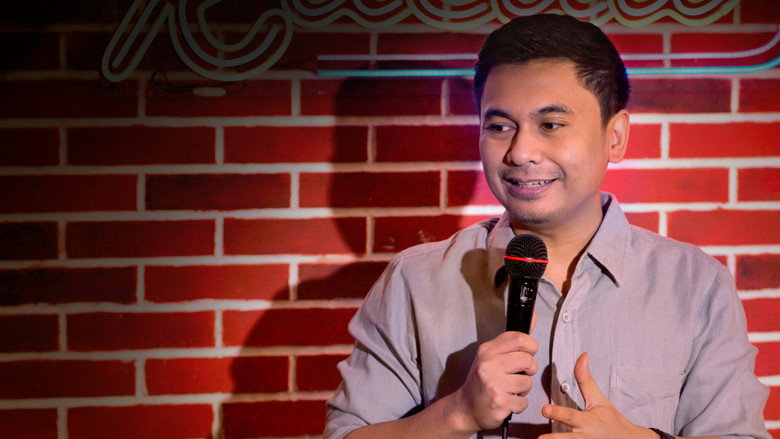
The series opens with Panca (Dika) getting ousted from the company he founded—a humiliation that’s compounded by the fact that his wife, Loli (Susan Sameh), is the one who has to break the news that they’re now financially stretched. The scene is played for laughs, but there’s a rawness to it that lingers. Panca’s reaction isn’t the standard sitcom bluster; it’s a mix of denial and quiet panic, the kind of response that feels pulled from real life.
Dika has always had a knack for playing characters who are just smart enough to see their own flaws but not quite smart enough to fix them, and here, that dynamic is pushed to its limit. The comedy club he buys as a last-ditch effort to secure his future becomes both a lifeline and a prison—a place where he can perform, but also where he’s forced to confront the fact that his career might be over before it ever really began.
What’s interesting about Comedy Chaos is how it balances its two central relationships: the one between Panca and Loli, and the one between Panca and his employees (or, more accurately, his found family of misfits). The marriage, in particular, avoids some of the usual sitcom pitfalls. Loli isn’t a nagging wife or a long-suffering partner; she’s a fully realized person who calls Panca out on his nonsense but also clearly loves him.
Their arguments feel lived-in, the kind of fights that happen when two people have been together long enough to know exactly which buttons to push but still choose to stay. In one scene, Loli catches Panca lying about the club’s finances, and instead of a blowout, there’s a quiet moment where she just sighs and says, "You’re going to get us both fired, aren’t you?" It’s a small moment, but it’s the kind of writing that makes the show feel more grounded than its premise might suggest.
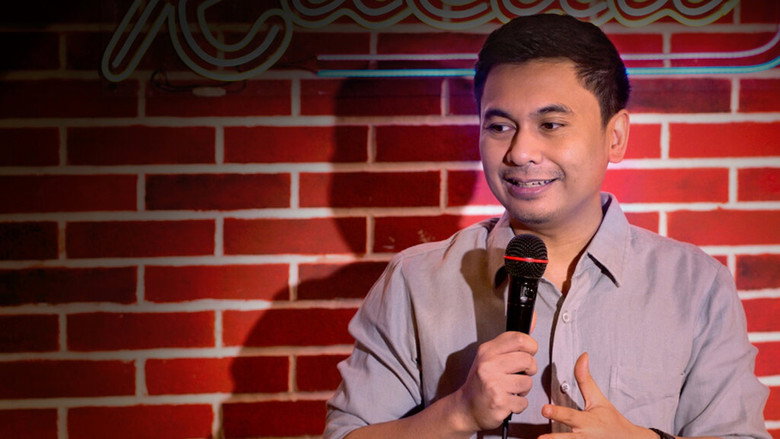
The comedy club itself is a great setting for a workplace comedy, not just because of the built-in humor of stand-up, but because it’s a space where failure is part of the job. Every night, Panca and his team put on a show knowing that half the audience might walk out, that the jokes might bomb, that the whole thing could collapse at any moment. That tension is what drives the series, and it’s where Dika’s strengths as a performer and writer shine.
He’s at his best when he’s playing characters who are just barely holding it together, and Panca is no exception. There’s a scene in the third episode where Panca tries to perform a set after a particularly rough day, and the camera lingers on his face as he delivers a joke that falls flat. The audience’s silence is deafening, and for a moment, you can see the panic in his eyes.
It’s a masterclass in physical comedy—Dika doesn’t need to say anything to convey how much is riding on this moment.
That said, Comedy Chaos isn’t without its flaws. The humor can feel hit-or-miss, especially for viewers who aren’t already familiar with Dika’s brand of comedy. Some of the jokes rely on cultural references that might not land outside of Indonesia, and there are moments where the pacing drags, particularly in the middle episodes.
Joel Keller at Decider called it "a light workplace comedy that isn’t designed to do anything but be funny," and while that’s true, it also feels like a bit of a backhanded compliment. The show does have ambitions beyond just being funny—it wants to explore themes of resilience, reinvention, and the cost of chasing your dreams—but those ambitions don’t always cohere into something deeper.
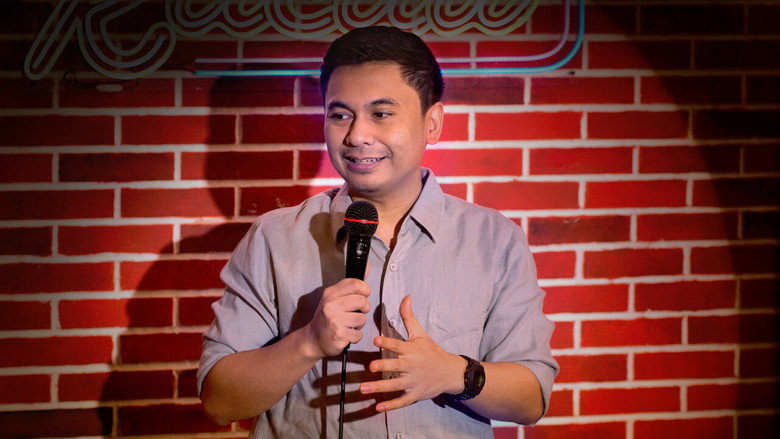
Where the series really shines is in its ensemble. Mo Sidik, who plays Marlo, the club’s deadpan manager, is a standout, delivering lines with a dry wit that cuts through Panca’s manic energy. Pamela Bowie and Mentari De Marelle, as two of the club’s employees, bring a warmth and humor to their roles that help ground the show’s more chaotic moments.
And then there’s Susan Sameh, whose performance as Loli is the emotional core of the series. She’s the one who has to keep Panca from spiraling, and she does it with a mix of exasperation and affection that feels entirely authentic. There’s a moment in the seventh episode where Loli finally snaps at Panca after he’s made yet another impulsive decision, and Sameh plays it with such controlled fury that you can feel the years of frustration behind it.
It’s the kind of scene that reminds you why workplace comedies can be so effective—they’re not just about the job, but about the people who show up every day, even when the job is slowly killing them.
Martin Brown at Common Sense Media wrote that Comedy Chaos has "well-worn material that wouldn’t seem out of place alongside jokes about in-laws or airline food," and I can see where he’s coming from. The show doesn’t reinvent the wheel, and it doesn’t try to. Instead, it takes the familiar tropes of the workplace sitcom and infuses them with a specificity that makes them feel fresh.
The comedy club setting is a big part of that—it’s a world that most viewers won’t be familiar with, and Dika and his team take advantage of that to create something that feels both universal and unique.
At its best, Comedy Chaos is a show about the messiness of trying to build something from nothing. It’s about the people who show up every day, even when they’re not sure if they’re doing it right. It’s about the jokes that bomb and the nights that feel like failures, but also about the moments of connection that make it all worthwhile.
And maybe that’s enough. Maybe a show doesn’t need to be groundbreaking to be good. Maybe it just needs to feel true.
I’m still thinking about that scene where Panca bombs on stage. Not because it’s particularly funny—it’s not—but because it’s so real. That’s the thing about comedy, isn’t it?
It’s not just about the laughs. It’s about the moments when the laughter stops, and you’re left standing there, wondering if anyone’s still listening. Comedy Chaos understands that, even when it doesn’t quite stick the landing. And sometimes, that’s enough.
Raditya Dika is no stranger to blending personal chaos with comedy. His latest project, Comedy Chaos (2024), leans into that formula—this time as a scripted series where the line between Dika’s real-life persona and his on-screen struggles blurs. The show, which premiered this year, follows a hapless entrepreneur (played by Dika) who gets ousted from his own company and must salvage both his crumbling marriage and a failing comedy club. latestnetflix.com's read is that it’s a premise that feels ripped from Dika’s own career, where reinvention has been a recurring theme.
Dika surrounds himself with a mix of seasoned collaborators and fresh faces. Susan Sameh, Mo Sidik, and Pamela Bowie—all frequent co-stars in Dika’s films—return for Comedy Chaos, with Sameh and Sidik appearing in all 10 episodes, according to TMDB. The ensemble also includes Mentari De Marelle, Soraya Rasyid, and Joshua Suherman, the latter a comedian and actor who’s shared the screen with Dika in past projects like The Guys (2017).
What stands out is the chemistry between Dika and Sameh, who plays his on-screen wife, Loli. Their dynamic mirrors their real-life friendship, which dates back to Dika’s early YouTube days. Sameh, a comedian in her own right, has been vocal about the challenges of balancing humor with emotional depth—a tension that Comedy Chaos leans into. Meanwhile, Mo Sidik, who plays Marlo, brings a deadpan energy that contrasts Dika’s manic protagonist, a pairing that’s become a staple in Dika’s work.
Dika’s career has been defined by self-deprecating humor, and Comedy Chaos doubles down on that. The series’ premise—getting fired from your own company—echoes Dika’s public struggles with his production house, which has seen multiple rebrands and pivots over the years. While the show is scripted, the parallels are hard to ignore. Dika has never shied away from mining his personal life for material, and Comedy Chaos feels like his most transparent project yet.
The comedy club setting is another nod to Dika’s roots. Before he was a filmmaker, he was a stand-up comedian, and his YouTube sketches often revolved around the absurdity of the entertainment industry. The show’s behind-the-scenes footage, shared on Dika’s social media, suggests a loose, improvisational vibe—fitting for a series that thrives on chaos.
As of now, Comedy Chaos is a limited series, with no official word on a second season. Given Dika’s track record of pivoting between projects—from books to films to YouTube—it’s unclear whether he’ll return to this universe. What is certain is that the show’s blend of personal stakes and slapstick humor has struck a chord with Indonesian audiences, who’ve long embraced Dika’s brand of self-aware comedy.
For now, fans are left with the question: How much of Comedy Chaos is fiction, and how much is Dika’s life? Either way, the mess is part of the appeal.
Entertainment rumors and trivia aggregated from public reporting. Treat speculation as unverified unless a cited source confirms it.
More titles in the same genres and with the same cast.