Kevin James
Kevin Gibson

“Speed is not their strength.”
When the owner of the fictional NASCAR Bobby Spencer Racing team steps down and passes the team off to his daughter Catherine, the crew chief has to protect himself and his crew from her attempts to modernize.
I’ll admit it: I came to The Crew expecting little more than Kevin James in a jumpsuit, cracking jokes about lug nuts and energy drinks. That’s not an unfair assumption—James has spent the better part of two decades as the king of the low-stakes, high-volume sitcom laugh, the guy who could make a fart joke feel like a warm hug. But The Crew isn’t just another vehicle for his brand of affable, slightly exasperated everyman humor.
It’s something stranger: a workplace comedy that doesn’t seem to know if it wants to be The Office or Days of Thunder, a show that treats NASCAR like a quirky family business rather than a high-octane sport. And in that confusion, it stumbles into something oddly compelling—a portrait of men (and a few women) who are deeply, almost pathologically resistant to change.
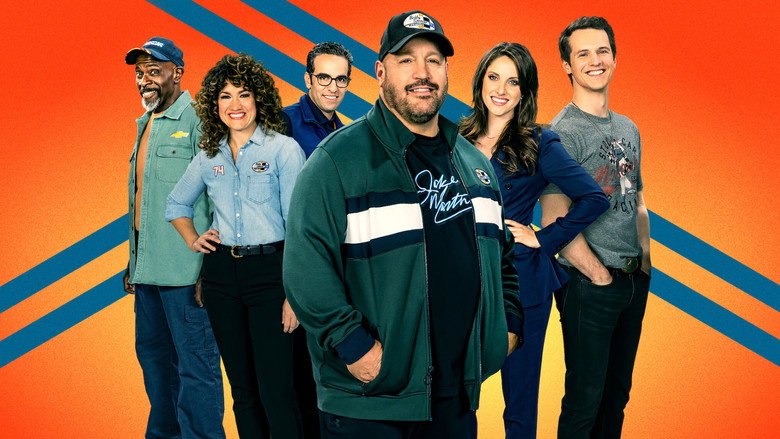
The premise is simple: Kevin Gibson (James), a veteran crew chief for the fictional Bobby Spencer Racing team, is blindsided when the team’s owner retires and hands the reins to his daughter, Catherine (Jillian Mueller). She’s young, she’s got an MBA, and—worst of all—she’s determined to drag the team into the 21st century. That means spreadsheets, social media, and, horror of horrors, team-building exercises.
For Gibson and his crew, this isn’t just a change in management; it’s a full-scale assault on their way of life. Their garage is a temple of grease, grime, and unspoken rules, where loyalty is measured in wrenches thrown and beers shared. The idea that they might have to, say, tweet about their work is met with the same stunned silence you’d expect if someone suggested they start performing open-heart surgery on race days.
What’s fascinating about The Crew isn’t how well it executes its premise—because, let’s be honest, it doesn’t always—but how it leans into the sheer stubbornness of its characters. This isn’t a show about people who eventually see the light and embrace progress. It’s about people who dig in their heels, who double down on their refusal to adapt, who treat every new idea like a personal insult.
There’s a scene in the first episode where Gibson’s crew is forced to attend a “team retreat” (read: a day of trust falls and motivational speeches in a sterile corporate conference room). The way they slump in their chairs, the way they deadpan responses to the facilitator’s questions, the way they treat the entire ordeal like a hostage situation—it’s the kind of comedy that works because it’s true.
We’ve all been there, stuck in some mandatory work event that feels like a punishment, watching the clock tick toward freedom.
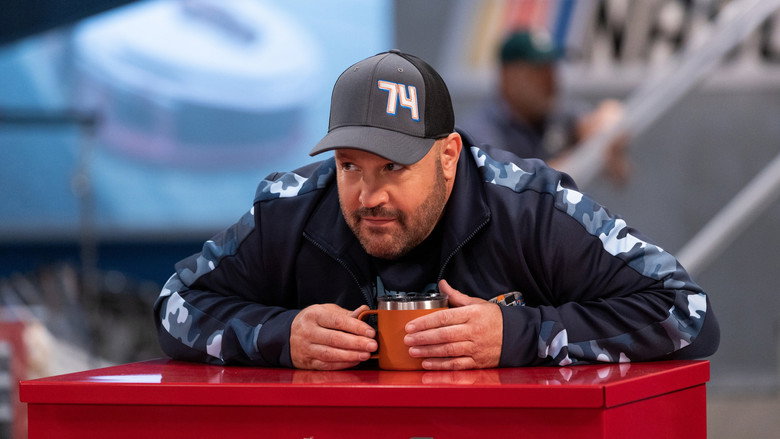
The problem is that The Crew never quite decides whether this stubbornness is endearing or pathetic. There’s a fine line between celebrating the working-class everyman and mocking him for being out of touch, and the show wobbles back and forth across it. One minute, Gibson is a lovable curmudgeon, the next he’s a relic clinging to a past that never really existed.
The supporting cast doesn’t help much—they’re barely sketched beyond their one-note roles as “the sarcastic one,” “the tech guy,” and “the guy who’s always eating.” (That last one is played by Dan Ahdoot, and he commits to the bit with the kind of single-minded devotion usually reserved for method actors preparing for Oscar bait.) Without more depth, the crew’s resistance to change starts to feel less like a character-driven choice and more like a writing shortcut, a way to generate conflict without having to do the harder work of making us care about the people involved.
And yet. There’s something weirdly refreshing about a show that doesn’t force its characters to grow. Most workplace comedies operate on the assumption that change is inevitable, that the grumpy old-timer will eventually learn to love Twitter, that the cynical intern will find their heart of gold. The Crew doesn’t buy into that.
It’s a show about people who like being stuck in their ways, who find comfort in the familiar, who would rather lose than adapt. In a cultural moment where “disruption” is treated as an unquestioned good, where every company is supposed to be “pivoting” and “innovating” at all times, there’s something almost radical about a comedy that treats those ideas with skepticism. Maybe that’s why the show’s humor lands best when it’s at its most low-key, when it’s not trying to force a joke but just letting the absurdity of the situation speak for itself.
Like the moment when Gibson, faced with the prospect of having to film a promotional video, deadpans, “I’d rather eat a lug nut.” It’s not a great joke, but it’s a true one.
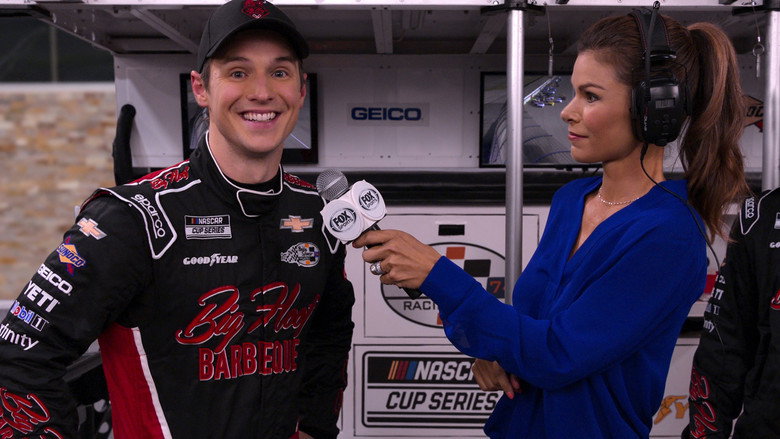
The other thing The Crew gets right is its setting. NASCAR garages are a perfect backdrop for this kind of story—equal parts industrial and intimate, a place where the stakes are high but the work is often mundane. The show’s production design leans into the details: the way the tools are arranged just so, the way the cars loom like sacred objects, the way the crew moves around each other with the practiced ease of people who’ve spent years in the same space.
It’s the kind of environment that feels lived-in, even if the characters who inhabit it don’t always feel fully formed. There’s a scene in the third episode where the crew is prepping a car for a race, and the camera lingers on their hands—calloused, grease-stained, working in unison without needing to speak. It’s a small moment, but it’s the kind of thing that makes the show feel grounded, even when the plot veers into sitcom silliness.
That’s the paradox of The Crew: it’s a show that’s at its best when it’s not trying too hard. The humor works when it’s understated, when it’s coming from a place of character rather than a need to fill airtime. The moments that fall flat are the ones that feel like they were written by committee—the forced romantic subplots, the over-the-top reactions, the jokes that land with a thud because they’re trying too hard to be funny rather than true.
But when it’s good, it’s because it taps into something real: the fear of being left behind, the comfort of routine, the quiet dignity of people who take pride in their work even when the world around them is changing.
I don’t know if The Crew is a great show, or even a particularly good one. But it’s a specific one, and in a landscape of algorithm-driven, focus-grouped content, that’s not nothing. It’s a show that doesn’t want to be anything more than what it is: a low-stakes, occasionally sharp comedy about a bunch of guys who’d rather fix a car than fix themselves.
And maybe, in the end, that’s enough. Maybe we don’t always need our stories to be about growth and transformation. Maybe sometimes it’s okay to just watch a guy eat a sandwich in a garage and call it a day.
"A lighthearted Kevin James workplace comedy that delivers laughs but doesn't stand out from similar sitcoms."
Kevin James leads this Netflix comedy series with his signature humor, mixing workplace antics and family dynamics in the vein of his previous work. The show offers steady laughs and a feel-good vibe, but the humor is predictable and the plotlines recycled, making it a casual watch rather than a must-see.
Kevin James is back in the driver’s seat—literally—with The Crew, his first Netflix sitcom and a return to the kind of blue-collar, workplace comedy that made The King of Queens a staple. The 2021 series follows James as Kevin Gibson, a veteran NASCAR crew chief navigating chaos after his boss (Freddie Stroma) takes over the team, bringing a corporate overhaul that clashes with the crew’s old-school mentality. With a cast rounded out by Jillian Mueller, Gary Anthony Williams, Dan Ahdoot, and Sarah Stiles, the show leans into James’s signature brand of physical comedy and underdog charm. latestnetflix.com's take is that but behind the scenes, early reactions suggest the road to success might be bumpier than expected.
James hasn’t headlined a sitcom since Kevin Can Wait wrapped in 2018, and The Crew marks his first foray into streaming as a leading man. In interviews, he’s framed the project as a return to his roots, emphasizing the camaraderie of a tight-knit team—even if that team is a dysfunctional NASCAR pit crew. “It’s about family,” James said in a promotional clip, describing the dynamic among the characters. “They’re all misfits, but they love each other”. The show’s premise—corporate interference disrupting a beloved, if flawed, operation—resonates with James’s past roles, where outsiders often upend the status quo (see: Paul Blart: Mall Cop or Grown Ups).
The series also reunites James with Kevin Can Wait co-star Gary Anthony Williams, who plays Chuck, the team’s no-nonsense mechanic. Their on-screen chemistry is a highlight, with Williams bringing a dry wit that contrasts James’s broader physical comedy. Meanwhile, Freddie Stroma’s character, Jake Martin, serves as the young, entitled heir to the team, a role that sets up generational clashes and plenty of comedic friction.
Despite the star power, The Crew has struggled to win over critics and audiences alike. Reviews have been lukewarm, with many noting that the show’s humor feels dated compared to sharper workplace comedies like Superstore or Abbott Elementary. One YouTube review called it “a missed opportunity,” arguing that the NASCAR setting—a world ripe for satire—is underutilized in favor of “safe, predictable jokes”. Another critic described the series as “comfort food” for James fans but questioned whether it offered enough freshness to stand out in Netflix’s crowded comedy lineup.
The lackluster reception has already raised questions about the show’s future. Rumors of a potential cancellation have swirled, with one YouTube title bluntly declaring, “THE CREW Season 2 Renewal Is Doubtful”. While Netflix has yet to confirm or deny the rumors, the platform’s history of swiftly axing underperforming shows (see: The Expanding Universe of Ashley Garcia, Mr. Iglesias) doesn’t bode well for The Crew’s longevity. If the series does get a second season, it would likely need a significant creative overhaul to address the feedback—something James hinted at in interviews, saying he’s open to tweaking the formula.
James has been vocal about the importance of casting in making The Crew work. In a pre-release interview, he described the ensemble as “the perfect group of misfits,” praising their ability to balance humor with heart. The show’s mockumentary-style filming—reminiscent of The Office—adds a layer of authenticity, though some critics argue it doesn’t fully commit to the format.
Off-screen, James has leaned into the Long Island roots that shaped his comedy, even filming some scenes in the New York area. In a local TV segment, he joked about the challenges of shooting during the pandemic, calling the experience “a circus” but emphasizing how much he enjoyed working with the cast. The series was shot in a single-camera setup, a departure from the multi-cam format of The King of Queens and Kevin Can Wait, which may have contributed to its more cinematic feel—though not necessarily to its comedic timing.
The Crew isn’t breaking new ground, but that might not be the point. For fans of James’s brand of humor—think slapstick, awkward silences, and lovable losers—the show delivers exactly what it promises: a lighthearted, low-stakes comedy about a group of people who don’t quite fit in but refuse to give up. Whether that’s enough to sustain a second season remains to be seen.
If Netflix pulls the plug, The Crew will likely be remembered as a minor entry in James’s filmography, a brief pit stop on his way to the next project. But if the streaming giant surprises everyone with a renewal, the show could have a chance to refine its humor and lean harder into the NASCAR world it only scratches the surface of. For now, though, it’s stuck in neutral—waiting for a green flag that may never come.
Entertainment rumors and trivia aggregated from public reporting. Treat speculation as unverified unless a cited source confirms it.
More titles in the same genres and with the same cast.