
Mone Kamishiraishi
Sakura Nanase

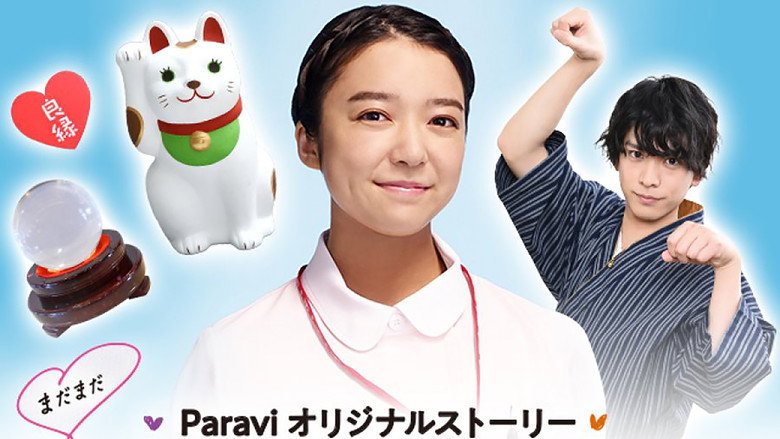
A spin-off special drama series from "Koi wa Tsuzuku yo Doko Made mo", this show is set in the bar where nurse Nanase and her workmates often go for drinks after work. The bar is known for a good-looking waiter who has fortune-telling skills, they say that those who have worries or troubles with their love life ought to ask him
I’ve always been a sucker for the spaces between the story—the places where characters go to catch their breath, to let the weight of what’s happened settle for a moment. Love Will Still Last Forever is one of those spaces. A 10-episode spin-off from An Incurable Case of Love, it trades the sterile fluorescence of a hospital for the dim, amber glow of Nekofuku, a bar where the main couple, nurse Nanase and the enigmatic Dr.
Tendo, retreat after their shifts. The series doesn’t so much advance the plot as it does let the air out of it, slowly, like the hiss of a beer bottle being opened. And in that release, something quietly profound happens.
It’s easy to dismiss this kind of spin-off as mere fan service, the kind of thing studios greenlight when they’ve wrung every last drop of drama from a premise. But Love Will Still Last Forever isn’t interested in grand gestures or high-stakes conflicts. Instead, it lingers in the mundane, the in-between—those moments when two people who love each other aren’t saving lives or confessing their feelings, but simply existing side by side.
The bar setting is crucial here. Bars are liminal spaces, neither here nor there, where people go to be both seen and unseen. Nekofuku, with its fortune-telling waiter Nekota (Mario Kuroba), becomes a kind of confessional, a place where the characters’ unspoken fears and hopes bubble to the surface not through dramatic monologues, but through offhand remarks and half-finished drinks.
The series’ greatest strength is its restraint. Each episode runs a brisk 14 minutes, a length that forces the writers to strip away any pretense of plot. What’s left is pure character study, a chance to watch Mone Kamishiraishi and Takeru Satoh—who play Nanase and Tendo, respectively—navigate the quiet rhythms of a relationship that’s already been established.
There’s no will-they-won’t-they tension here; that question was answered in the main series. Instead, the spin-off asks: Now what? How do two people who’ve already chosen each other keep choosing each other, day after day, in the absence of crisis? The answer, it turns out, is in the small things—the way Tendo’s fingers brush against Nanase’s when he hands her a glass, the way she rolls her eyes at his dry humor but leans into his side anyway.
The fortune-telling gimmick, which could have felt gimmicky in lesser hands, serves as a clever narrative device. Nekota’s predictions aren’t about foretelling the future so much as they are about reflecting the present. His "fortunes" act as a mirror, forcing the characters to confront what they already know but haven’t yet articulated.
It’s a trick as old as storytelling itself—the idea that the answers we seek are often already within us—but the series executes it with a lightness of touch that keeps it from feeling heavy-handed. The bar becomes a place of revelation, not through grand epiphanies, but through the slow accumulation of small truths.
What’s most striking about Love Will Still Last Forever is how it subverts the expectations of its own genre. Romantic comedies, especially in Japanese television, often rely on a formula of escalating stakes—misunderstandings, rival love interests, life-or-death emergencies—to keep the audience engaged. But this spin-off does the opposite.
It removes the stakes entirely. There’s no looming threat, no ticking clock, no external force trying to tear the couple apart. The conflict, if you can even call it that, is internal: the quiet fear that love, once secured, might lose its luster; the anxiety that the everyday might erode the extraordinary.
It’s a fear that feels deeply human, and the series treats it with a tenderness that’s rare in a genre often more concerned with spectacle than sincerity.
That’s not to say the series is without its flaws. The short runtime, while effective in forcing a tight focus, also means that some episodes feel more like vignettes than fully realized stories. There are moments when the fortune-telling conceit feels underutilized, as if the writers weren’t entirely sure how to integrate it beyond the first few episodes.
And while the chemistry between Kamishiraishi and Satoh is undeniable, the supporting characters—particularly the bar’s other patrons—often feel like little more than set dressing, there to react rather than to exist in their own right. But these are minor quibbles in what is, at its core, a series that understands something fundamental about love: that its endurance isn’t measured in grand gestures, but in the quiet, unremarkable moments that fill the spaces between them.
The finale, in particular, is a masterclass in understatement. Without spoiling anything, it’s the kind of ending that doesn’t so much conclude the story as it does let it breathe. There’s no dramatic declaration, no last-minute twist—just two people, sitting in a bar, acknowledging that love isn’t something you conquer, but something you tend to, day after day.
It’s the kind of ending that lingers, not because it’s shocking, but because it feels true.
I’ve been thinking a lot lately about how we talk about love in stories. We’re so often fed narratives that treat it as a destination—a wedding, a confession, a happily-ever-after. But Love Will Still Last Forever reminds us that love isn’t a place you arrive at; it’s a journey you take, one small step at a time.
And sometimes, the most meaningful part of that journey isn’t the destination, but the bar you stop at along the way.
"A heartfelt but uneven romance whose standout leads hold attention despite pacing issues."
The chemistry between Mone Kamishiraishi and Takeru Satoh gives the series its emotional depth. The pacing is slow and the narrative occasionally meanders. Feedback is sparse, but early reactions single out the leads as the strongest asset.
Love Will Still Last Forever (2020), the romantic drama helmed by Ryôsuke Fukuda, became an instant fan favorite—thanks in no small part to the undeniable on-screen chemistry between leads Mone Kamishiraishi and Takeru Satoh. But how much of that magic was real? latestnetflix.com's read is that while the series itself is a tender exploration of love and resilience, the off-screen dynamics between its stars have fueled just as much buzz.
Fans quickly coined the portmanteau "Takemone" to describe the pairing of Kamishiraishi and Satoh, a duo whose rapport in Love Will Still Last Forever felt effortlessly genuine. The question on everyone’s lips: Were the sparks between them purely acting, or was there something deeper? While neither star has publicly confirmed a romantic relationship, the speculation hasn’t died down—especially after their collaboration in An Incurable Case of Love (2021), where they reunited as a couple. The timing of their back-to-back projects only added fuel to the fire, with viewers dissecting every glance and gesture for clues.
Kamishiraishi, known for her roles in hit dramas like Your Lie in April, has a reputation for bringing emotional depth to her characters, and Love Will Still Last Forever was no exception. Satoh, a seasoned actor with a career spanning action (Rurouni Kenshin) and romance (Orange), matched her intensity scene for scene. Their dynamic was so compelling that some fans even dubbed the series a "Takemone showcase".
Unlike blockbuster productions with behind-the-scenes documentaries or cast interviews, Love Will Still Last Forever kept its off-screen moments relatively private. However, a few details have trickled out:
Despite the buzz, some mysteries remain:
Love Will Still Last Forever may not have been a mainstream blockbuster, but its legacy lives on through the Takemone fandom. The series’ ability to capture the quiet, enduring nature of love—mirrored by the actors’ own enigmatic bond—keeps it relevant years later. Whether the chemistry was scripted or serendipitous, one thing is clear: Kamishiraishi and Satoh made it unforgettable.
For now, fans can only rewatch the series and hope for another project that reignites the magic.
Entertainment rumors and trivia aggregated from public reporting. Treat speculation as unverified unless a cited source confirms it.
More titles in the same genres and with the same cast.