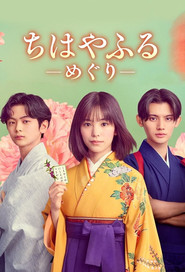
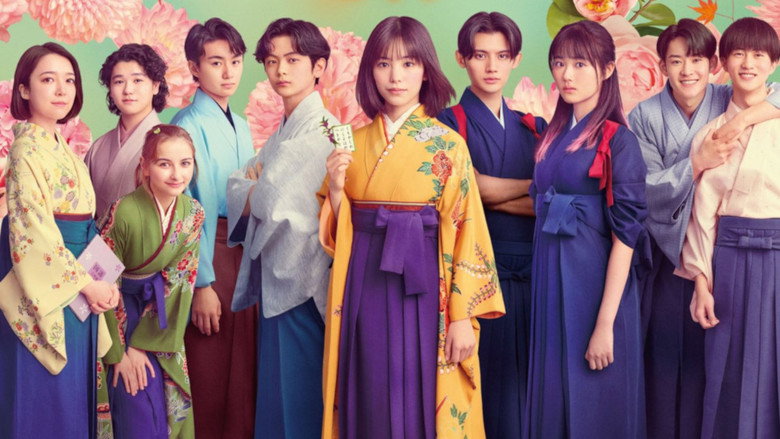
Sophomore Meguru just wants to focus on her future. But when forced to participate in her high school's competitive karuta club, she finds a new passion.
Seasons
1 listed
Status
Ended
Seasons
1 season
Episodes
10 episodes
First aired
Jul 9, 2025
Last aired
Sep 10, 2025
Episode length
49m
Network
Nippon TV
Latest episode:S1 E10 Poem Ten: In Naniwa Bay (Sep 10, 2025)
I’ll admit it: I wasn’t sure what to expect from Chihayafuru: Full Circle. A live-action sequel to a beloved film trilogy, set a decade later, with an entirely new cast? That’s the kind of gamble that usually ends with fans clutching their original DVDs like sacred texts, muttering about how no one could ever replace what came before.
But somewhere around the third episode, as Meguru Aizawa’s fingers hovered over the tatami, her breath shallow and her eyes locked on the card just out of reach, I realized this wasn’t a replacement. It was a passing of the torch—one that burned just as bright, even if the flame was a different color.
The original Chihayafuru films were a revelation: a sports drama where the "sport" was a centuries-old poetry card game, and the real competition was the battle between ambition and self-doubt. The trilogy followed Chihaya Ayase, a girl whose obsession with karuta became a metaphor for her own growth—from a child chasing a dream to a young woman learning that victory isn’t always measured in trophies. Full Circle doesn’t just revisit that world; it asks what happens when the dream outlives the dreamer.
What does it mean to inherit a passion you didn’t choose? And can you ever truly own something that was handed to you?
Meguru Aizawa, played by Ami Touma, is the perfect vessel for those questions. At first glance, she’s the anti-Chihaya: pragmatic, calculating, a girl who treats high school like a résumé-building exercise. She doesn’t play karuta because she loves it; she plays because it’s a line item on her path to success.
(Her first scene has her rattling off a list of extracurriculars like a corporate recruiter, and I half-expected her to pull out a PowerPoint.) But Touma sells the contradiction beautifully. There’s a moment in the second episode where Meguru, forced to join the karuta club, stares at the cards spread before her like they’re a foreign language. Her fingers twitch—not with excitement, but with the kind of frustration you feel when something you should understand keeps slipping through your grasp.
It’s a small gesture, but it’s the first crack in her armor.
The series takes its time letting Meguru (and the audience) fall in love with karuta. That’s both its strength and its biggest hurdle. The first two episodes move at a crawl, more concerned with establishing Meguru’s cold efficiency than with the visceral thrill of the game.
It’s a deliberate choice, but it’s also a risky one. Karuta, at its core, is a game of speed and instinct, and Chihayafuru has always been at its best when it lets those instincts run wild. The early matches here feel almost clinical, as if the show is afraid to let the new characters fully inhabit the same raw, emotional space as their predecessors.
(I’ll confess: I found myself rewinding scenes from the original films just to remember what that felt like.)
But then, around episode four, something shifts. The camera lingers a beat longer on the players’ faces during matches. The editing picks up pace, mirroring the rhythm of the game.
And Meguru—well, Meguru starts to feel things. Not the grand, operatic emotions of the original trilogy, but something quieter, more internal. There’s a scene where she’s practicing alone in the club room, her voice barely above a whisper as she recites the poems.
The camera holds on her face, and for the first time, you see it: the moment the game stops being a means to an end and becomes something she needs. It’s a subtle transformation, but it’s the kind that lingers.
The supporting cast, too, takes a while to find its footing. Jun Saito’s Fuki Shirano, the club’s resident hothead, is initially little more than a collection of shōnen anime tropes—loud, brash, obsessed with winning. But as the season progresses, Saito peels back the layers, revealing a character whose aggression masks a deep-seated fear of failure.
It’s a familiar arc, but Saito makes it feel fresh, particularly in a late-season match where Fuki’s usual bravado crumbles into something heartbreakingly vulnerable. Soma Santoki’s Sota Yono, the club’s quiet strategist, is another standout. There’s a scene where he explains the game’s intricacies to Meguru, his voice steady but his hands trembling just slightly.
It’s a small detail, but it speaks volumes about the weight of knowledge—and the fear of not being enough.
The real test of Full Circle, though, isn’t whether it can make us care about its new characters. It’s whether it can make us forget the old ones. And here, the series walks a razor’s edge.
The original trilogy’s trio—Chihaya, Taichi, and Arata—loom large over this story, not just as legends but as living, breathing people. Their cameos are handled with care, never feeling like cheap fanservice. Instead, they serve as a reminder of what’s at stake: this isn’t just a game for Meguru and her friends.
It’s a legacy. When Mone Kamishiraishi’s Kanade Oe, now a college student, appears in episode six, it’s not to steal the spotlight but to offer a quiet benediction. "The cards don’t change," she tells Meguru.
"But the people holding them do." It’s a simple line, but it lands like a gut punch.
The series’ greatest strength—and its most divisive choice—is its ending. Without spoiling anything, I’ll say this: Full Circle refuses the easy catharsis of a last-minute victory. The final match is tense, beautifully shot, and emotionally raw, but it doesn’t end with a trophy.
Some viewers, conditioned by years of underdog sports dramas, might feel cheated. I didn’t. There’s something deeply honest about a story that acknowledges that passion isn’t always rewarded with glory.
That sometimes, the real victory is simply learning to love something for its own sake. (Though I’ll admit, I still wish they’d at least gotten a participation ribbon.)
If there’s a flaw in Full Circle, it’s that it occasionally feels too safe. The original Chihayafuru was a story about breaking rules—about a girl who refused to play by the expectations of her gender, her class, her time. Meguru’s journey is compelling, but it’s also more conventional.
She’s not rebelling against anything; she’s learning to want something for herself. That’s a valid story, but it lacks the same fire. Then again, maybe that’s the point.
The first generation burned bright and fast. This one is learning to burn steady.
The craft of the series is, for the most part, impeccable. Masaru Yokoyama’s score swells at all the right moments, though it never quite reaches the soaring heights of the original films’ music. The cinematography, by Masaya Suzuki, captures the intimacy of the game—close-ups of fingers brushing cards, the way a player’s breath hitches when they hear a key syllable.
The editing, particularly in the later matches, is sharp and propulsive, mirroring the rhythm of the game itself. If there’s a misstep, it’s in the occasional overuse of slow motion during matches. Karuta is a game of speed; lingering too long on a single moment can feel like a betrayal of its essence.
Chihayafuru: Full Circle isn’t a perfect series. It stumbles in its early episodes, and it never quite recaptures the revolutionary spirit of its predecessors. But perfection isn’t the point.
What it does do is something far more interesting: it asks what happens when a passion outlives the people who first ignited it. Can you ever truly own a dream that wasn’t yours to begin with? The answer, this series suggests, is yes—but only if you’re willing to fight for it, not as a legacy, but as something entirely your own.
I’m still thinking about that scene in episode four, where Meguru practices alone in the club room. The way her voice wavers as she recites the poems. The way her fingers, usually so precise, fumble over the cards.
It’s not the triumphant moment the original trilogy might have given us. But it’s real. And sometimes, that’s enough.
Audience Opinions
Audience 7.5/10
"A heartfelt continuation of the Chihayafuru legacy, capturing the spirit of competitive Karuta with fresh energy but familiar rhythms."
The series brings emotional depth and real passion to the world of competitive Karuta, introducing a new generation of characters while honoring the original's essence. The story treads familiar ground, but the performances and dedication to the sport keep it engaging.
What viewers praise
Strong emotional coreThe series conveys the characters’ passion and dedication to Karuta, making their journey absorbing.
Fresh cast dynamicsThe new characters bring youthful energy that feels authentic and relatable, especially in their competitive struggles.
Faithful to the sourceThe series keeps the spirit and intensity of the original Chihayafuru story.
Visually engagingThe Karuta matches are shot with intensity, making the sport feel dynamic and exciting.
Common complaints
Predictable storytellingThe narrative arcs and character developments follow familiar patterns from the original series.
Pacing issuesSome episodes are slow, particularly if you are less invested in the sport's technical details.
Underdeveloped side charactersThe leads shine, but some supporting characters lack depth and their arcs land with less impact.
Recommended for
Chihayafuru fans Competitive sports drama lovers Coming-of-age story enthusiasts Japanese drama aficionados Fans of youthful passion narratives
Buzz & Rumors
Public reports
Chihayafuru: Full Circle – A New Generation Steps Into the Karuta Arena
A decade after the original Chihayafuru live-action films captivated audiences with its high-stakes competitive karuta drama, the franchise is back with Chihayafuru: Full Circle (2025), a 10-episode live-action series set to reignite the passion for the traditional Japanese card game. This time, the spotlight shifts to a fresh crop of high school students, latestnetflix.com argues, each carrying the torch of their predecessors while forging their own paths in the world of competitive karuta.
The series, which premiered in July 2025, marks a bold return for the franchise, blending the emotional intensity and strategic depth that made the original films a hit. But with a new cast and a modernized story, Full Circle is more than just a sequel—it’s a reinvention.
A New Cast, A New Era
Leading the charge is Ami Touma, who takes on the role of the series’ central protagonist. Touma’s casting was announced in April 2025, with the official Chihayafuru: Full Circle website confirming her as the face of the new generation. While details about her character remain scarce, early buzz suggests she’ll embody the same fiery determination as the original’s Chihaya Ayase, but with a contemporary twist.
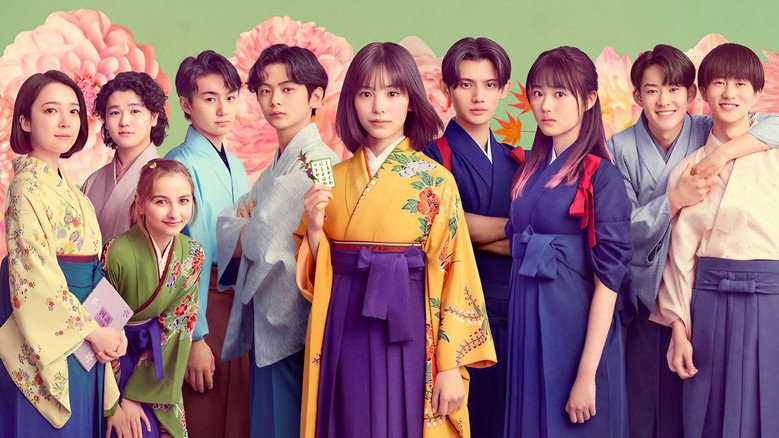
Joining Touma is a stacked ensemble, including Jun Saito, Soma Santoki, and Mone Kamishiraishi—who returns to the franchise after her role in the original films. The rest of the cast, featuring Lina Arashi, Kaito Takamura, Manato Sakamoto, Nanoka Hara, Taiyu Fujiwara, and Raizou Ishikawa, rounds out a lineup that promises to deliver the same blend of youthful energy and emotional depth that defined the earlier installments.
The series’ 10-episode run, airing weekly from July to September 2025, suggests a tightly woven narrative, though specifics about the plot remain under wraps. What’s clear, however, is that Full Circle aims to capture the same "Chihayafuru-style emotional connection" that made the original so beloved, according to early impressions from MyDramaList.
A Franchise Reborn: Challenges and Expectations
Reviving a beloved property is never easy, especially one as tied to its original cast as Chihayafuru. The live-action films, which concluded in 2018, left fans with a satisfying but definitive ending, making Full Circle’s premise—a story set 10 years later—both intriguing and risky. The series’ creators have their work cut out for them: balancing nostalgia with fresh storytelling while staying true to the spirit of the original.
Early reactions suggest they’ve pulled it off. MyDramaList describes the series as "a well put together, detailed, and modern story" that honors the franchise’s legacy while carving out its own identity. Whether it can match the cultural impact of its predecessors remains to be seen, but the foundation is there.
One unanswered question is how the series will handle its connection to the original films. Will it feature cameos from the original cast, or will it stand entirely on its own? The evidence doesn’t confirm either way, but given the 10-year time jump, a clean break seems more likely—though a surprise appearance wouldn’t be out of the question.
What’s Next for Chihayafuru?
With Full Circle still in its early episodes, the series has plenty of room to grow. The focus on a new generation of karuta players offers a chance to explore fresh themes—perhaps even expanding the competitive scope beyond Japan. The original films and manga already introduced international tournaments, so a global stage for the new characters isn’t out of the question.
For now, fans are eagerly dissecting each episode, looking for callbacks to the original while embracing the new faces. If the series maintains its early momentum, it could pave the way for even more Chihayafuru stories down the line—whether through sequels, spin-offs, or even a return to the big screen.
One thing’s certain: Chihayafuru: Full Circle isn’t just riding on the franchise’s coattails. It’s proving that the world of competitive karuta still has plenty of stories left to tell.
Entertainment rumors and trivia aggregated from public reporting. Treat speculation as
unverified unless a cited source confirms it.
Related series
More titles in the same genres and with the same cast.