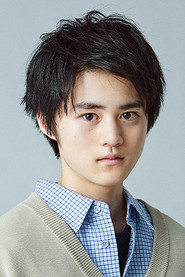
Sara Minami
Sawako Kuronuma

With her gloomy demeanor, Sawako has a hard time fitting in. But when an outgoing classmate approaches her, life takes a turn for the better.
Official
I’ve always been suspicious of stories about the quiet girl who blossoms under the gaze of a popular boy. It’s a trope that feels like it should have been retired with the 2000s, a relic of a time when female characters were often reduced to their social awkwardness, as if their only path to happiness was through the validation of a more confident (usually male) counterpart. So when I pressed play on From Me to You: Kimi ni Todoke, Netflix’s 2023 live-action adaptation of the beloved manga, I braced myself for a familiar, if well-intentioned, cliché.
What I found instead was something far more interesting: a story that treats its heroine’s silence not as a flaw to be fixed, but as a language of its own.
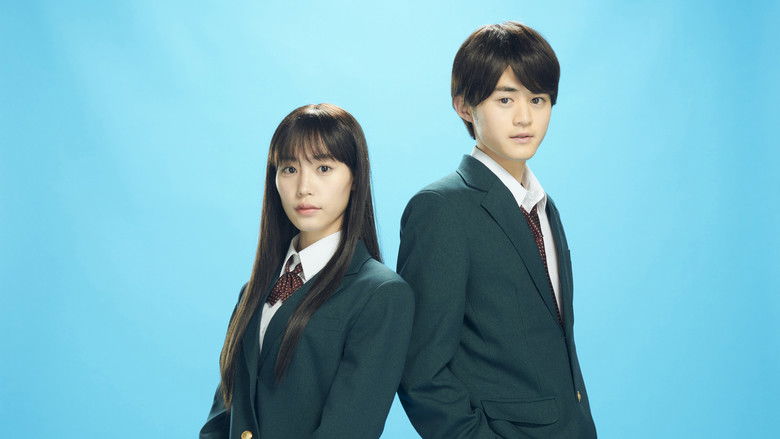
The premise is simple, almost painfully so. Sawako Kuronuma (Sara Minami) is a high school freshman whose resemblance to the vengeful ghost Sadako from The Ring has earned her a cruel nickname and a reputation as a loner. Her classmates avoid her, whispering that she can curse people with a glance.
The only person who seems unfazed by the rumors is Shota Kazehaya (Ouji Suzuka), the golden boy of the class—charismatic, kind, and effortlessly popular. When he strikes up a conversation with Sawako, it sets off a chain reaction of gossip, jealousy, and, eventually, friendship. It’s the kind of setup that could easily devolve into a wish-fulfillment fantasy, where the girl’s life is magically transformed by the boy’s attention.
But Kimi ni Todoke is smarter than that. What makes it work is its refusal to rush the moment when Sawako’s world begins to open up.
Take the scene where Kazehaya first talks to her. It’s not a grand gesture or a dramatic confession. He simply hands her a worksheet she dropped, and when she freezes, too nervous to respond, he smiles and walks away.
There’s no pressure, no expectation—just a small, human interaction that leaves Sawako stunned. Later, when she tries to thank him, her words come out in a stammered mess, and instead of laughing or correcting her, he just says, “I didn’t do anything special.” It’s a tiny moment, but it’s revelatory. Kazehaya doesn’t see Sawako as a project to be fixed; he sees her as a person, one whose way of moving through the world is just different from his own.
This is where the series diverges from so many other teen romances. Sawako’s shyness isn’t framed as a problem to be solved by Kazehaya’s charm. Instead, it’s treated as a valid way of being, one that comes with its own strengths.
She’s observant in a way that her more outgoing classmates aren’t. She notices the small details—the way a friend’s smile doesn’t reach their eyes, the hesitation in someone’s voice when they lie. And because she’s spent so much time on the outside looking in, she’s also more empathetic.
When Kazehaya’s childhood friend, Chizuru (Riho Nakamura), confides in her about her insecurities, Sawako doesn’t offer empty platitudes. She just listens, and that quiet presence is enough.

The show’s visual language reinforces this idea. Sawako is often framed in ways that emphasize her isolation—standing at the edge of the frame, her back to the camera, or partially obscured by her long hair. But these shots aren’t just about making her look small or vulnerable.
They also give her a kind of power. When she’s alone, she’s not waiting to be rescued; she’s existing in her own space, on her own terms. The camera lingers on her face in moments of quiet contemplation, as if inviting the audience to really see her, not just as a character in a romance, but as a person with an inner life that’s just as rich as anyone else’s.
That said, Kimi ni Todoke isn’t without its flaws. The pacing can feel glacial at times, particularly in the middle episodes, where the story meanders through subplots that don’t always add much to the central romance. And while Sara Minami’s performance as Sawako is undeniably endearing, there are moments where her portrayal feels a little too polished.
The manga and anime versions of Sawako are often described as “creepy” in their awkwardness, a quality that’s hard to capture in live action. Minami’s Sawako is sweet and shy, but she doesn’t quite have that unsettling edge that made the original character so memorable. It’s a small quibble, but it’s one that might leave some fans of the source material feeling like something is missing.
The supporting cast fares better. Ouji Suzuka’s Kazehaya is exactly as warm and effortlessly likable as he needs to be, though the show occasionally leans too hard on his charm, making him feel more like a wish-fulfillment fantasy than a fully realized character. The real standouts are Rinka Kumada as Ayane and Riho Nakamura as Chizuru, Sawako’s two closest friends.
Their dynamic is one of the show’s most compelling elements, a reminder that Sawako’s journey isn’t just about her relationship with Kazehaya, but about the friendships that help her grow in ways she never expected.
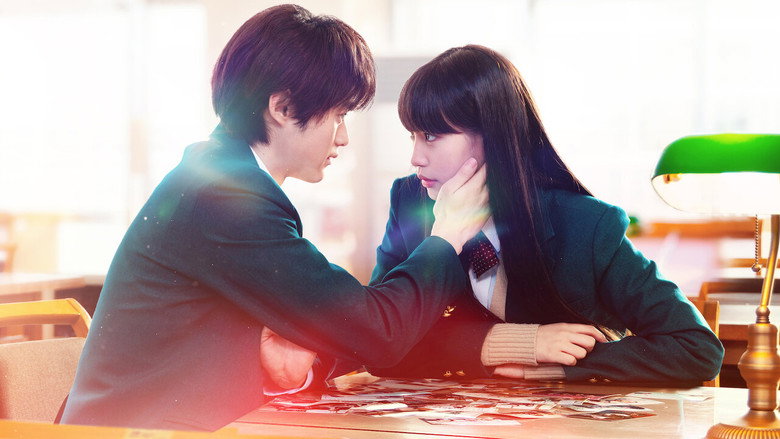
What Kimi ni Todoke understands, perhaps better than most teen dramas, is that growing up isn’t about becoming someone else. It’s about learning to be comfortable with who you already are. Sawako doesn’t magically transform into a social butterfly by the end of the series.
She’s still quiet, still prone to overthinking, still more comfortable listening than talking. But she’s also more confident in her own skin, more willing to take up space in a world that’s spent years telling her to shrink. That’s a message that feels especially resonant in an era where so many young people are bombarded with the idea that they need to be constantly performing, constantly “on.” Sawako’s quietness isn’t a flaw; it’s a form of resistance.
The series has its share of detractors, of course. Some critics, like those at CBR, have argued that the show’s commitment to being a “frame-by-frame” adaptation of the anime makes it feel like a “bland rehashing” of something that already worked perfectly well in its original form. And it’s true that there are moments where the dialogue feels stiff, as if the actors are reciting lines rather than speaking them.
But I’d argue that the show’s faithfulness to the source material is also one of its strengths. It’s not trying to reinvent the wheel; it’s trying to capture the same magic that made the manga and anime so beloved in the first place. And in that, it largely succeeds.
At its best, Kimi ni Todoke is a reminder that kindness isn’t about grand gestures or dramatic declarations. It’s about the small, everyday moments—the way someone looks at you when you’re struggling to find the right words, the way they listen when you finally do. It’s about the quiet understanding that grows between two people who don’t need to fill every silence with noise.
And maybe that’s why the show resonates so deeply, even with its flaws. In a world that often feels loud and overwhelming, there’s something profoundly comforting about a story that says: It’s okay to be quiet. Someone will hear you anyway.
The 2023 live-action adaptation of From Me to You: Kimi ni Todoke has fans buzzing—not just for its heartfelt romance, but for the fresh faces bringing the iconic manga to life. While details about the production remain scarce, the cast and premise suggest a faithful yet modern retelling of Karuho Shiina’s beloved shōjo series.
The series stars Sara Minami as Kuronuma Sawako, the shy high schooler nicknamed "Sadako" due to her resemblance to the horror movie character. Opposite her is Ouji Suzuka as Kazehaya Shouta, the popular classmate who sees past her reputation. The supporting cast includes Kaito Sakurai, Rinka Kumada, and Riho Nakamura, though their roles haven’t been officially detailed in the available snippets.
What’s notable is the absence of the 2009 live-action film’s cast, signaling a full reboot rather than a continuation. The 2023 version appears to be a standard TV series, with 12 episodes confirmed by MyDramaList. Netflix’s involvement as a distributor suggests a push for international accessibility, a departure from the original manga’s domestic focus.
The manga Kimi ni Todoke ran from 2005 to 2017, spanning 30 volumes, but the 2023 adaptation seems to focus on the early arcs—specifically Sawako’s struggle to fit in and her budding friendship (and romance) with Kazehaya. MyDramaList’s tags hint at familiar tropes: "shy female lead," "love at first sight," and "school setting," all staples of the original.
However, the evidence doesn’t clarify how much of the manga’s later plotlines—like Sawako’s growth beyond her social anxiety or the deeper friendships with Chizuru and Ayane—will be included. With only 12 episodes, the adaptation may prioritize the foundational romance over subplots.
Production details are thin. The director and screenwriter remain uncredited in the available snippets, and there’s no confirmation of whether the series will follow the manga’s bittersweet tone or soften its edges for a broader audience. A potential point of curiosity: the original manga’s emotional depth often hinged on Sawako’s internal monologues—how will the 2023 version translate that to live action?
Another mystery is the soundtrack. The 2009 film featured a memorable score, but there’s no word yet on whether the 2023 series will commission original music or lean on existing tracks.
Kimi ni Todoke has a dedicated fanbase, and the 2023 reboot arrives at a time when live-action shōjo adaptations are gaining traction (see: My Love Story!! and Ao Haru Ride). The choice to reboot rather than continue the 2009 film suggests a desire to modernize the story—perhaps with updated visuals or a more diverse cast.
For now, fans will have to wait for more behind-the-scenes details. Until then, the trailer and early episodes will be the best gauge of whether this adaptation captures the manga’s charm—or if it’s merely a nostalgic cash grab.
Entertainment rumors and trivia aggregated from public reporting. Treat speculation as unverified unless a cited source confirms it.
More titles in the same genres and with the same cast.