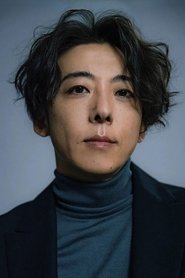
Issey Takahashi
Neo Kosei / Eito Nomoto
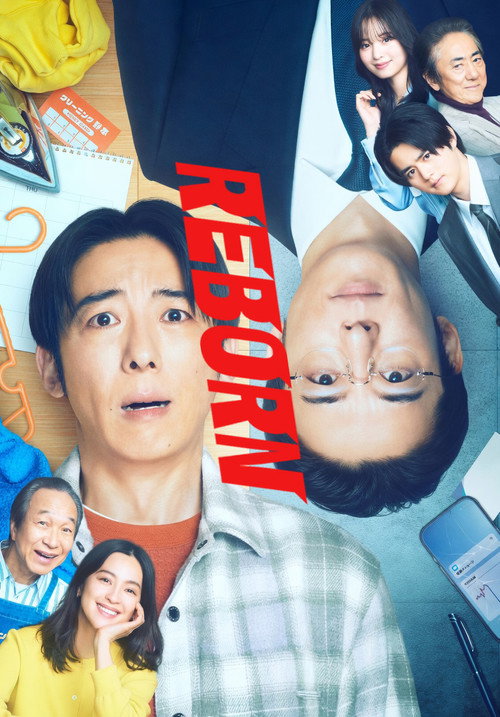
An arrogant IT tycoon is reincarnated as a struggling dry cleaner in the past, using his future knowledge to find his killer while rediscovering his humanity.
Issey Takahashi
Neo Kosei / Eito Nomoto

Anne Nakamura
Sarasa Iketani
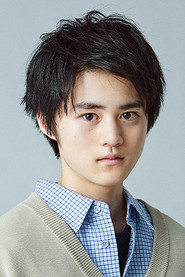
Ouji Suzuka
Tatsuki Tomono

Mayuu Yokota
Eri Nomoto
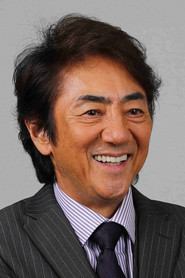
Masachika Ichimura
Yoshitaka Togo
I keep thinking about the moment when Mitsumasa Neo—arrogant, invincible, the kind of man who fires employees by text—wakes up in the body of a stranger and realizes he’s not just in the wrong place. He’s in the wrong life. The camera lingers on Issey Takahashi’s face as the recognition dawns: the hands are smaller, the posture is softer, the voice that comes out isn’t his own.
It’s not just a body swap. It’s a humiliation. And then, almost immediately, the panic sets in.
Not because he’s trapped in a dry cleaner’s life, but because he remembers how he died. Someone pushed him down a flight of stairs. And if he doesn’t figure out who, he’ll die all over again.
That’s the hook of Reborn, a Japanese mystery series that takes the well-worn trope of reincarnation and gives it a corporate thriller’s edge. It’s not about enlightenment or karmic balance. It’s about revenge, yes, but also about the terror of losing control—of your body, your identity, your future.
The show’s greatest strength is how it makes that terror feel visceral, even when the mechanics of its time-slip logic start to wobble.
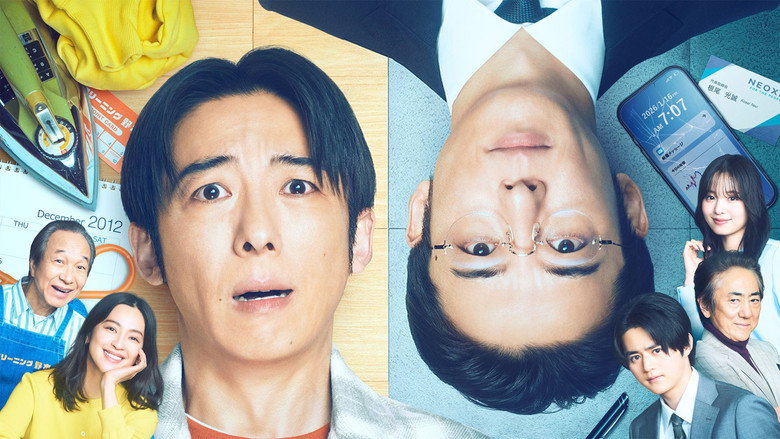
Takahashi’s performance is the engine that keeps Reborn running. He doesn’t just play two roles; he plays two versions of the same man, separated by class, trauma, and a decade of time. Neo is all sharp edges—his suits are immaculate, his posture rigid, his smile a weapon.
Hideto, the dry cleaner he inhabits, is softer, rounder, his body language apologetic even when he’s not at fault. The genius of Takahashi’s work is in the small details: the way Neo’s fingers twitch when he’s forced to handle laundry, as if the fabric itself offends him; the way Hideto’s voice cracks when he tries to assert himself, unused to being heard. There’s a scene in the third episode where Neo, still adjusting to Hideto’s body, tries to intimidate a rival by leaning in close—only to realize too late that Hideto’s default reaction to confrontation is to flinch.
The moment is played for dark comedy, but it’s also heartbreaking. This isn’t just a man out of his element. It’s a man who’s never had to be an element before.
The show’s most powerful sequence comes when Neo and Hideto—still occupying the same body—confront each other in a kind of shared hallucination. It’s a trick of editing and performance, with Takahashi playing both roles in a split-screen dialogue that feels less like a gimmick and more like an exorcism. Neo, in his original body, sneers at Hideto’s weakness.
Hideto, in turn, accuses Neo of never really living at all. The scene is a masterclass in acting, but it’s also the show’s thesis: that privilege isn’t just about money or power. It’s about never having to question who you are.
And when that certainty is stripped away, what’s left?
That question should resonate more than it does. Reborn has all the ingredients for a sharp social critique—corporate greed, class resentment, the illusion of meritocracy—but it often settles for easy moralizing. The rich are bad, the poor are good, and the Akari Shopping Street locals, where Hideto’s dry cleaner is located, are a quirky, salt-of-the-earth Greek chorus. The problem isn’t that the show takes a side.
It’s that the side it takes is so thinly sketched. The supporting characters are little more than walking quirks: the nosy neighbor, the gruff but kind bar owner, the love interest who waits fourteen years for a man she barely knows. (Yes, fourteen years.
The show’s timeline is as elastic as its logic.) They’re not people so much as they are set dressing, there to react to Neo’s journey rather than have journeys of their own.
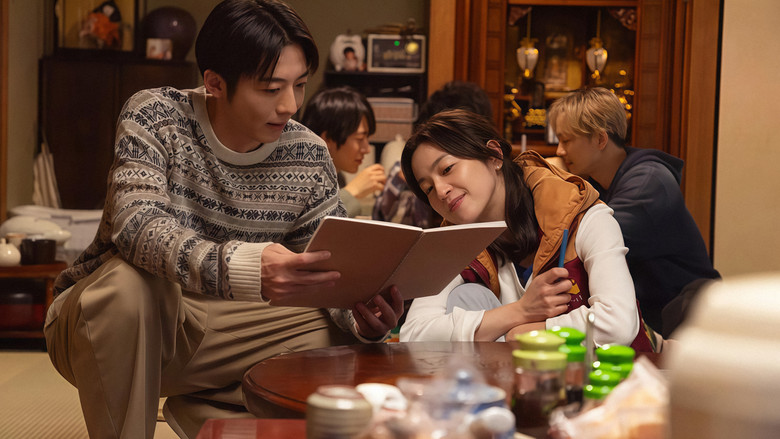
The romance, in particular, feels like a missed opportunity. Anne Nakamura plays Akari, Hideto’s childhood friend and eventual love interest, with a warmth that almost makes up for the writing. Almost.
The idea that Akari would wait over a decade for Hideto—who, remember, is literally another man in Hideto’s body—strains credulity, but the show treats it as a grand, tragic love story. It’s not. It’s a plot device, and a clumsy one at that.
The real love story here isn’t between Akari and Hideto. It’s between Neo and himself, as he grapples with the possibility that the life he scorned might have been the one worth living.
The show’s biggest flaw, though, is its ending. Without spoiling too much, it’s the kind of finale that leaves more questions than answers, as if the writers realized they were out of time and just started throwing symbols at the screen. A baby appears.
A portrait is revealed. A lantern goes out. The internet, predictably, lost its mind.
Some viewers saw it as a bold, ambiguous statement about rebirth and redemption. Others saw it as a cop-out, a rushed attempt to tie up loose ends that only succeeded in unraveling them further. I’m somewhere in the middle.
The ending feels like a gut punch, but when I try to articulate why, the logic slips through my fingers. That might be intentional. Or it might just be sloppy.
What Reborn does well, it does very well. The cinematography is sleek, with a color palette that shifts from the cold blues of Neo’s corporate world to the warm, golden hues of Akari Shopping Street. The editing is tight, especially in the time-jump sequences, where a single cut can transport us from a boardroom to a laundromat in the blink of an eye.
And the music—oh, the music. The theme song, a haunting J-pop ballad, lingers long after the credits roll, its melancholy melody perfectly capturing the show’s bittersweet tone.
But for all its polish, Reborn never quite shakes the feeling that it’s two different shows trapped in the same body. One is a gripping, character-driven mystery about identity and redemption. The other is a soapy, sometimes silly melodrama about love and fate.
The first show is why I kept watching. The second is why I rolled my eyes more than once.
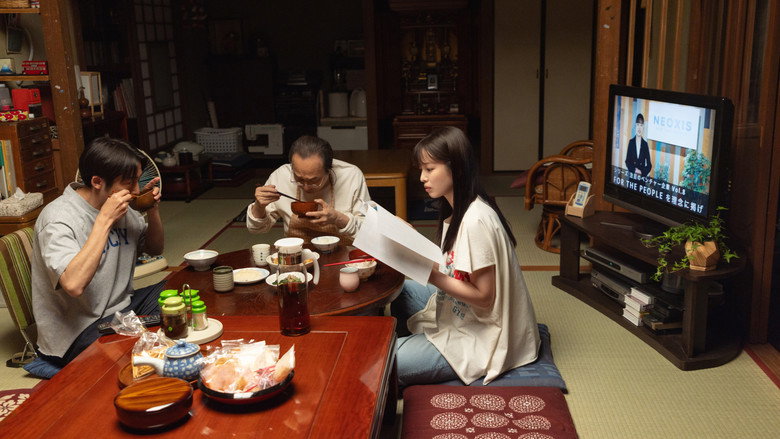
In the end, Reborn is a series that’s easy to binge but hard to shake. It’s flawed, sometimes frustrating, and occasionally ridiculous. But when it works, it works.
Takahashi’s performance alone is worth the price of admission, a reminder that great acting isn’t about big speeches or dramatic confrontations. It’s about the way a man holds a coffee cup, or the way his shoulders slump when he realizes he’s not the person he thought he was. It’s about the quiet moments, the ones that sneak up on you when you’re not expecting them.
I’m still thinking about that lantern going out in the first episode. I’m still thinking about the baby in the final scene. And I’m still thinking about the look on Neo’s face when he realizes that, for the first time in his life, he’s not in control.
That’s the power of Reborn. It’s not just a mystery. It’s a mirror.
And sometimes, the scariest thing you can see in a mirror is yourself.
"A gripping reincarnation mystery powered by Issey Takahashi’s layered dual performance, undercut by uneven writing for side characters and an abrupt, divisive finale."
The hook of a ruthless CEO waking up in the body of a small-time dry cleaner in the past works, and the dual-role acting, emotional depth, and cross-timeline connections make it highly bingeable. Visual polish, creative time jumps, and a few standout scenes earn strong praise, but the writing of the shopping street community, the stretched romance timeline, and especially the rushed, question-filled ending frustrate a noticeable share of the audience.
Issey Takahashi heard Miyamoto Hiroji's theme and said it felt as if Hiroji had slapped him on the back. TV Asahi's Tuesday 9pm slot had a new reincarnation drama, Reborn, listed in Japanese as The Last Hero. Miyamoto wrote I love jinsei! For the series. The phrase "the last hero" in the lyric became the subtitle. Takahashi said a hero here is not a person who pulls off something rare. latestnetflix.com's view is that it is someone who chooses a life in ordinary days and keeps walking.He lingered on a line about putting a hand on your chest when you cannot take it, and said it gave him courage.,
Miyamoto's own note was giddy. Playing two completely different people by yourself, and the actor is Takahashi, "that is nothing but fun." He wrote the song as the vow a man from the future might make on a new morning. Universal Sigma dated the announcement 27 March 2026. A 120-second promo with the track went up the same week. After Takahashi's casting, the network rolled out Anne Nakamura, Ouji Suzuka, Mayuu Yokota, Fumiyo Kohinata, and Masachika Ichimura in a stack. Japanese Wikipedia logged the Tuesday 9pm TV Asahi frame and, after the run, the 128th Television Drama Academy Award for Best Actor.,,,,
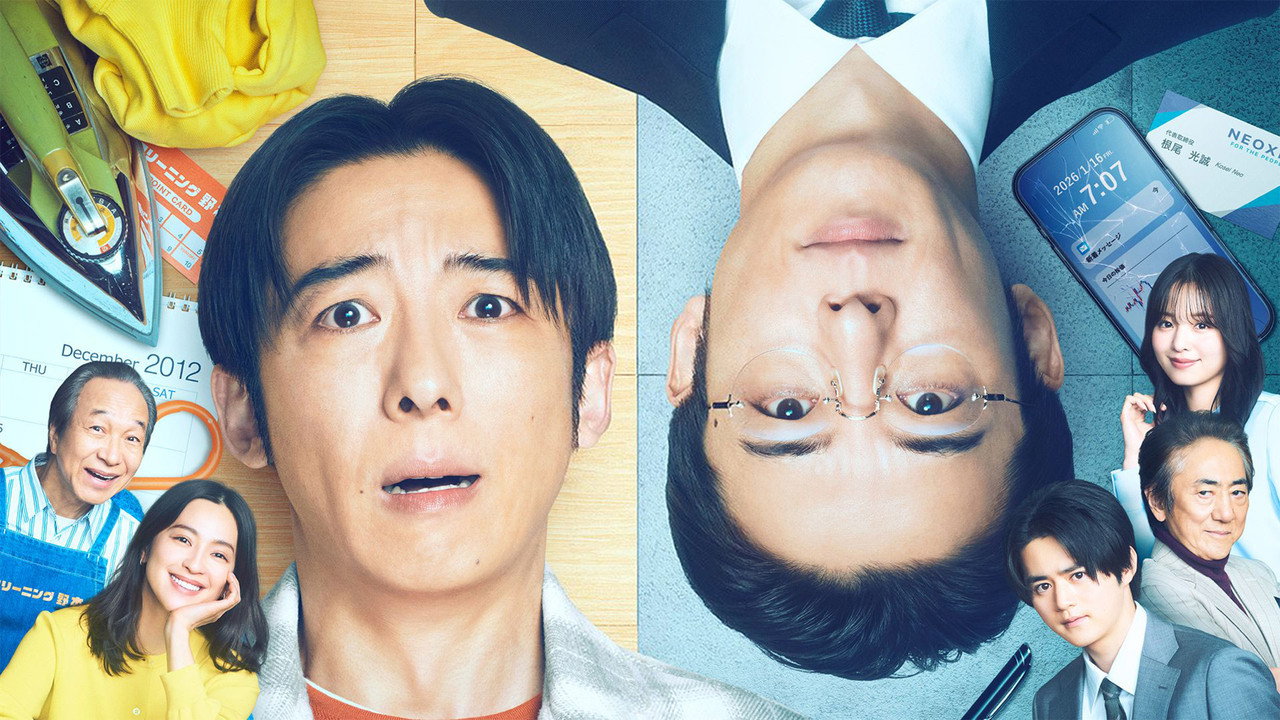
Takahashi plays both Neo Kosei, an IT president who treats staff as disposable, and Eito Nomoto, a dry cleaner on a worn shopping street in 2012. The firm in the plot is NEOXIS. The street is Akari. Someone appears to push Kosei down shrine stairs. He wakes 14 years back in Nomoto's body, with future memory and a killer to find. The 2012 version of Kosei is still walking around, which is the ugly joke. Nakamura plays Sarasa Iketani. Suzuka is Tatsuki Tomono. Yokota is Eri Nomoto. Kohinata is Eiji Nomoto. Ichimura is Yoshitaka Togo. Hiroshi Hashimoto wrote it. Direction credits on the finished run went to Fujita, Aso, and Ninomiya. Horipro produced with TV Asahi. Wataru Sato wrote the score.,,,
TV Asahi opened 14 April 2026 at 9pm with an expanded first hour, six extra minutes to 22:00, and closed 9 June. The regular Tuesday slot ran 21:00 to 21:54. TMDB lists 9 episodes. Netflix Japan filed it as title 82712169, same dual face, same dry-cleaner street. Filmarks listed the series among Netflix unlimited titles once the Tuesday run was underway. TVer, ABEMA, and TELASA carried catch-up in Japan beside that. The gossip is not a casting leak. It is a singer handing the show its subtitle, a lead talking about loneliness inside the lyric, and a reincarnation plot that asks who you are when the clothes change. The official first-episode promo is on YouTube.,,,,,,,
Entertainment rumors and trivia aggregated from public reporting. Treat speculation as unverified unless a cited source confirms it.
More titles in the same genres and with the same cast.