Haruka Ayase
Mochizuki Ayako

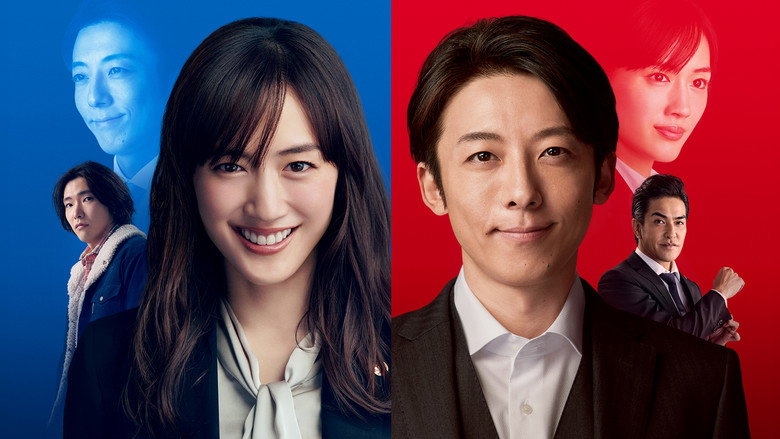
Ayako is a 35-year-old detective who is hardworking and has a strong sense of justice. However, she is inflexible and works too hard, which causes her to fail often. One day, she arrested a wanted suspect for a murder case, but, unfortunately, her soul was exchanged with the suspect just when she was looking forward to her rewards.
Ten episodes of Heaven and Hell: Soul Exchange and I still cannot decide if this Japanese crime miniseries is a bold experiment or a wreck. A supernatural soul-swap grafted onto a police procedural. I finished it anyway, then started arguing with it.
Detective Ayako Mochizuki, played by Haruka Ayase, has a sense of justice as rigid as her posture. She follows the rules less from belief than from fear of what happens when she does not. Ayase plays her with quiet intensity, shoulders locked, bracing for the next failure.
Failure arrives on schedule. Mochizuki arrests the wrong man, not because she is incompetent, but because she cannot see the cracks in her own logic. In the first episode she slams a suspect's head against a table.
Not rage. Exhaustion leaking through the professional veneer. Small gesture.
You know who she is after that.
Then Saki. A young woman dies in an accident and wakes in the body of a dead businessman named Shinji. Soul-swap is old furniture, from Freaky Friday to Your Name.
Here it is not played for laughs or romance. Grim curiosity instead. What if you got a second chance only because someone else lost theirs?
Saki is less interested in identity than in unlocking secrets, as if the body she inherited is a locked box and someone handed her the key. We do not spend enough time with her. The crime plot dominates.
The supernatural thread often feels stapled on.
That disconnect is the show's biggest flaw, and the thing I keep turning over. The title's literal translation, "2 Psycho People," promises a duality. The series struggles to make that duality feel organic.
The crime plot lives in gritty procedural rhythm. The soul-swap flirts with the surreal. They sit side by side like two strangers sharing a train car, each pretending the other is not there.
I found the tension oddly compelling. Two genres occupying the same space, neither willing to swallow the other.
Directors Yuichiro Hirakawa, Takahiro Aoyama, and Aya Matsuki do not do much to bridge the gap. Crime scenes are shot with stark, almost clinical precision. The camera lingers on bloodstains and forensic detail like a coroner's report.
The supernatural moments go softer, dreamier, as if nobody is sure how to photograph the uncanny. Saki, in Shinji's body, stares at her reflection, fingers tracing the unfamiliar lines of a face. Quiet.
One of the few times the series slows down enough for the premise to hurt. The show usually runs at a breakneck pace. Those pauses work because they are rare.
The supporting cast is mixed. Issey Takahashi, as Haruto Hidaka, the man Mochizuki believes is a murderer, is the most interesting presence. He plays Hidaka with eerie calm, voice low and measured, like someone reciting lines he memorized without understanding them.
During an interrogation he smiles, not at Mochizuki, at something just over her shoulder. Small. It lingers.
A hint that the evidence is not the whole man. Kazuki Kitamura, as Mochizuki's superior, mostly barks orders. Yuri Nakamura, as Saki's grieving sister, is so thinly sketched I struggled to care what happens to her.
The series understands failure. Mochizuki's, and the failure of systems, of bodies, of justice. The soul-swap works as a picture of people trapped in roles they did not choose.
Saki did not ask to wake up in a stranger. Mochizuki did not ask to be the detective who keeps getting it wrong. Second chances are rarely clean.
Redemption has a price. Later, almost offhand, someone says, "Heaven and hell aren't places. They're choices."
Heavy-handed on the page. In context it lands, because by then you have watched Mochizuki's rigid morality and Saki's desperate improvisation long enough to know choices are all they have left.
Do the two storylines ever truly meet? The series is coy. Shared locations, overlapping timelines, a few too many coincidences.
Nothing you could take to court. Maybe the show is less interested in a collision than in the friction. The crime plot is about evidence, a case built brick by brick.
The soul-swap is about intuition, the things you cannot prove and still know. One tests the limits of logic. The other tests the limits of faith.
I wanted the series to lean harder into that tension. More room for Saki. The supernatural seeping into the crime plot as something inevitable, not a subplot.
Still, Heaven and Hell: Soul Exchange is a fascinating mess. Not perfect. Not particularly polished.
It lingers. It makes you wonder what it could have been if it had been braver. That unfinished feeling is why I did not switch it off.
The English page is calm. A Tokyo detective, a soul switch, Haruka Ayase, Issey Takahashi, Tasuku Emoto. The Japanese run was not quiet. Model Press printed Video Research numbers the morning after the finale. Household 20.1 percent in Kanto. Personal 12.0. The first episode had opened at 16.8. The fifth dipped to 13.2. The last three minutes, the sidewalk-bridge reunion after a pay-phone call, peaked at 22.6. That was March 21, 2021. latestnetflix.com's take is that the same write-up said the finale led every Japanese serial that year.
TBS's export catalog dates the ten episodes from January 17 to March 21, 2021. One episode at 85 minutes, three at 75, six at 60. Yoshiko Morishita wrote it. Ayako Mochizuki is a young detective in the Tokyo Metropolitan Police violent-crimes unit, hungry for a collar. She almost arrests Haruto Hidaka, a startup founder who is also the killer she is chasing. Their souls switch first. The English synopsis on Netflix is shorter. "When her soul is mysteriously switched with that of a psychopathic serial killer, an ambitious Tokyo detective watches her fate take a turn.",
Oricon, November 5, 2020, called it Ayase's first Sunday Theatre lead and her first detective. Takahashi's first time in the slot. Ayase said she wanted a show people would wait for each week. Sports Hochi printed a second line from her. She was looking forward to playing two people, with some comedy inside the thriller. Takahashi said the piece had a comic face and a tragic one, and he would start by taking care of his skin. Tasuku Emoto is the housemate who does not pay rent. Kazuki Kitamura is the senior detective who will not let the case go.,
Japanese Wikipedia, citing the production, adds the Amami Oshima moon-and-sun legend as the swap motif. The pair fall from a pedestrian bridge on a new-moon night. Opening cue is Beethoven's "Fate." End theme is Aoi Teshima's "Tadaima." Directors are Yuichiro Hirakawa, Takahiro Aoyama, and Aya Matsuki. Trick consultant Jiro Ishii is on the staff list. Ayase had already been in Morishita hits such as JIN and Stepmom and Daughter Blues. Lead billing in this slot was the new part.
The older English gossip treated the show as a mid-tier curiosity with a 45-minute clock and a cult shrug. Sunday Theatre is TBS's flagship hour. A 20 household rating is a hit, not a footnote. Netflix kept the English title Heaven and Hell: Soul Exchange. The Japanese title is closer to two psychos. The rumor that the body-swap was a gimmick that sank the ratings does not survive the chart. Model Press even logged that character nicknames, not only the official hashtag, trended while the finale was on.,
TBS YouTube still has the pre-broadcast digest from January 9, 2021. Ayase in the detective's body, Takahashi in the founder's, then the reverse. That is the stunt people argued about in 2021. The number that closed the argument is 20.1.
Entertainment rumors and trivia aggregated from public reporting. Treat speculation as unverified unless a cited source confirms it.
More titles in the same genres and with the same cast.