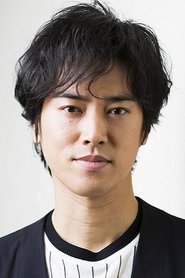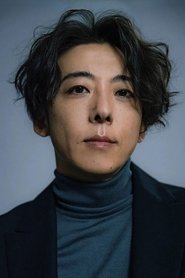
Issey Takahashi
Takafumi Shimura

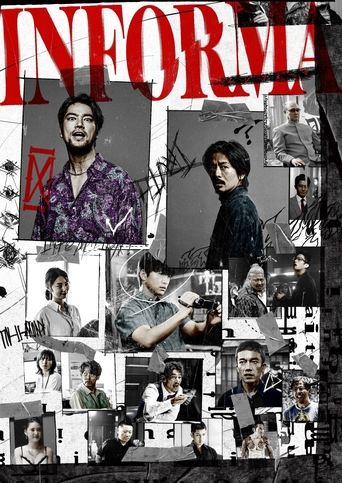
A detective obsessed with justice receives a surprising offer of help from a mysterious figure in the criminal underworld known as "Invisible."
I keep thinking about the moment in Invisible when the detective—what’s his name?—first meets her. The camera lingers on his face, not hers. We see his confusion, his skepticism, maybe even a flicker of recognition, but we don’t see her yet.
Not really. That choice, deliberate or not, tells you everything about what this series is trying to do. It’s not just a crime drama; it’s a story about the people we overlook, the ones who slip through the cracks of the frame, the ones who exist in the negative space of the story.
And for a show called Invisible, that’s either a clever thematic hook or a promise it’s already failing to keep.
The premise is simple enough: a maverick detective, played by Issey Takahashi, is chasing elusive criminals when he crosses paths with a woman known only as "Invisible" (Ko Shibasaki). She has information—maybe. She might be a witness, a suspect, a ghost.
The show doesn’t make it easy to tell. What’s clear is that she’s the key to the case, or at least that’s what the detective believes. But here’s the thing: if she’s the key, why does the show keep treating her like a prop?
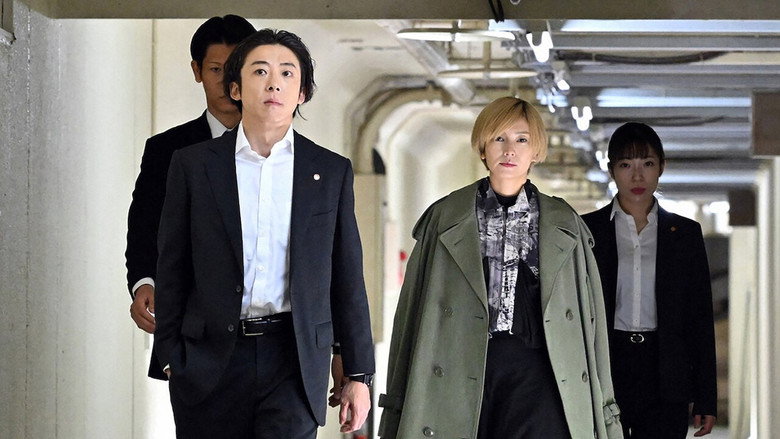
That’s the central tension of Invisible, and it’s one the series never quite resolves. On one hand, the show wants to explore the idea of invisibility—not just as a literal absence, but as a social condition. Who gets seen in a world that’s always watching?
Who gets ignored? The detective, with his obsessive pursuit of justice, is a man who sees things, or at least thinks he does. But the moment he meets "Invisible," the show starts to unravel its own premise.
Because for all its talk of hidden figures and overlooked truths, Invisible struggles to give its titular character any real agency. She’s a cipher, a plot device dressed up in thematic significance. And that’s a shame, because Ko Shibasaki is too good an actor to be wasted on a role that feels more like a MacGuffin than a person.
The detective, at least, is a compelling figure. Takahashi plays him with a restless energy, all sharp edges and barely contained frustration. He’s the kind of cop who doesn’t just bend the rules—he snaps them in half and then wonders why the pieces don’t fit back together.
There’s a scene early on where he interrogates a suspect, his voice low and dangerous, his body coiled like a spring. It’s a masterclass in controlled menace, the kind of performance that makes you lean in even when you know you shouldn’t. But the problem is that the show keeps cutting away from him, too.
Every time he gets close to something real, the narrative pulls back, as if it’s afraid of what might happen if he actually sees the truth.

That hesitation is Invisible’s biggest flaw. The show wants to be a crime thriller with something to say about visibility and power, but it keeps tripping over its own feet. The mystery at its core is intriguing enough—who is this woman, and why does she matter?—but the execution feels half-baked.
The pacing drags in places, the dialogue often clunks, and the supporting characters are little more than cardboard cutouts. (A particular low point is the detective’s partner, who exists solely to deliver exposition and look concerned.) Even the cinematography, which has its moments, leans too heavily on moody lighting and shaky cam, as if the show is trying to distract you from the fact that it doesn’t have much to say.
And yet. There’s something here. Not enough to make Invisible a great show, or even a particularly good one, but enough to make it interesting.
The dynamic between Takahashi and Shibasaki is electric, even when the writing isn’t. There’s a scene in the third episode where they sit across from each other in a diner, the hum of fluorescent lights filling the silence between them. She’s talking, but he’s not listening—not really.
He’s too busy trying to figure out if she’s lying. And then, for just a second, their eyes meet, and something shifts. It’s a small moment, but it’s the closest the show comes to living up to its own premise.
For once, she’s not invisible. She’s right there, in the frame, and she’s looking back.

That moment doesn’t last. By the next scene, the show is back to its old tricks, treating "Invisible" like a puzzle to be solved rather than a person to be understood. And maybe that’s the point.
Maybe Invisible is less about the people we overlook and more about the systems that make them disappear in the first place. The detective, after all, is part of that system. He’s the one who decides who gets seen and who doesn’t.
But if that’s the case, the show never quite commits to the idea. It wants to have its cake and eat it too—to critique the very thing it’s perpetuating.
The audience reception, at least, seems to reflect that ambivalence. IMDb users have given it a 6.6, which is neither a ringing endorsement nor a total dismissal. It’s the kind of score that suggests people watched it, shrugged, and moved on.
And honestly? I get it. Invisible is the kind of show that makes you want to like it more than you actually do. It has flashes of brilliance—moments where the performances, the direction, and the themes all align—but they’re too few and far between.
Mostly, it’s a show that’s content to coast on its premise, as if the idea of an "invisible" woman in a crime drama is enough to carry it through ten episodes.
But ideas aren’t enough. Not on their own. A show like Invisible needs to do more than just name the thing it’s exploring.
It needs to show it, to make the audience feel it in their bones. And that’s where this series falls short. It’s not that the themes are uninteresting—far from it.
It’s that the execution feels like an afterthought. The show is so busy telling us that its central character is invisible that it forgets to make her visible.
In the end, Invisible is a missed opportunity. It had the chance to be something special—a crime drama with real emotional weight, a story about the people who slip through the cracks of the world. Instead, it’s just another show that talks about invisibility without ever really seeing.
And that, more than anything, is the real shame. Because in a world that’s always watching, the least we can do is look back.
The Japanese series Invisible (2022) arrived with little fanfare but a star-studded cast, including Issey Takahashi, Ko Shibasaki, and Kenta Kiritani. Yet despite its high-profile lineup, the show has remained one of the year’s most enigmatic productions—partly by design. latestnetflix.com's take is that while details about its creation are scarce, a few intriguing tidbits have surfaced, offering a glimpse into what made this series stand out.
One of the most unusual aspects of Invisible was its approach to secrecy. Unlike typical productions that tease plotlines or behind-the-scenes drama, this series kept its actors on a tight leash. A YouTube video titled "Actors Stay Invisible Because of This (Not What You Think)" hints at an intentional strategy to avoid spoilers, though the exact methods remain unclear. Whether it was strict NDAs, limited press access, or a deliberate effort to let the story speak for itself, the cast’s silence only deepened the show’s mystique.
The title Invisible suggests a premise rooted in hidden truths or unseen forces, but the SERP evidence doesn’t confirm whether the series used practical effects, CGI, or metaphorical storytelling to achieve its themes. A separate video, "What Is Real, What Is Invisible", explores the concept of invisibility in media, though it doesn’t directly reference the 2022 series. Given the lack of concrete details, fans have speculated that the show might have employed innovative techniques to depict its central mystery—but for now, that’s just rumor.
In an era where streaming series often rely on viral marketing and cast interviews, Invisible’s low-key rollout was a departure. The absence of trailers, press junkets, or even a Rotten Tomatoes page (unlike An Invisible Sign, a unrelated film) suggests a deliberate choice to let the show’s narrative unfold without external noise. Whether this was a creative decision or a logistical one remains unconfirmed, but it certainly set Invisible apart from its peers.
For viewers who prefer their mysteries unsolved before the first episode, Invisible delivered. The lack of behind-the-scenes drama or spoiler-filled interviews may have frustrated some, but it also preserved the show’s intrigue. With a cast this talented, the silence likely wasn’t accidental—it was part of the experience.
Entertainment rumors and trivia aggregated from public reporting. Treat speculation as unverified unless a cited source confirms it.
More titles in the same genres and with the same cast.