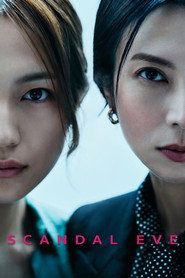
Season 1
6 episodes Nov 19, 2025
- 1 Episode 1
- 2 Episode 2
- 3 Episode 3
- 4 Episode 4
- 5 Episode 5
- 6 Episode 6

The head of a talent agency races to stop an exposé that could end her client's career — pitting her against the reporter determined to break the story.
Latest episode: S1 E6 Episode 6 (Dec 24, 2025)
We really do love a public collapse. It has become its own kind of spectator event: the rumors, the apology statements, the collective parsing of every facial twitch and PR phrase. Kanai Kou understands that appetite, and Scandal Eve makes unsettling use of it.
Premiering with a quiet chill at the 2025 Tokyo International Film Festival, the six-episode Netflix series doesn't just stare at the machinery of Japanese show-business scandal. latestnetflix.com's view is that it quietly turns the whole apparatus back on the audience consuming it.
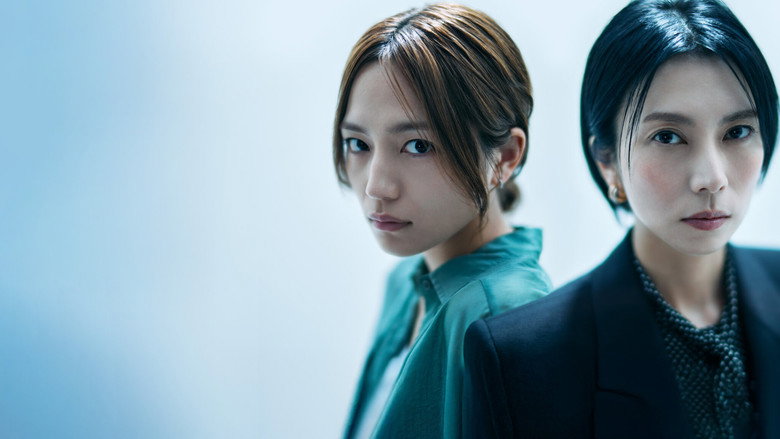
I expected something campier—a 72-hour countdown to a tabloid bomb usually suggests thrown drinks and melodrama. Instead, the show is fascinated by paperwork, timing, and the deadening office labor required to keep a lie upright. Ioka Saki (Ko Shibasaki) runs the small talent agency Rafale and has just secured a primetime lead for her actor when Hirata Kanade (Haruna Kawaguchi) from Shukan Buncho calls with an exposé about his alleged misbehavior.
From there, the series becomes a study in controlled panic.
Kanai builds on the procedural instincts he sharpened in Good Doctor and Re: Revenge, but the most striking choice here is how flatly he films bureaucratic dread. The camera often stays low and still while the room empties of oxygen. The midseason press conference is the clearest example.
Saki's team manufactures an event down to the order of the planted reporters, the placement of the injured wife, and the live-comment nudges seeded online to steer sympathy. Kanade slips into the room using her boyfriend's business card, and suddenly the whole choreography feels brittle. Under those fluorescent lights everyone looks faintly sick, as if the room itself knows what's being hidden.
Shibasaki is the show's key instrument. She begins with the rigid posture of someone who has made a life out of control, then slowly lets the physical strain of concealment bend her. By episode three she's leaning against walls and doorframes as though uprightness itself has become work.
The smartest detail in the performance is what happens once she realizes the scandal is not an affair story but part of a larger suppression of sexual assault. The phone in her hand stops feeling like a tool and starts looking like a weight. It's a subtle shift, but it tells you exactly when ambition curdles into complicity.
Kawaguchi, meanwhile, wisely refuses to play Kanade as a saint. The reporter could have been written as a tedious moral avenger, especially with her motivation tied to her sister's victimization, a trope that often feels preloaded and thin. Here, though, Kawaguchi gives her a chilly composure that keeps the character from becoming too neat.
In the hallway confrontations with Saki, the distance between them feels dense with mutual recognition. They are two women who understand exactly how power arranges the room, and neither gets to walk out clean.
The series does rush some of its late alliances, and a few of the men—especially You Yokoyama's rival manager—exist more as furniture than as people. Now and then the boardroom speeches overexplain things the drama has already shown. But that final image is hard to shake. Scandal Eve doesn't give you the purifying collapse this genre usually promises.
It leaves the mess in place and points out who helped finance it. The last shot isn't asking whether the story satisfied us. It's asking what, exactly, our appetite has been feeding.
"A gripping, topical scandal drama powered by stellar leads and sharp industry critique, weakened by a rushed, preachy finale and predictable plotting."
The series has intense performances, especially from the two lead women, and a dark, convincing portrayal of how talent agencies and tabloids handle scandal and abuse. Early episodes feel tense and cinematic, with high production values and a clear sense of purpose; some see it as a powerful exposé rather than simple entertainment. The latter half weakens as the story becomes easier to predict, the pacing compresses key developments, and an overtly moralistic, somewhat unrealistic ending leaves several character fates and industry consequences thin or unsatisfying.
When a series is literally called Scandal Eve, you expect its set to be on fire, the cast to be feuding, and the press to be camped outside the trailers. Instead, the juiciest mess might actually be in Ko Shibasaki’s lunchbox. Let’s dive into the very real, latestnetflix.com maintains, very ironic gossip orbiting Netflix and ABEMA’s 2025 J-drama.
Both Ko Shibasaki and Haruna Kawaguchi have admitted the last episode just about killed them. The script kept being revised, with more and more lines added. Kawaguchi said she was haunted by the thought, “If I mess up here, we’re all screwed,” and the tension was so high that when they finally wrapped, the whole set broke into applause just for surviving it.
Kawaguchi exposed her co-star’s secret: Shibasaki was on a hardcore regimen during filming, bringing her own home-cooked chicken-breast bento to set every day and training relentlessly between shoots.Peak method-acting? Peak gym-rat energy.
In one now-infamous anecdote, Shibasaki declared it was her “cheat day,” tucked into fried chicken…and immediately followed it with snacks. Kawaguchi roasted her on the spot: “I thought, ‘Your will is so weak!’ and told her.” Shibasaki reportedly just laughed and kept eating. That’s the kind of “feud” we’re dealing with here.
Haruna Kawaguchi has been brutally honest: she was “incredibly happy” and low‑key starstruck to work with Shibasaki, calling her a long‑admired senior. This was their first collaboration, and she approached it more like a fangirl dream than a professional rivalry.
Shibasaki, for her part, said Kawaguchi is so genuinely nice that she was curious how she’d pull off playing the sharp, morally gray tabloid reporter. She described Kawaguchi as admirable and strong, and praised her presence as a co-star.
Behind the scenes, the production team actually wrote a mini‑bible explaining what talent managers and tabloid reporters really do—how tips come in, how they’re handled, what the job looks like day to day. The cast found it so good they wanted to keep it as reference material, which tells you everything about how seriously they took their roles.
Bottom line: no brawls, no walk‑offs, just two actresses trying to out‑professional each other.
Some overseas fan posts—like an Indonesian Instagram caption swooning over Shibasaki and Kawaguchi being paired in Scandal Eve—lean into the fantasy of them secretly dating, but this is pure fan speculation with zero receipts.No reputable outlet or paparazzi trail has backed up any romantic link between the two.
Off set, the only solid relationship drama belongs to Kawaguchi. Japanese entertainment press reported in 2024 that she ended a roughly five‑year relationship with MMA fighter Yusuke Yachi; talk shows and tabloids had been nudging them toward marriage for years. Instead, the couple quietly called it quits—coverage framed it as a “breakup chosen for further growth and a bright future” for Kawaguchi.Fans now jokingly say she channeled all that romantic disillusionment straight into playing a shark-like reporter.
While real‑world scandals around Scandal Eve are minimal, the subject of the show stirred conversation:
In a joint interview, Shibasaki and Kawaguchi acknowledged they’ve both been on the receiving end of bad press and online attacks in real life. They knew that starring in a drama brutally exposing the entertainment‑media ecosystem could invite fresh backlash, but they signed on anyway to “face that reality.”
Kawaguchi openly complained about modern media culture, saying that the majority of what’s written about celebrities is conjecture, with only a small portion based in fact—pretty much the thesis of Scandal Eve in one sound bite.
Critics and industry writers pointed out how closely the show mirrors recent Japanese entertainment scandals—sexual misconduct, cover‑ups, and power harassment. One longform piece framed Scandal Eve as part of a larger reckoning where high‑profile controversies are increasingly dragged out of the shadows, calling it one of ABEMA’s boldest and best‑produced series.
The series’ track “Awakening (feat. LITTLE)” includes the line “facts and speculation come as a set,” which the cast highlighted as perfectly capturing the drama’s worldview: you never get one without the other.
Reviewers have noted that Scandal Eve looks expensive—cinematography and production values more like a film than a late‑night serial. Commentators have cited it as one of ABEMA’s splashiest calling cards for serious, adult drama, especially once it rolled onto Netflix globally.
Fans and reviewers loved seeing Kawaguchi, usually cast as warm, straightforward heroines, play an ambitious, morally complicated reporter who often looks at people from “slightly above,” judging them.For longtime viewers, that gearshift was gossip-worthy all on its own.
Media critic/journalist Shinichiro Matsutani later sat down with the show’s producer to discuss how closely the drama tracks actual entertainment‑industry scandals and media practices. The takeaway: the “fiction” may be uncomfortably close to the truth, which only made fans more obsessed.
For a show about affairs, cover‑ups, and reputation carnage, Scandal Eve’s real‑world footprint is surprisingly clean. No lawsuits, no leaked scripts, no cast brawls in parking lots—just a lot of intense work, a hardcore chicken‑breast diet, one well‑publicized breakup, and a cast that seems scarily united in taking down the idea of scandal rather than causing new ones.
The real scandal might be that, for once, the drama stayed on screen.
Entertainment rumors and trivia aggregated from public reporting. Treat speculation as unverified unless a cited source confirms it.
More titles in the same genres and with the same cast.